
Global Insights: Comparing Zinc Alloy, Stainless Steel, Copper, and Iron in Modern Bag Hardware Materials
As global bag and luggage brands move toward higher durability, refined craftsmanship, and stronger brand identity, the choice of
bag hardware materials has become a decisive factor. Materials such as zinc alloy, stainless steel, copper, and iron not only influence the visual appeal of a bag but also determine its structural strength, corrosion resistance, cost efficiency, and long‑term performance.
This report provides a comprehensive comparison of these four major bag hardware materials, covering their applications, product types, performance characteristics, pricing differences, and market trends. Understanding these materials helps brands make informed decisions and build products that align with their target market.
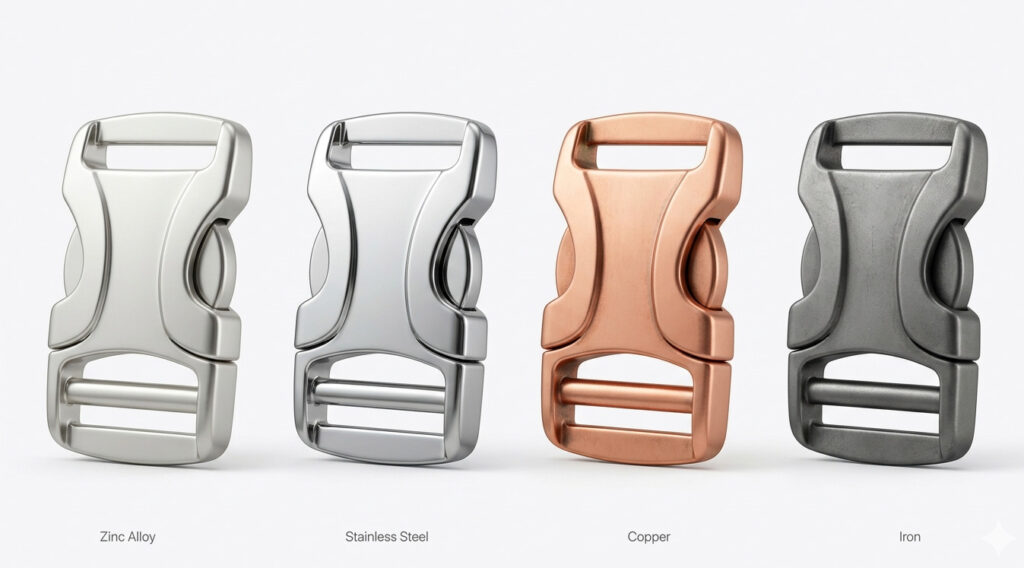
1. Typical Applications of Each Material in Bag Hardware Materials
Zinc Alloy (Zamak)
Common Products: buckles, locks, D‑rings, square rings, logo plates, zipper pulls, hooks
Key Features: excellent moldability, ideal for complex shapes, premium electroplating results
Market Position: mainstream choice for mid‑to‑high‑end fashion bags and luggage
Stainless Steel (304 / 316)
Common Products: climbing hooks, strap adjusters, pull rings, heavy‑duty hardware
Key Features: exceptional corrosion resistance, high tensile strength
Market Position: outdoor, tactical, and professional‑grade bags
Copper (Brass / Red Copper)
Common Products: vintage locks, rivets, decorative pieces, retro zipper pulls
Key Features: premium texture, natural patina aging, excellent conductivity
Market Position: luxury leather goods, handcrafted bags, vintage‑style brands
Iron (Carbon Steel)
Common Products: basic zipper pulls, iron buckles, rings, low‑cost hardware
Key Features: low cost, acceptable strength, requires plating to prevent rust
Market Position: mass‑market and cost‑sensitive products
This is why many brands choose professional bag hardware suppliers to ensure consistent quality.
👉 Explore our production-grade bag hardware products here
2. Performance Comparison of Bag Hardware Materials
Strength Ranking (High → Low)
- Stainless Steel – strongest, ideal for load‑bearing structures
- Iron – strong but rust‑prone
- Copper – moderate strength, mainly decorative
- Zinc Alloy – moderate strength, suitable for shaped hardware
Corrosion Resistance
- Stainless Steel (★★★★★) – marine‑grade resistance
- Copper (★★★★) – oxidizes naturally but does not rust
- Zinc Alloy (★★★) – depends heavily on plating quality
- Iron (★) – rusts quickly without coating
Weight Comparison
- Heaviest: copper, stainless steel
- Medium: zinc alloy
- Lightest: thin‑gauge iron
Workability
- Zinc Alloy (★★★★★) – best for complex designs
- Copper (★★★★) – excellent ductility
- Iron (★★★) – suitable for stamping
- Stainless Steel (★★) – difficult to machine or mold
3. Price Comparison of Bag Hardware Materials
| Material | Price Level | Cost Drivers |
|---|---|---|
| Copper | Highest | Expensive raw material, labor‑intensive processing |
| Stainless Steel | High | High material cost, difficult machining |
| Zinc Alloy | Medium | Plating cost is the main factor |
| Iron | Lowest | Cheap material, simple processing |
Summary:
- Zinc alloy = best cost‑performance balance
- Stainless steel = strongest and most durable
- Copper = premium texture and vintage appeal
- Iron = lowest cost but shortest lifespan
4. Best Use Cases for Each Type of Bag Hardware Materials
Zinc Alloy — For brands prioritizing design and aesthetics
Ideal for: fashion bags, women’s bags, travel luggage, logo hardware
Pros: excellent plating, flexible shapes
Cons: lower strength than stainless steel
Stainless Steel — For outdoor and heavy‑duty applications
Ideal for: hiking bags, tactical gear, camera bags, tool bags
Pros: corrosion‑proof, high strength, long lifespan
Cons: higher cost, limited design flexibility
Copper — For luxury and handcrafted leather goods
Ideal for: handmade leather bags, vintage collections, premium accessories
Pros: natural patina, high‑end appearance
Cons: heavy, expensive
Iron — For budget‑friendly mass‑market products
Ideal for: basic backpacks, promotional bags, low‑cost items
Pros: lowest cost
Cons: rust‑prone, shorter lifespan
5. Full Comparison Table for Procurement Teams
| Feature | Zinc Alloy | Stainless Steel | Copper | Iron |
|---|---|---|---|---|
| Strength | Medium | High | Medium | High |
| Corrosion Resistance | Medium | Excellent | High | Low |
| Weight | Medium | Heavy | Heavy | Light–Medium |
| Cost | Medium | High | Highest | Lowest |
| Workability | Excellent | Limited | Good | Moderate |
| Best For | Fashion bags | Outdoor gear | Luxury leather | Budget products |
6. Market Trends: What to Expect in 2026
1. Rising demand for corrosion‑resistant materials
Outdoor and travel categories continue to grow, driving demand for stainless steel and high‑quality plated zinc alloy as preferred bag hardware materials.
2. Copper hardware becomes a luxury signature
Its natural aging effect is increasingly favored by premium leather brands, making copper one of the most distinctive bag hardware materials in the luxury segment.
3. Eco‑friendly plating pushes zinc alloy innovation
PVD coating and nickel‑free plating are becoming industry standards, improving durability and sustainability across modern bag hardware materials.
Conclusion: Material Choice Defines Brand Positioning
Zinc alloy, stainless steel, copper, and iron each offer unique advantages as bag hardware materials.
- Choose zinc alloy for design flexibility and balanced cost.
- Choose stainless steel for maximum strength and corrosion resistance.
- Choose copper for luxury and vintage aesthetics.
- Choose iron for cost‑driven mass production.
If you are developing a new collection or looking for stable OEM manufacturing support:
For pricing and sampling:
For additional reference on metal composition and performance standards used in
bag hardware materials, you can review the material guidelines provided by
AZoM – The A to Z of Materials
, one of the world’s leading materials science resources.