
Introduction
If you work with handbags long enough, you’ll notice something interesting:
customers rarely complain about leather first — they complain about hardware.
A lock that feels loose.
A chain that looks good in photos but scratches after a few weeks.
A metal finish that fades faster than expected.
Going into Handbag Hardware Trends for 2026, metal locks, chains, and custom hardware are no longer small details. For many brands, they quietly determine whether a bag feels premium or forgettable.
This article isn’t about theory. It’s based on what buyers actually ask for, compare, and reject when sourcing handbag hardware.
What Counts as Metal Handbag Hardware Today?
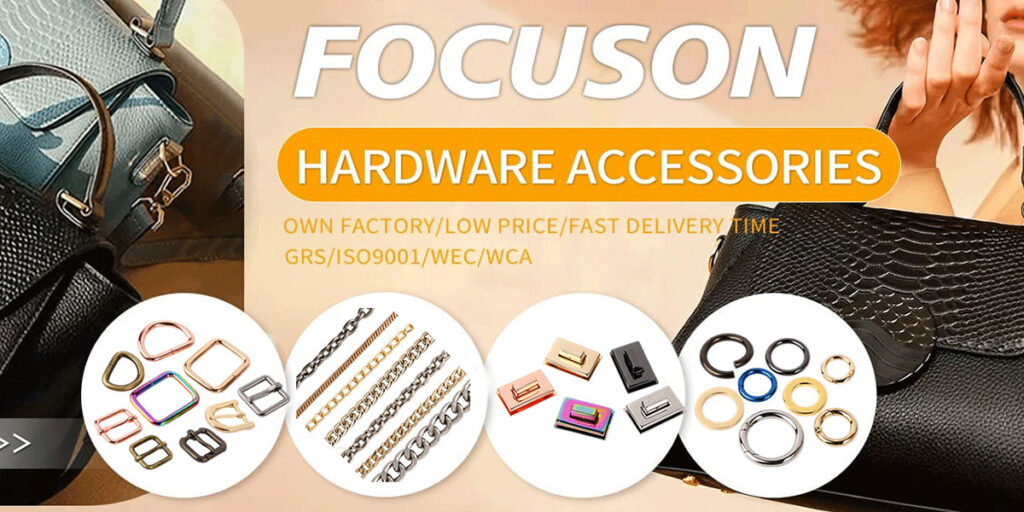
Handbag hardware usually includes:
- Turn locks, flip locks, and magnetic closures
- Metal chains for straps or decoration
- Rings, hooks, buckles, and connectors
- Logo plates and branded metal tags
What’s changed is how much attention these parts receive. Buyers are no longer satisfied with “standard factory items.” They ask questions about material, plating depth, weight, and even how the lock feels when opened by hand.
Metal Locks: From Functional to Front-Facing
A few years ago, many locks were designed to stay unnoticed. That’s no longer the case.
In 2026, metal locks are often placed at the visual center of the bag. Especially for minimalist designs, the lock becomes the main design language.
From our experience, buyers tend to prefer:
- Zinc alloy or brass locks with clean edges
- Matte or brushed finishes instead of mirror polish
- Custom shapes rather than generic round locks
The reason is simple: customers touch the lock first. If it feels cheap, the entire bag feels cheap.
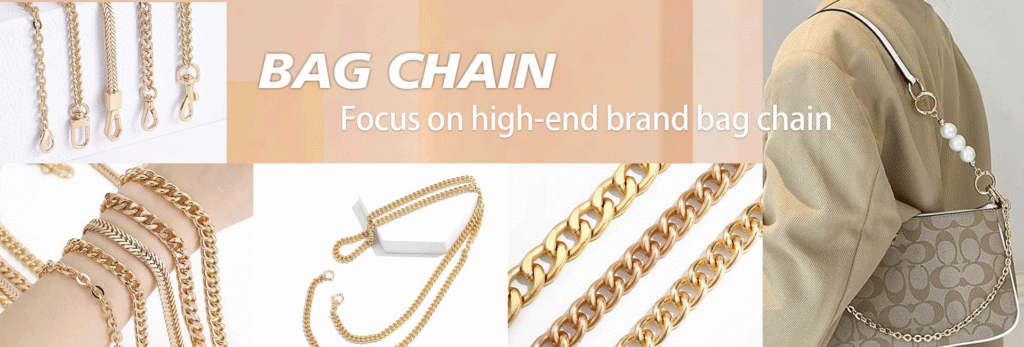
Chains Are No Longer Just Straps
Chains used to be “just shoulder straps.” Now they play multiple roles.
We see chains used as:
- Main handles for small bags
- Decorative elements on the bag body
- Hybrid designs mixed with leather or fabric
One thing buyers pay close attention to is weight balance. A chain that looks great but feels heavy will cause problems in real use. That’s why hollow chains and lightweight structures are increasingly popular for daily bags.
Surface Finish Is Where Quality Is Judged
Many sourcing decisions come down to one thing: the surface finish.
In real buyer conversations, questions often sound like:
- “Will this color change after a few months?”
- “Is this electroplated or spray-coated?”
- “Can you keep the color consistent across batches?”
In 2026, finishes like matte gold, gunmetal, and antique silver remain strong, but consistency matters more than color choice itself.
Custom Hardware Is Becoming Normal
Custom hardware is no longer reserved for luxury brands.
More mid-sized brands are choosing:
- Custom logo plates
- Brand-specific lock shapes
- Exclusive finishes
The goal isn’t complexity. It’s recognition. Even a small custom detail helps brands avoid looking generic in a crowded market.
How Buyers Actually Evaluate Hardware
When buyers compare suppliers, they usually focus on:
- Material stability
- Surface finish durability
- Smoothness of function
- Consistency across production
- Ability to support customization
Price matters, but rarely on its own.
Final Thoughts
In 2026, handbag hardware quietly defines product quality.
Metal locks, chains, and custom accessories are not accessories anymore — they are part of the product’s identity. Brands that understand this early avoid many problems later, from customer complaints to product returns.
This blog post includes references—Zipper Market – Global Industry Analysis and Forecast (2025-2032); you can click to read more details.