
Common Brass Grades Explained: Composition, Properties and Applications
As a professional handbag hardware manufacturer, we work with different brass grades daily in real production.
When working with brass for hardware such as chains, hooks, and logo plates, the material grade is not just a specification. It directly affects forming performance, surface finishing quality, and long-term durability.
This guide explains common brass grades from H59 to H70+, combining standard material data with practical factory experience.
Understanding Brass Composition
Brass is an alloy of copper (Cu) and zinc (Zn). The proportion of copper determines how the material behaves during manufacturing.
- H59: approx. 57–60% copper
- H62: approx. 60.5–63.5% copper
- H65: approx. 63–68% copper
- H68: approx. 67–70% copper
- H70+: above 70% copper
As copper content increases, the material becomes softer, more ductile, and more corrosion-resistant, while strength gradually decreases.
Key Mechanical Properties
Tensile Strength
- H59: 400–500 MPa
- H62: 350–470 MPa
- H65: 300–450 MPa
Higher strength improves load-bearing capacity but makes forming processes more difficult.
Elongation
- H59: 10–15%
- H62: 18–25%
- H65: 25–35%
Higher elongation means better ductility and lower risk of cracking during bending or forming.
Hardness
- H59: higher hardness
- H62: medium
- H65+: lower hardness
Higher hardness increases wear resistance but also increases machining difficulty.
Electrical Conductivity
Electrical conductivity improves with higher copper content. While not critical for bag hardware, it is relevant in electrical components.
Processing Performance by Grade
H59 Brass
Higher strength and rigidity. Suitable for machining but less ideal for complex forming.
H62 Brass
Balanced strength and ductility. Widely used in general hardware production.
H65 Brass
Better ductility and smoother surface finish. Preferred for premium hardware products.
H68 / H70 Brass
Excellent for deep drawing and complex shapes. Typically used for thin-wall structures and precision parts.
Surface Finishing and Plating Performance
- Higher copper content improves plating adhesion
- Better polishing results
- More consistent electroplating color
In practice, H65 and above are more stable for high-end finishes such as gold plating and nickel plating.
Applications in Bag Hardware
- Chains and hooks: commonly H62
- Logo plates: typically H65
- Decorative parts: H65 or higher
These applications require a balance between strength, appearance, and plating quality.
How to Choose the Right Brass Grade
- If cracking occurs during forming, use higher copper content
- If parts deform too easily, choose stronger material like H59
- If plating quality is unstable, upgrade to H65 or above
Material selection is always a balance between cost, performance, and production efficiency.
Conclusion
Brass grade tables provide technical data, but real value comes from understanding how these properties affect production and product quality.
Selecting the right material early can reduce development costs and improve consistency in mass production.
If you are sourcing brass hardware or need material recommendations, feel free to contact us for practical support based on your product.
Brass Grades Composition and Properties Table
| Grade | Copper (Cu %) | Zinc (Zn %) | Tensile Strength (MPa) | Elongation (%) | Hardness (HV) | Key Features |
|---|---|---|---|---|---|---|
| H59 | 57–60 | Balance | 400–500 | 10–15 | High | High strength, good for machining |
| H62 | 60.5–63.5 | Balance | 350–470 | 18–25 | Medium | Balanced performance, widely used |
| H63 | 62–65 | Balance | 340–460 | 20–28 | Medium | Better ductility than H62 |
| H65 | 63–68 | Balance | 300–450 | 25–35 | Lower | Good forming and surface finish |
| H68 | 67–70 | Balance | 280–420 | 30–40 | Lower | Excellent for deep drawing |
| H70 | 70–73 | Balance | 260–400 | 35–45 | Low | High ductility, precision forming |
FAQ
What is the most commonly used brass grade?
H62 is the most widely used due to its balance of cost and performance.
Which brass grade is best for plating?
H65 and above generally provide better plating performance.
Which brass is best for forming?
H65, H68, and H70 offer better ductility for forming processes.
Is higher copper content always better?
No. It improves ductility and corrosion resistance but reduces strength and increases cost.
This is a detailed introduction of the zinc alloy material.
Learn more about brass material
| Common Brass Grades (Listed by Increasing Copper Content) | ||||
| Grade | Copper Content (%) | Name | Characteristics | Typical Applications |
| H59 | ~59% | Brass H59 | High strength, lower ductility, economical | Mechanical parts, welded components, hardware |
| H62 | ~62% | Brass H62 | Balanced properties, good cold workability, easy machining | Rivets, washers, tubes, general hardware |
| H63 | ~63% | Brass H63 | Excellent cold‑forming performance | Screws, stamped parts, deep‑drawn components |
| H65 | ~65% | Brass H65 | Higher strength, good corrosion resistance, clean surface finish | Precision hardware, springs, decorative parts |
| H68 | ~68% | Brass H68 | Very good ductility, ideal for deep drawing | Radiator shells, bellows, flexible tubes |
| H70 | ~70% | Cartridge Brass (H70) | High strength, wear‑resistant, excellent cold workability | Cartridge cases, deep‑drawn parts, heat‑exchange components |
| H75 | ~75% | Brass H75 | Balanced strength and ductility, corrosion‑resistant | Springs, precision components |
| H80 | ~80% | Brass H80 | High strength, excellent seawater corrosion resistance | Thin‑wall tubes, marine hardware, architectural parts |
| H85 | ~85% | Brass H85 | High corrosion resistance, good thermal conductivity | Condenser tubes, serpentine tubes, heat‑exchange systems |
| H90 | ~90% | Red Brass (H90) | Reddish color, high electrical & thermal conductivity | Medals, electrical connectors, radiator strips |
| H96 | ~96% | High‑Copper Brass (H96) | Very close to pure copper; excellent conductivity & corrosion resistance | Heat sinks, conductive components, premium decorative parts |
| “H” stands for “Huangtong,” meaning Brass in Chinese standards. The number indicates the approximate copper percentage in the alloy. Higher copper content → better conductivity and corrosion resistance, but lower strength and higher cost. Higher zinc content → higher strength and hardness, but reduced ductility. These grades follow the GB/T 4423 standard for wrought brass materials. International equivalents often use UNS C-series (e.g., C26000 ≈ H70, C26800 ≈ H65). | ||||
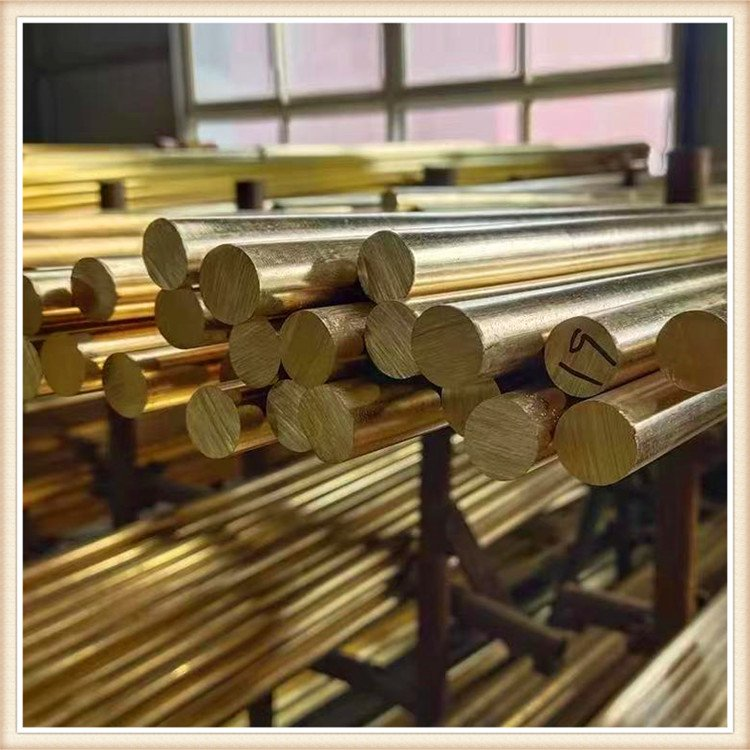
Looking for high-quality H59 Brass hardware for your luxury bags? Contact DG Buddy for free samples and custom molding options!
“To view our full range of products, you can download our latest hardware catalog here.”