
Main Content
In handbag hardware sourcing, buyers often ask the same question:
“Why do two gold-plated parts look similar, yet differ so much in price?”
The short answer is: gold plated handbag hardware is not a single standard process.
Behind the same “gold color” are differences in material preparation, plating thickness, solution chemistry, and process control.
Gold plated handbag hardware Is a System, Not a Color
Many low-cost gold-plated parts rely on extremely thin decorative layers.
They look acceptable at first—but quickly reveal problems after wear.
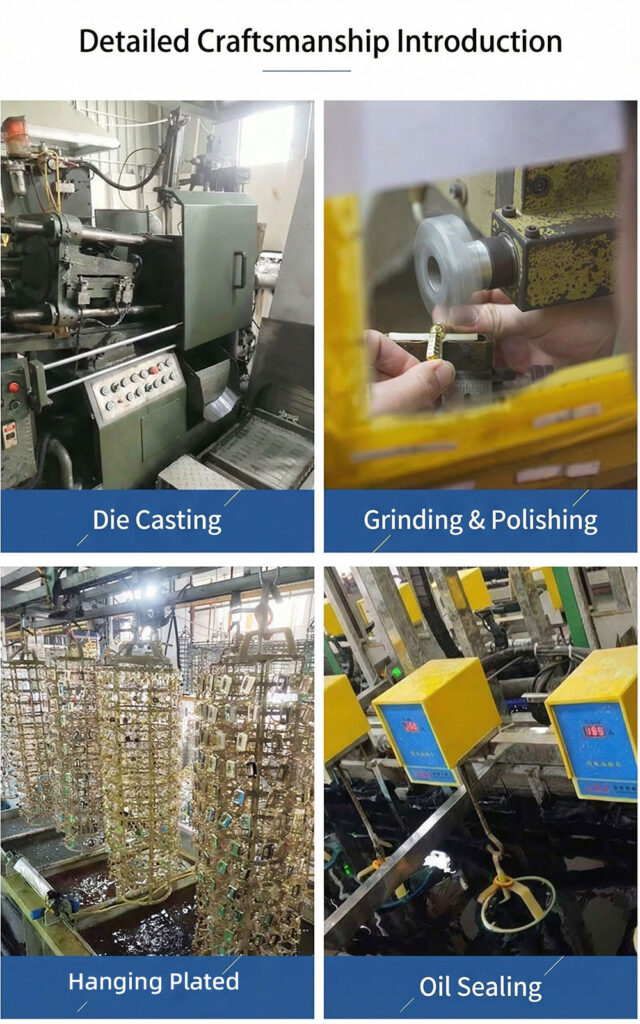
Professional gold plating involves multiple controlled stages:
- Base material treatment
- Polishing and surface leveling
- Undercoating layers (nickel or copper systems)
- Final gold or gold-tone plating
Each step affects durability, color stability, and long-term performance.
Thickness Changes Everything
One of the biggest cost drivers is plating thickness.
Thicker plating means:
- Higher material consumption
- Longer plating time
- Tighter quality monitoring
Thin decorative plating may cost less initially, but it wears through faster—especially on contact points like hooks, chains, and locks.
Color Stability vs. Visual Imitation
Gold color can be visually “matched” using different chemical formulas.
However, stability under friction, humidity, and skin contact varies significantly.
Lower-cost processes often fade unevenly or expose base metal tones over time.
Process Control Determines Consistency
Stable gold plating requires precise control of:
- Electrical current
- Solution balance
- Temperature
- Plating duration
Factories that invest in process monitoring deliver consistent results batch after batch—at a higher but justified cost.
Why Our Factory’s Gold Plating Costs More—but Lasts Longer
We approach gold plating as a performance process, not a decorative shortcut.
Our focus is on:
- Controlled thickness
- Stable underlayers
- Wear-resistant finishes
This reduces post-production issues and protects brand image long after the product enters the market.
The Real Cost Difference Is Risk
The price gap between two “gold-plated” parts reflects risk distribution:
- Lower price → higher chance of fading, rework, or complaints
- Higher process cost → long-term stability and reliability
In handbag hardware, gold plating is not about shine—it’s about trust.
More information about electroplating can be found on Wikipedia.