
How to Identify High-Quality Electroplating on Metal Bag Hardware Before OEM Production
For many handbag brands, plating quality is one of the biggest hidden risks in metal bag hardware sourcing. A buckle may look perfect in sample photos, but after several weeks of shipping, storage, or customer use, problems like fading, oxidation, peeling, or uneven color often appear. Identifying high-quality electroplating early can prevent expensive returns, unstable OEM production, and long-term damage to brand reputation.
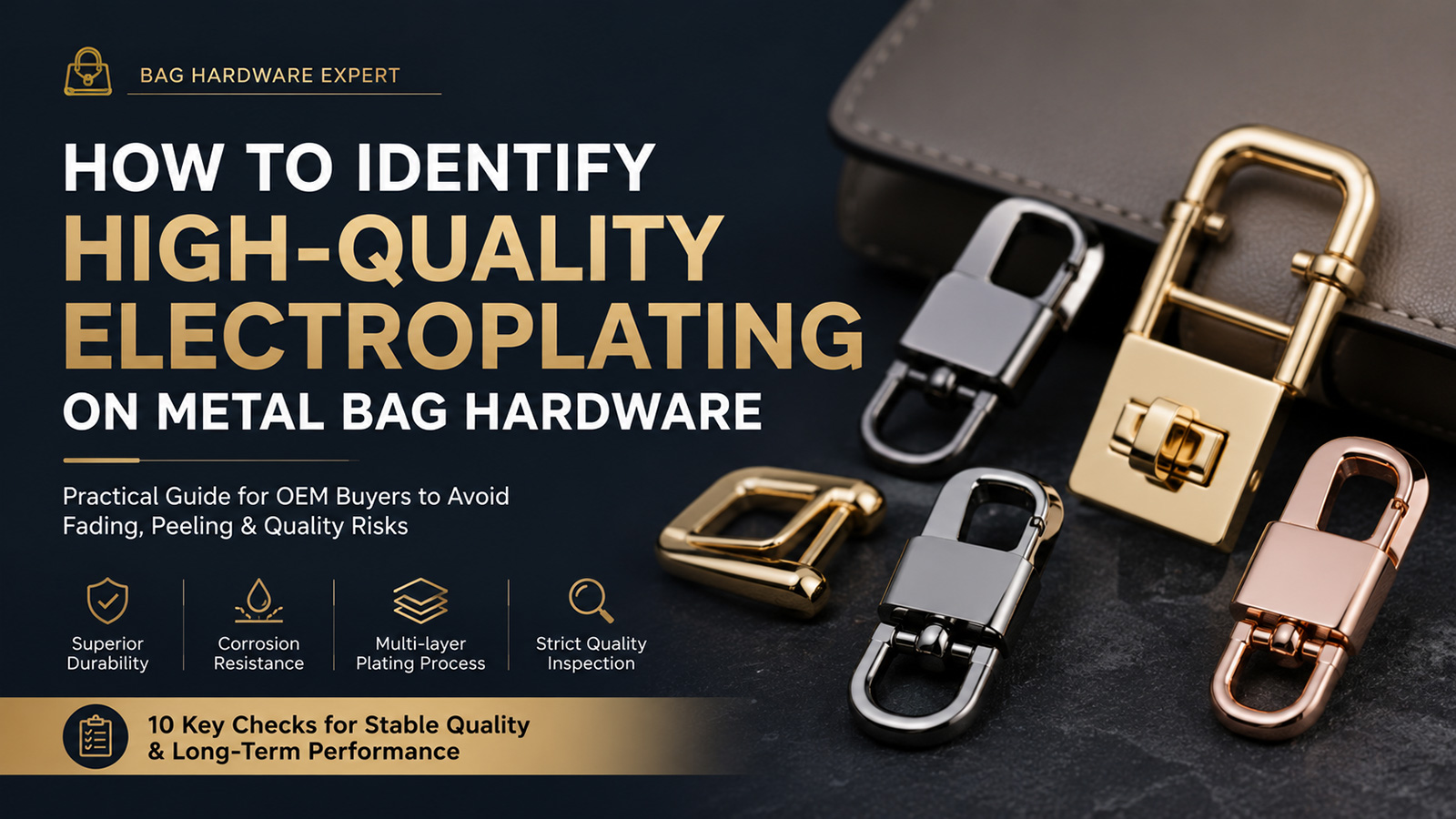
Table of Contents
- Common OEM Purchasing Problems with Electroplated Hardware
- Material and Electroplating Quality Analysis
- Real Factory Experience and Common Failure Cases
- How to Evaluate a Reliable Electroplating Supplier
- Practical Inspection and Purchasing Tips
- Conclusion
Common OEM Purchasing Problems with Electroplated Hardware
In the handbag accessories industry, high-quality electroplating on metal bag hardware is something you often can’t judge just by looking at a fresh sample. The real problems usually don’t show up right away; instead, most quality issues pop up after the long trip in shipping, months in warehouse storage, or once the end-user actually starts handling the bag. This is exactly why so many overseas buyers get stuck discovering plating defects only after the bulk delivery has already arrived.
Sample Quality Does Not Match Bulk Production
One of the most common OEM complaints is that approved samples look significantly better than mass production. This usually happens because suppliers use different polishing standards, different plating thicknesses, or even different subcontracted plating factories during bulk production.
In some low-cost projects, suppliers may use thicker plating on samples to secure orders, then reduce plating thickness later to control production costs.
Color Fading After Short-Term Use
Gold, gunmetal, and black nickel finishes are especially sensitive to electroplating quality. If the pre-polishing process is poor or the plating layer is too thin, color fading can appear within weeks.
- Humid shipping environments
- Luxury handbag applications
- Frequent friction areas
- Metal parts exposed to sweat or cosmetics
Peeling and Bubbling Problems
Peeling usually indicates poor surface preparation before electroplating. If oil, oxidation, or polishing residue remains on the base material, the plating layer cannot properly bond to the surface.
This problem is especially common with unstable zinc alloy die casting quality.
Inconsistent Color Between Production Batches
Honestly, many brands really underestimate how tough it is to keep color consistency during production. Achieving high-quality electroplating on metal bag hardware requires extreme precision; even tiny shifts in the electrical current, chemical mix, polishing texture, or how long it sits in the plating tank can lead to visible color gaps. For fashion brands that have repeat seasonal orders, having inconsistent hardware colors can become a huge headache for your overall product consistency.
For fashion brands with repeat seasonal production, inconsistent hardware color can create serious problems for product consistency.
Material and Electroplating Quality Analysis
Zinc Alloy vs Brass for Electroplating
Choosing the right base material directly affects electroplating durability, appearance consistency, polishing quality, and long-term OEM stability. Many buyers focus only on unit price differences, but the base material itself often determines whether plating problems will appear later during customer use or bulk production.
| Comparison Item | Zinc Alloy Hardware | Brass Hardware |
| Material Cost | Lower cost, suitable for large-volume OEM projects | Higher raw material and machining cost |
| Design Flexibility | Excellent for complex decorative shapes | Better for precision luxury structures |
| Electroplating Adhesion | More sensitive to casting porosity and defects | More stable plating adhesion and smoother coating |
| Polishing Performance | Depends heavily on die casting quality | Produces cleaner mirror polishing effect |
| Surface Smoothness | May show pinholes or casting marks | Denser material with smoother finish |
| Risk of Peeling | Higher if surface preparation is poor | Lower under stable plating process |
| Salt Spray Resistance | Moderate depending on plating thickness | Better long-term corrosion resistance |
| Color Consistency | Less stable across different batches | More stable and consistent plating color |
| Luxury Appearance | Suitable for mid-range fashion handbags | Preferred for premium and luxury handbags |
| Weight & Hand Feel | Lighter weight | Heavier and more premium feel |
| Production Efficiency | Faster die casting production speed | Longer CNC and polishing process |
| MOQ Suitability | Better for large-scale production | Higher cost pressure on smaller orders |
| Best OEM Application | Fashion bags, seasonal products, trend collections | Luxury handbags, designer collections, premium hardware |
In actual OEM production, zinc alloy remains widely used because it supports complex mold structures and more competitive pricing. However, for luxury handbag brands requiring stable gold finishes, high polishing quality, and long-term durability, brass generally performs more consistently during electroplating production.
Many premium handbag factories also combine CNC-machined brass structures with thicker electroplating systems to improve scratch resistance, color stability, and overall hardware lifespan.

Why Surface Polishing Matters Before Electroplating
Many buyers focus only on final plating color but ignore pre-plating polishing quality.
In reality, electroplating amplifies the underlying surface condition. Poor polishing remains visible even after thick plating.
- Wave marks
- Die casting lines
- Pinholes
- Surface scratches
- Uneven mirror effect
At our workshop, we know that high-quality electroplating on metal bag hardware isn’t just about the chemicals in the tank. Experienced factories like ours spend a huge amount of time on manual polishing long before the plating even starts. We do this because the prep work directly decides that final, high-end look and that smooth luxury feel your customers expect..
Understanding Plating Layer Structure
high-quality electroplating on metal bag hardware usually includes multiple protective layers rather than a single coating.
- Copper layer
- Acid copper leveling
- Nickel layer
- Color plating layer
- Protective top coating
If suppliers skip intermediate layers to reduce cost, the hardware may initially look acceptable but durability drops significantly during actual use.
Salt Spray Testing Standards
Salt spray testing is one of the most important methods for evaluating electroplating durability.
- 24 hours: low-end commercial standard
- 48 hours: common mid-range handbag standard
- 72-96 hours: premium handbag hardware requirement
However, buyers should understand that salt spray hours alone do not guarantee quality. The testing method, sample position, polishing quality, and plating structure all affect the result.
Salt spray testing is one of the most common methods used to evaluate plating durability and corrosion resistance for metal handbag hardware. Official testing details can be found here: ASTM B117 Corrosion Testing Standard .
CNC Precision and Structural Durability
For luxury bag hardware, plating quality alone is not enough. Structural precision also matters.
- Uneven gaps
- Loose locks
- Weak spring structures
- Surface cracking after assembly
You also have to watch out for the build quality itself. If the parts don’t fit perfectly, these structural problems might eventually ruin even the high-quality electroplating on metal bag hardware because of all that constant friction or pressure on certain spots..
For buyers looking for durable OEM locking solutions, our custom handbag turn lock hardware is designed for luxury leather goods and high-volume production projects.
Real Factory Experience and Common Failure Cases
A Common OEM Failure Case: Low-Cost Gold Plating
A European handbag customer once requested bright gold hardware with aggressive target pricing. After comparing several suppliers, they selected the lowest quotation.
The samples looked acceptable initially. However, after bulk shipment arrived, oxidation appeared around the buckle edges within two months.
After inspection, several issues were discovered:
- Very thin nickel underlayer
- Insufficient polishing
- No protective top coating
- Unstable electroplating subcontractor
The customer eventually replaced over 12,000 pieces of hardware, causing production delays and additional logistics costs.
Why Black Finishes Often Have Higher Defect Rates
Black nickel and matte black finishes are visually attractive but technically more difficult than standard silver or light gold finishes.
Even minor polishing defects become highly visible under dark plating.
- More polishing time
- More stable plating current
- Stricter cleaning procedures
- Higher inspection standards
This is one reason why extremely low-priced black hardware often has unstable quality.
How to Evaluate a Reliable Electroplating Supplier
Check Whether the Factory Controls Its Own Plating Process
Some suppliers own internal electroplating workshops, while others outsource all plating work.
- How long the supplier has worked with the plating factory
- Whether quality standards are documented
- Whether incoming QC inspection exists
- Whether plating batches are traceable
Evaluate OEM Development Experience
Factories experienced in luxury handbag hardware development usually understand:
- Color matching standards
- Luxury polishing requirements
- Scratch resistance expectations
- Packaging protection methods
- Assembly tolerance requirements
Practical Inspection and Purchasing Tips
Inspect Hardware Under Different Lighting Conditions
- Natural daylight
- Warm indoor lighting
- White LED lighting
Some plating defects only appear under specific lighting angles.
Use Adhesive Tape Testing
Here is a quick tip to check things: just apply a piece of strong adhesive tape directly to the surface, and then pull it off fast. This is a simple but effective test for high-quality electroplating on metal bag hardware. If the plating is weak or poorly bonded, it might actually peel right off or show visible damage on the spot..
Check Hidden Areas Carefully
Some suppliers focus polishing only on visible surfaces while ignoring hidden edges or internal corners.
These hidden areas often reveal actual manufacturing quality standards.
Conclusion
Identifying high-quality electroplating on metal bag hardware requires more than checking surface color. Buyers should evaluate the entire manufacturing process, including material selection, polishing standards, plating structure, QC systems, and OEM production experience.
In many OEM projects, the biggest risks do not come from visible defects during sampling, but from unstable bulk consistency after production scales up.
Working with experienced suppliers that understand plating durability, luxury finishing standards, and long-term production consistency is usually more valuable than choosing the lowest quotation.

How can buyers identify poor electroplating quality on handbag hardware?
Common signs include uneven color, surface pinholes, peeling around edges, rough polishing marks, and rapid fading after friction or humidity exposure.
Is brass better than zinc alloy for luxury handbag hardware?
Brass generally offers better polishing quality and stronger plating adhesion, making it more suitable for premium handbag hardware. Zinc alloy is more cost-effective for complex shapes.
What salt spray testing standard is recommended for handbag hardware?
For mid-to-high-end handbag hardware, 48 to 72 hours of salt spray resistance is commonly requested, depending on market positioning and usage environment.
Why does electroplated hardware fade after shipping?
Fading may result from thin plating layers, poor surface preparation, lack of protective coating, or humidity exposure during international transportation.
How do factories control plating color consistency in bulk production?
Experienced factories use fixed plating parameters, color reference samples, chemical monitoring, and batch QC inspections to maintain stable color consistency.
What causes plating peeling on zinc alloy hardware?
Peeling is often caused by poor die casting quality, surface contamination, insufficient polishing, or weak bonding between plating layers.
Should buyers request plating thickness reports?
Yes. Plating thickness reports help verify whether suppliers meet durability requirements, especially for luxury or high-frequency-use handbag hardware.
Why are black electroplated finishes harder to produce?
Black finishes make polishing defects more visible and require stricter process control, making them more technically demanding than light gold or silver finishes.
How can buyers reduce OEM hardware quality risks?
Buyers should confirm material specifications, approve production samples, request testing reports, inspect packaging methods, and evaluate supplier OEM experience before mass production.
What is the biggest mistake buyers make when sourcing metal bag hardware?
Focusing only on unit price while ignoring plating structure, polishing quality, and long-term production consistency often leads to higher overall costs later.
If you are developing a new collection or looking for stable OEM manufacturing support:
For pricing and sampling: