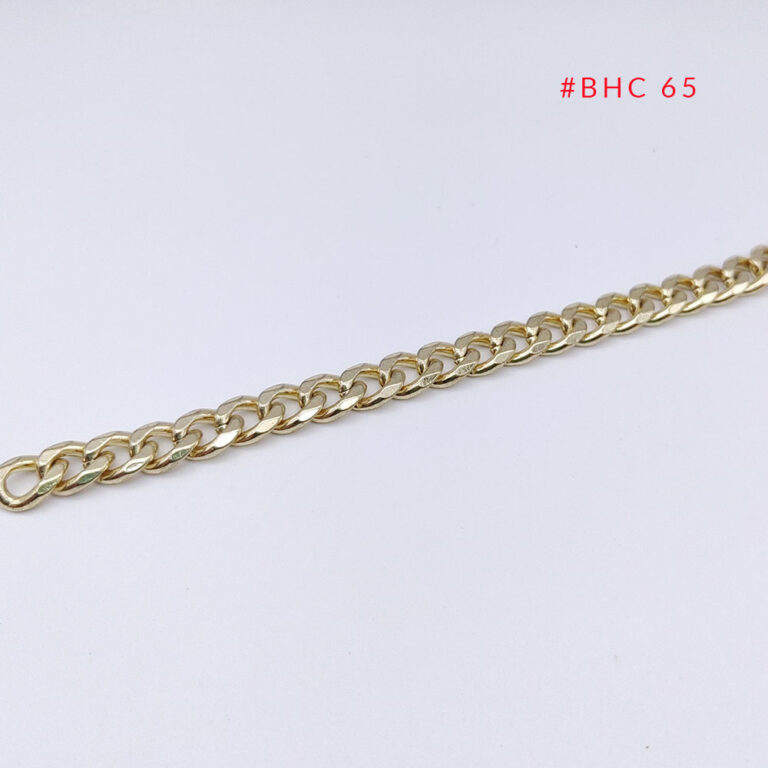
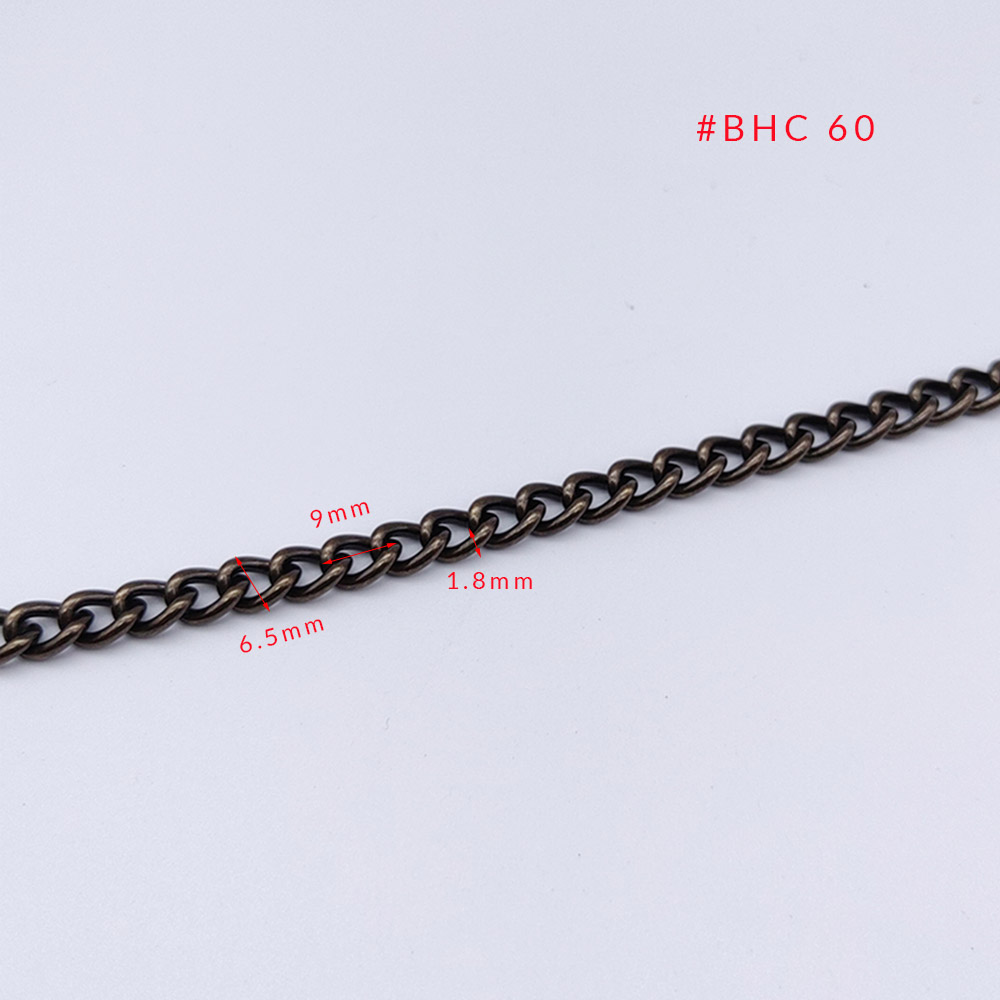
The #BHC 65 is a decorative metal chain for handbags featuring interlocking links with angled, faceted surfaces. The supplied image presents light gold as the main color and gunmetal as an alternative appearance.
Three dimensions are marked on the drawing: 11.7 mm, 9 mm, and 2.5 mm. These references help buyers begin evaluating link proportion and visual compatibility with a planned product. The exact measurement positions, material, full chain length, weight, end connections, and surface treatment still need confirmation before quotation or bulk production. For OEM projects, DG Buddy recommends reviewing a physical sample alongside the bag material and neighboring metal components instead of making a decision from a photograph alone.
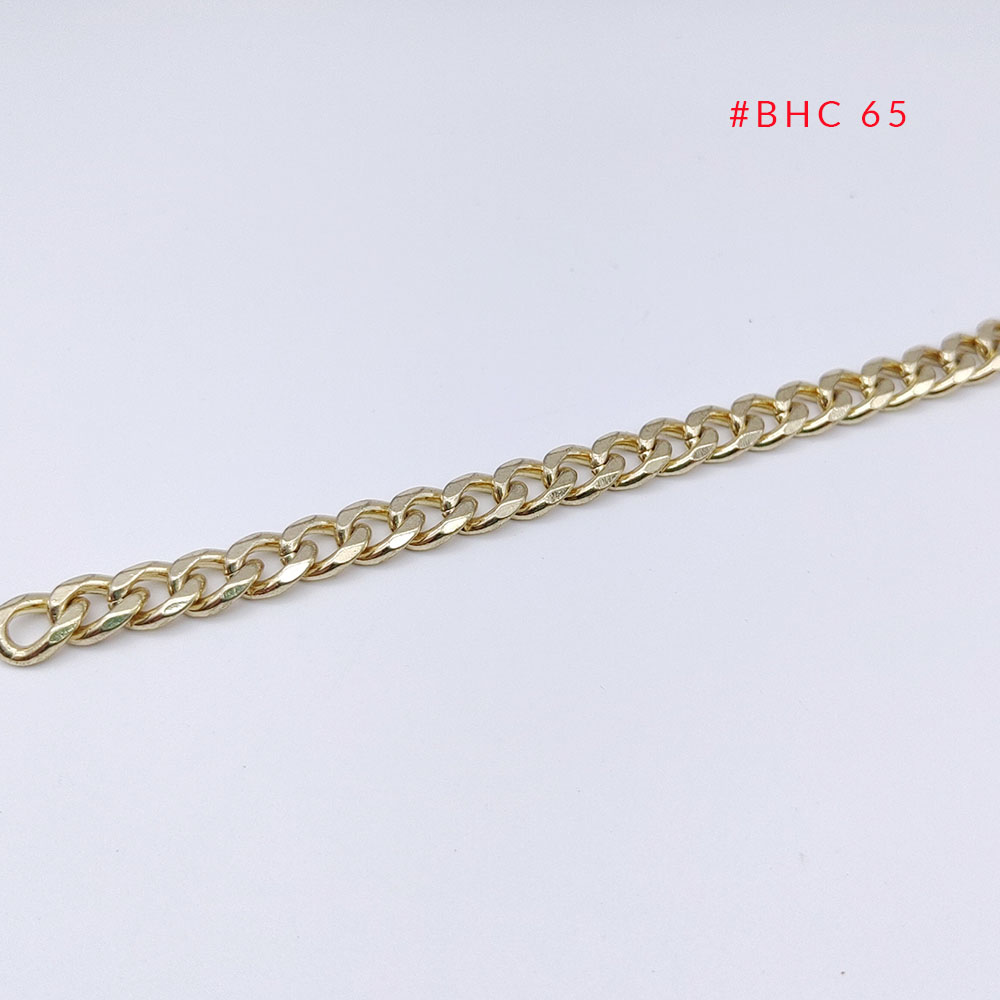
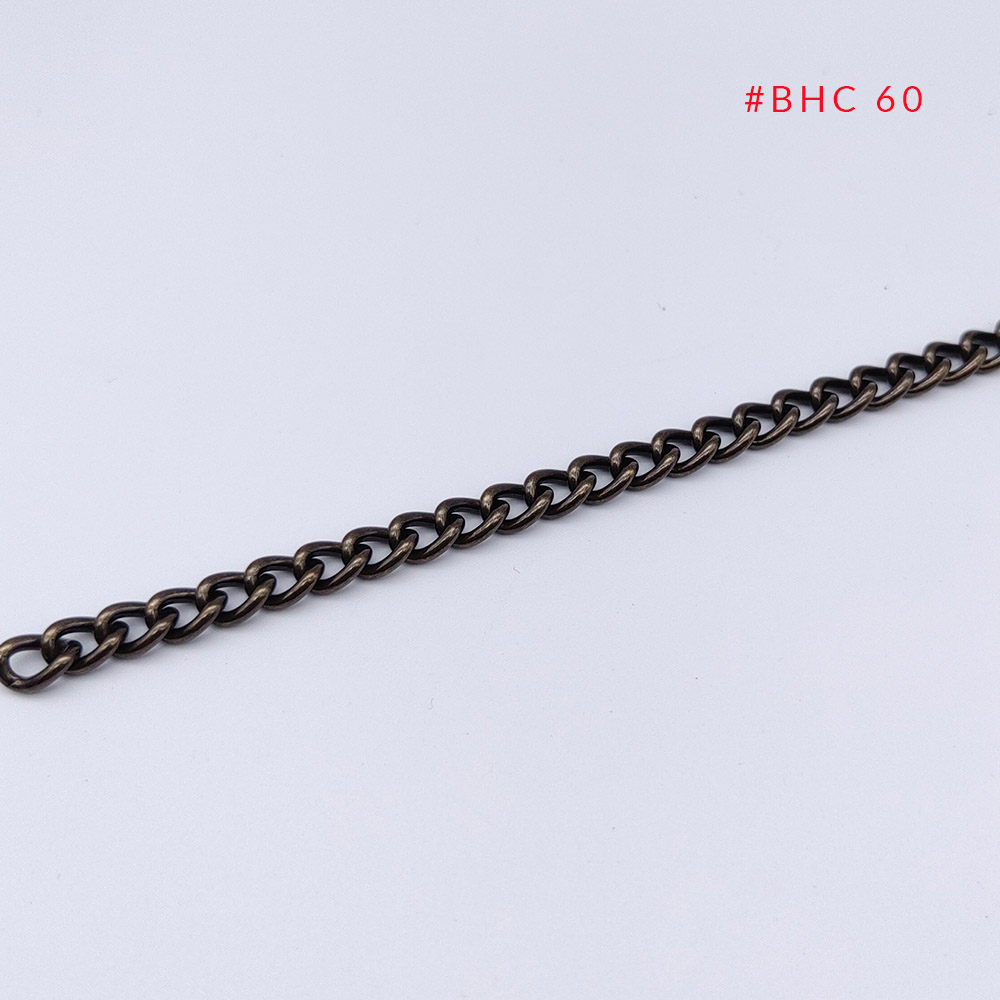
A chain’s appearance depends on link geometry as much as its color. Rounded links tend to create soft reflections, while angled faces can produce more distinct light and shadow. In the #BHC 65 image, the links have a defined, faceted profile. This visual detail may suit a chain link handbag design where the metal component remains visible and contributes to the overall styling.
Search phrases such as metal chain handbag, metal chain purse, and metal purse chain can describe related product concepts, but the buyer should still check the actual component rather than relying on a phrase alone. The pictured item is a linked metal component, not a finished handbag or purse. Its role in a finished product depends on the design, connection method, intended length, and surrounding hardware.
For a product team comparing a chain link purse concept with a smoother-link alternative, the practical question is whether the link profile supports the desired appearance without creating unwanted interference during movement. A sample should be flexed gently and inspected from several angles. Check for inconsistent facets, irregular gaps, visible burrs, and differences in the way adjacent links sit together. These observations are useful during sample approval, but they do not replace material verification or performance testing where required.
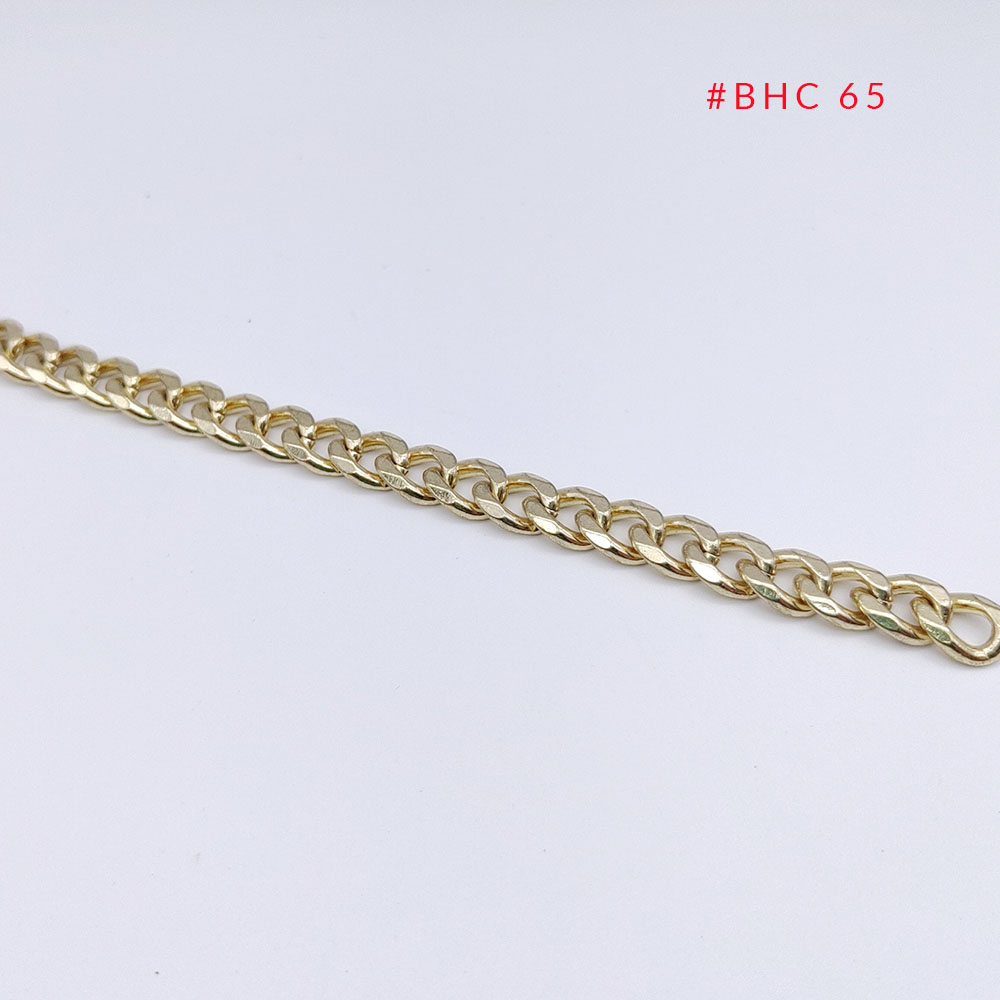
Consistency comes from repeated link geometry, similar surface preparation, and a controlled finish. A single attractive link is not enough to establish the quality of a full assembly. Inspect several consecutive links under the same light and compare their profile, edge definition, color, and spacing.
A chain may look correct when laid flat but behave differently when curved around a bag corner or connected to a fitting. Movement checks help reveal tight spots, rubbing, and links that do not settle evenly. Confirm the intended installation before approving the component.
A decorative chain is only one component. A complete assembly may require end fittings, rings, hooks, or other connectors. The supplied #BHC 65 image does not confirm whether any such parts are included, so the quotation should clearly state the supply scope.
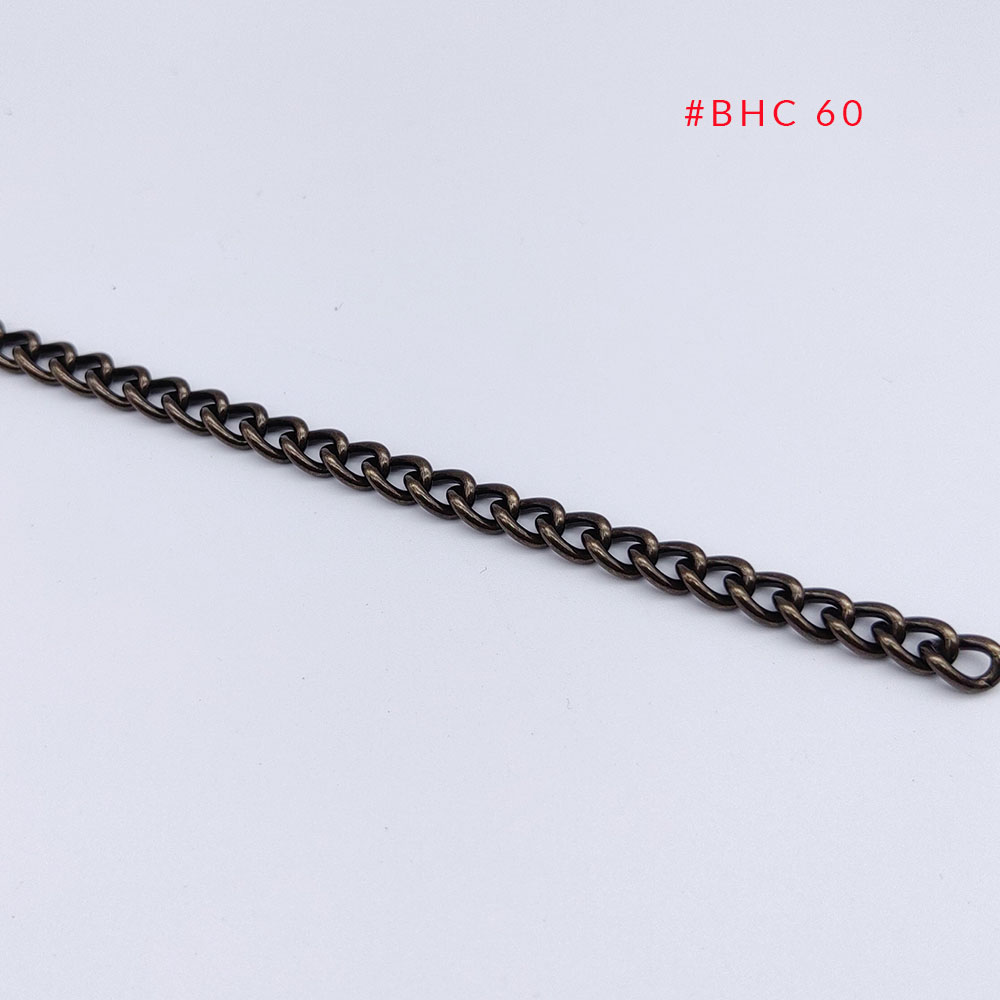
The image shows light gold as the main version. This warmer appearance can be assessed against matching logo hardware, zipper components, buckles, rings, and the color of the bag material. Gunmetal is shown as an alternative for collections that call for a darker metallic accent. The exact finish reference and production method have not been confirmed, so buyers should not assume that the color name alone defines a complete surface specification.
When evaluating a silver chain handbag look or comparing the visual direction of a silver chain for purse design, use the phrases as references for color preference rather than as confirmed options for this model. The provided image only establishes light gold and gunmetal as the displayed choices. If silver is required, ask the supplier to confirm whether it can be produced for this specific design.
Color approval should be completed using a physical sample whenever the metal component must match other trims. Monitor displays, studio lighting, and retail lighting can make the same finish appear different. Keep the approved reference sample and record the agreed color description so that the buyer, supplier, and inspection team are comparing against the same target.
| Evaluation point | Faceted link design | Smooth rounded link | Large decorative link |
|---|---|---|---|
| Visual character | Defined facets and sharper light transitions | Softer reflections and simpler contours | Stronger visual emphasis |
| Design role | Visible detail on a fashion accessory | Minimal or understated styling | Statement styling |
| Key inspection point | Facet consistency and edge appearance | Roundness and surface uniformity | Proportion and handling |
| Movement check | Confirm neighboring links articulate without unwanted interference | Check that links move evenly | Check how the assembly bends and rests |
| Color approval | Compare the facets under consistent lighting | Compare overall color and reflection | Check color consistency across larger visible areas |
| Dimensional review | Confirm link length, width, and the marked 2.5 mm feature | Confirm diameter and link spacing | Confirm overall proportions and interfaces |
| Connection planning | Confirm end fittings and mounting requirements | Confirm the required connection method | Check whether additional connectors are needed |
| Purchase decision | Approve drawing and sample together | Approve drawing and sample together | Approve drawing and sample together |
This table compares visual design characteristics, not verified performance. No link type should be described as stronger or more durable without relevant specifications or test results. For OEM sourcing, the best selection is the one that meets the approved appearance, dimensional fit, assembly, and project requirements.
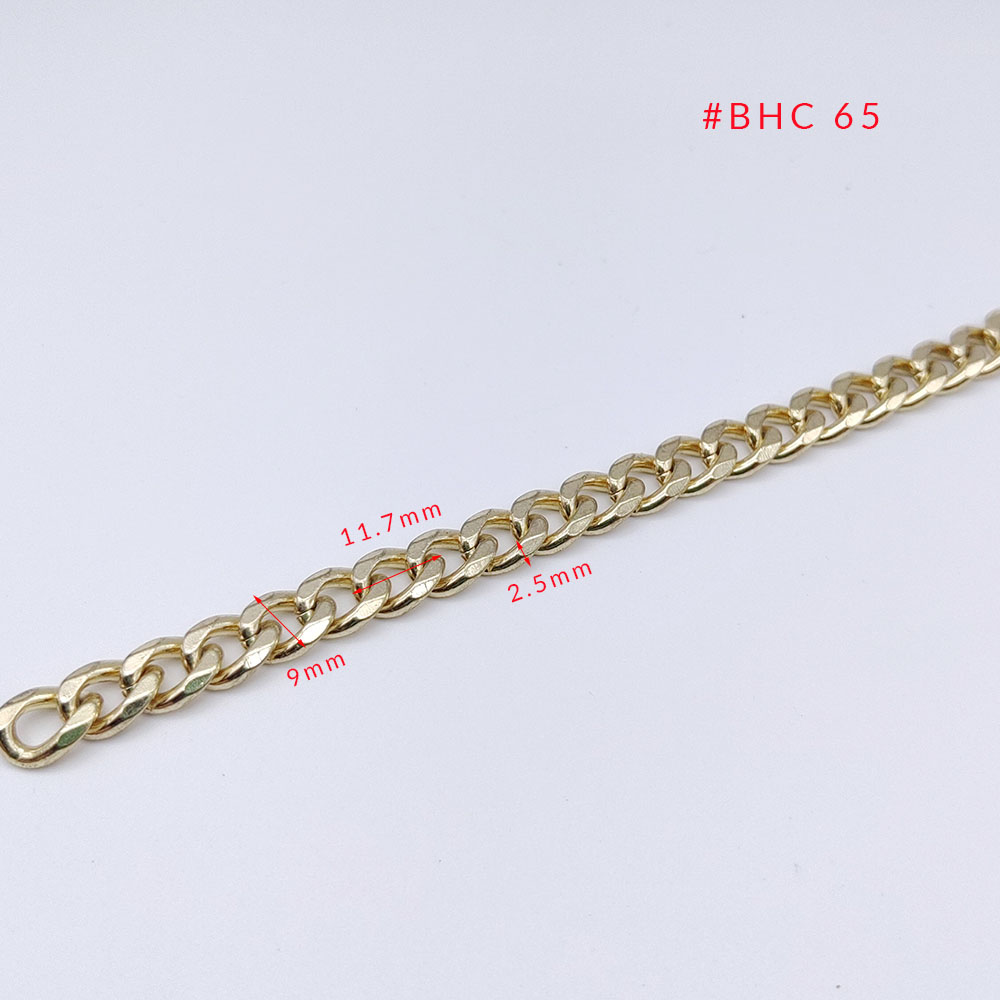
The drawing supplied for #BHC 65 marks 11.7 mm, 9 mm, and 2.5 mm. These numbers are useful starting references, but the drawing should identify exactly where each dimension begins and ends. A buyer should not assume that the 2.5 mm mark is the material thickness until the measurement location is confirmed.
For a chain for shoulder bag project, even a small dimensional difference can affect how the component sits against the bag body or joins to another fitting. Provide the supplier with a drawing that includes measurement datums and any critical interfaces. If the design is still being developed, a sample review can help determine whether the dimensions need adjustment before bulk production.
The #BHC 65 design may be evaluated for decorative applications where a visible metal link detail supports the overall styling. Buyers exploring a chain handle bag concept should check whether the link proportions and movement suit the planned design. A chain handle purse application may have different length, handling, and attachment requirements, so compatibility should not be assumed from appearance alone.
Related searches such as chain handle handbags, bag handle chain, and chain shoulder strap reflect different ways shoppers and designers describe metal components. For manufacturing procurement, the key is to translate the design idea into a technical specification: required length, connection arrangement, color reference, material, quantity, and inspection criteria. If the component is intended to carry a load, ask for the relevant performance information before selecting it for that role.
Some buyers also explore bag charm chain or chain bag charm concepts for decorative accessories. A charm application may call for a different overall length and end fitting from a component used in a shoulder assembly. Similarly, a purse charm chain can be a useful search description for a decorative concept, but the final part specification should define how it attaches and how it will be used.
For projects inspired by a metal chain bag aesthetic, the chain should be reviewed with the rest of the visible metal trims. A metal chains for bags sourcing brief is more useful when it states the required finish, dimensions, connection method, and intended application rather than only describing the style. DG Buddy can review these details as part of an OEM hardware discussion.
During prototype development, the first task is to align the product image, drawing, and physical sample. The buyer and supplier should agree on the link geometry and identify which measurements are critical. If a dimension is unclear, clarify it before using the value in a quotation or production instruction. This prevents a visual reference from being mistaken for a complete engineering drawing.
In a typical metal hardware workflow, manufacturing steps may include material preparation, forming or casting where appropriate, trimming, grinding, polishing, surface finishing, inspection, and packing. The exact route depends on the confirmed material and construction. The image does not establish which manufacturing process is used for #BHC 65, so the process should be confirmed rather than assumed.
Polishing and surface preparation matter because facets can make differences in reflection more visible. A finish sample should be checked for color consistency, surface marks, and irregular edges. If the project requires corrosion or wear testing, agree on the method and acceptance criteria in advance. Do not treat a general appearance check as proof that a particular test has been passed.
For a realistic development example, imagine a buyer matching a light gold chain to an existing logo plate. The initial sample may look close in isolation but differ under the same lighting when placed beside the logo plate. The practical response is to compare both components under agreed lighting, document the preferred sample, and confirm whether the finish reference can be aligned. This is a hypothetical workflow example, not a claim about a completed customer project.
This design is worth evaluating when the product brief calls for visible interlocking links and a faceted appearance. It may be a fit for a fashion accessory program that can approve the sample and confirm the attachment details. It may not be the right choice if the project requires a specific load rating, exact material grade, or confirmed corrosion performance that has not yet been established for this model.
Before requesting a quotation, prepare the model reference #BHC 65, the required color, the target overall length, the intended application, the order quantity, and any drawing with critical dimensions. If the buyer needs a metal chain for handbags in a specific shade, provide a physical reference or an approved color sample. If a design team is comparing metal chain straps for bags with other component options, use the same technical requirements for each supplier so the quotation comparison remains meaningful.
A vintage metal chain purse direction, for example, may prioritize a particular visual character, while a contemporary design may focus on clean facets and consistent reflections. These style terms can guide the discussion, but they do not replace material, dimension, finish, and assembly requirements. A metal chain sling bag application also needs its own review of intended use and attachment points before the component is approved.
Buyers considering decorative purse straps should clarify whether they are sourcing only the visible metal component or a complete ready-to-install assembly. DG Buddy can review the scope and identify what needs confirmation before sampling. The same approach applies when a brief mentions a chain link handbag or a metal chain purse: convert the design language into a drawing and a clear list of requirements.
DG Buddy supports OEM discussions for metal hardware used in handbags and fashion accessories. For #BHC 65, start by confirming whether the existing link design and dimensions suit the intended product. If changes are required, provide a drawing or marked-up image identifying the requested features. Customization, material selection, finishing process, and connection details must be reviewed for the specific project before they are treated as confirmed.
For chain hardware, the standard MOQ is 500 meters (negotiable based on order details). Sample and production arrangements should be confirmed against the final specification. Free stock samples available. Custom samples require a sampling fee. Custom sample fees are fully deductible from bulk orders. Courier charges are borne by the customer.
DG Buddy describes its manufacturing experience as nearly 20 years. The team can review drawing requirements, finish references, sampling needs, packaging expectations, and inspection points as part of a sourcing discussion. The standard packaging is Pearl Foam + OPP Bag + Export Carton or Customized Packaging. Sample time for custom development is 5–7 days; production time is 10–15 days; delivery time is 10–15 days. Confirm the applicable schedule and logistics details for the order before making a delivery commitment.
The image presents light gold as the main color and gunmetal as an alternative appearance. The exact finish specification and production process are not established by the image. If another color is required, ask DG Buddy to confirm availability for this design and approve a physical sample before bulk production.
The image marks 11.7 mm, 9 mm, and 2.5 mm. The precise measurement location for each value should be confirmed against the controlled drawing. The image does not establish the full chain length, tolerances, weight, or connector dimensions. These details should be clarified before final quotation and production approval.
The supplied image does not identify the material. Buyers should ask DG Buddy to confirm the material and relevant specification for this model rather than assuming an alloy based on color or appearance. Material requirements should be aligned with the intended application and any project-specific performance criteria.
The image does not confirm the end connection structure or whether additional fittings are included. State whether the order requires the chain alone or a complete assembly. If connectors are needed, provide the attachment dimensions and, where possible, a drawing or sample of the mating component.
The standard MOQ for chain hardware is 500 meters (negotiable based on order details). The final quotation should confirm the purchasing unit, requested configuration, finish, and supply scope. If the project includes connectors or additional assembly work, ask the team to confirm how those requirements affect the order.
Free stock samples available. Custom samples require a sampling fee. Custom sample fees are fully deductible from bulk orders. Courier charges are borne by the customer. Confirm whether a stock sample matches the required color and configuration or whether custom sampling is needed to evaluate the intended design.
Custom sample time is 5–7 days. Production time is 10–15 days, and delivery time is 10–15 days. These are standard planning times; the actual schedule should be confirmed after the product specification, order quantity, sample approval, and delivery destination are reviewed.
Confirm the material, full length, measurement positions, tolerances, finish reference, end connections, packaging, order quantity, and inspection requirements. If the project needs particular performance tests or compliance documentation, communicate those requirements before the quotation is finalized. Do not assume a test or certification has been completed unless valid supporting documentation is provided.
If you are sourcing a decorative metal component for an upcoming collection, send DG Buddy the model reference #BHC 65, your intended application, target length, preferred color, and estimated order quantity. Include the drawing if the 11.7 mm, 9 mm, and 2.5 mm references are critical to fit. The team can review the information, clarify the remaining specifications, and discuss the next step for sample evaluation and OEM sourcing.
Contact DG Buddy about your hardware project or request the hardware catalog to review related components.