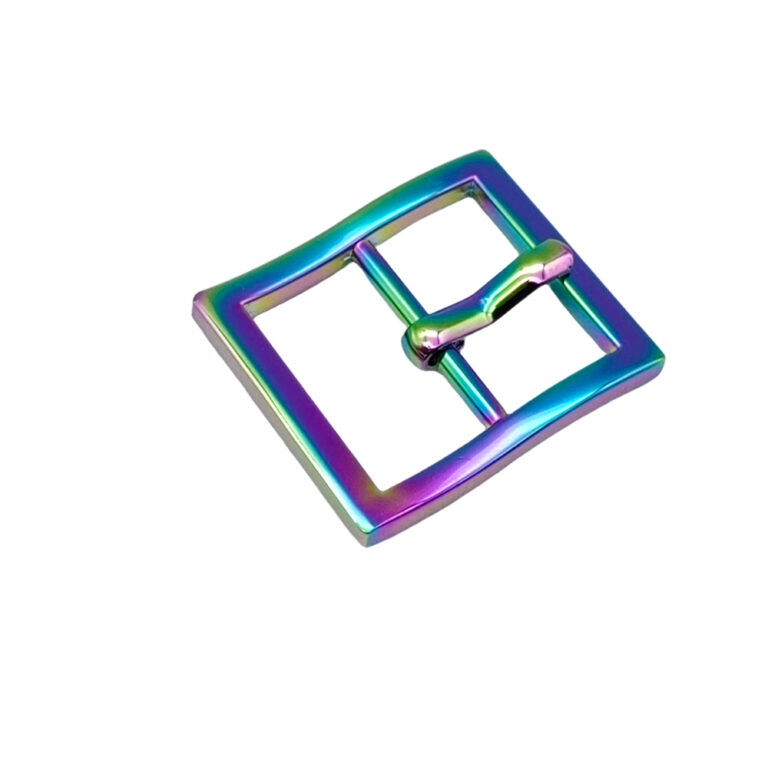
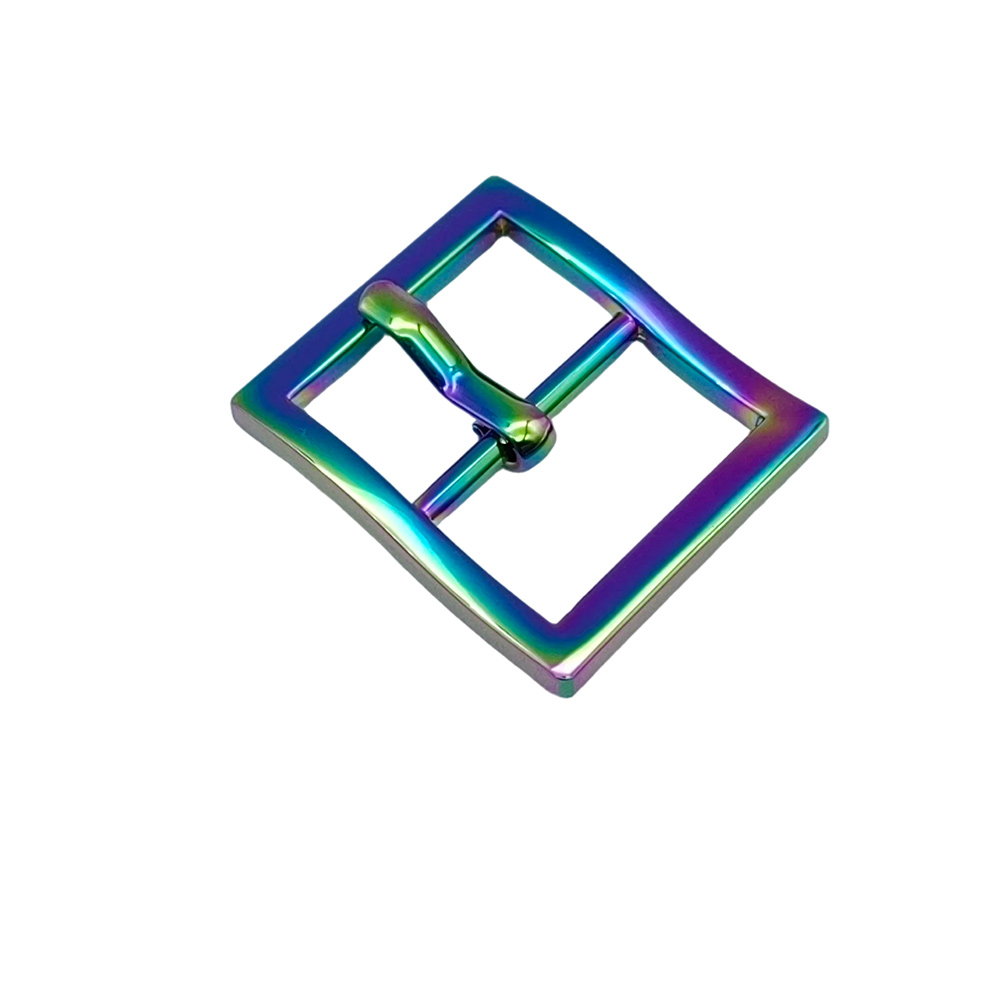
What is a metal belt buckle? It is a functional piece of strap hardware that joins a rectangular frame, a Center Bar and a movable tongue to guide, adjust and secure a strap. This rainbow metal belt buckle is designed for buyers who need a compact visual finish with a practical pin mechanism. The belt pin buckle format is suitable for belt-style accessories, narrow fashion straps and selected OEM hardware projects. Its approximate dimensions are 30.3 × 26.6 mm, with a thickness of about 2.8 mm and an image-marked reference dimension of 20 mm. The material, production route and final application should be confirmed before quotation because appearance alone cannot prove alloy grade, the forming route or load performance.
For sourcing teams, the key decision is not simply whether the buckle looks attractive. The frame opening, Center Bar position, tongue clearance, surface consistency and strap compatibility must work together. DG Buddy can review drawings, samples, colors, logos and packaging requirements before bulk production.
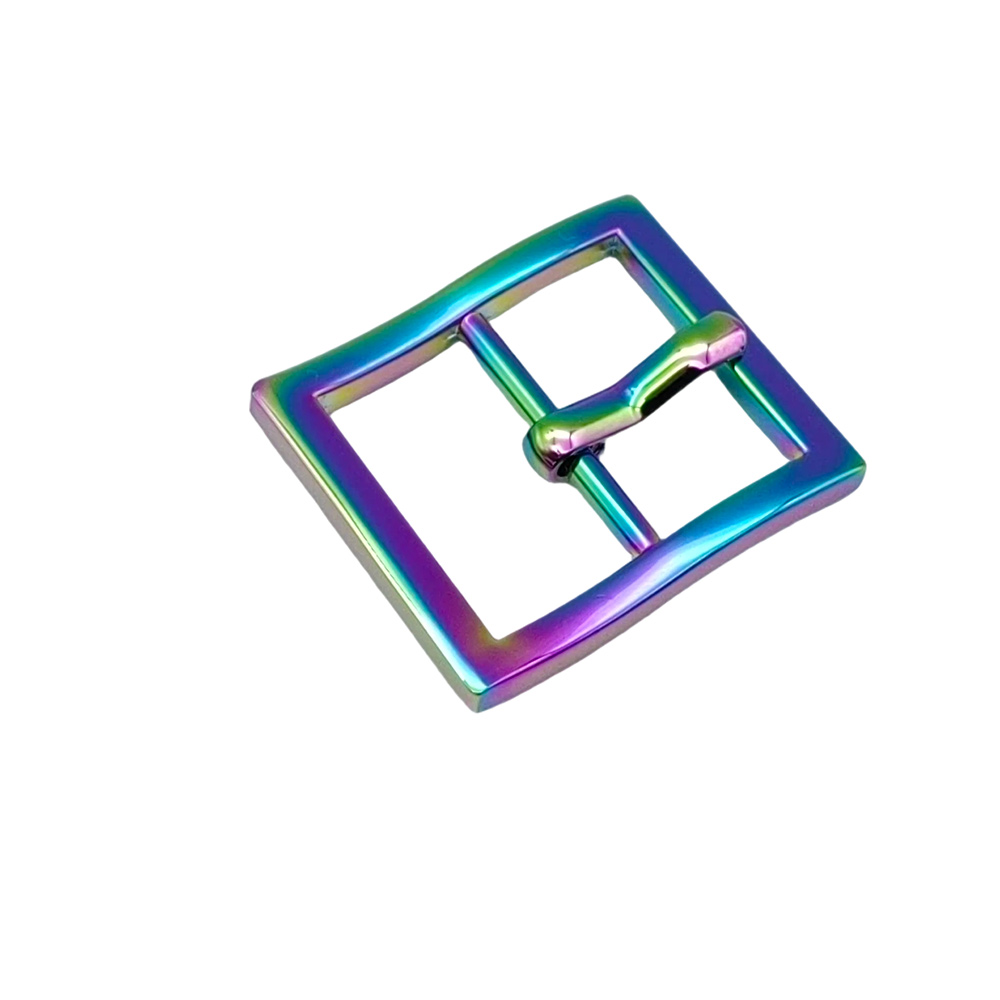
A belt pin buckle works through controlled strap movement. The strap passes around the frame and is positioned against the Center Bar. The tongue then enters the selected hole or adjustment position in the strap. This arrangement lets a buyer create a repeatable fastening point without adding a separate locking component.
For a metal buckle for belt applications, the external length is only one part of the engineering decision. The inner opening must allow the strap to pass without excessive friction. The frame must also leave enough room for folding, stitching, edge paint or reinforcement used in the finished product. A strap that fits the nominal outside dimension may still fail during assembly if its folded section is too thick.
Metal tongue buckles need the same practical review as other pin mechanisms. The visible tongue is another practical consideration. It should pivot smoothly, return to a stable position and remain aligned with the strap holes. During prototype development, buyers should test several strap materials rather than relying on one thin sample. Leather, coated webbing and woven tape may behave differently even when their stated width is similar.
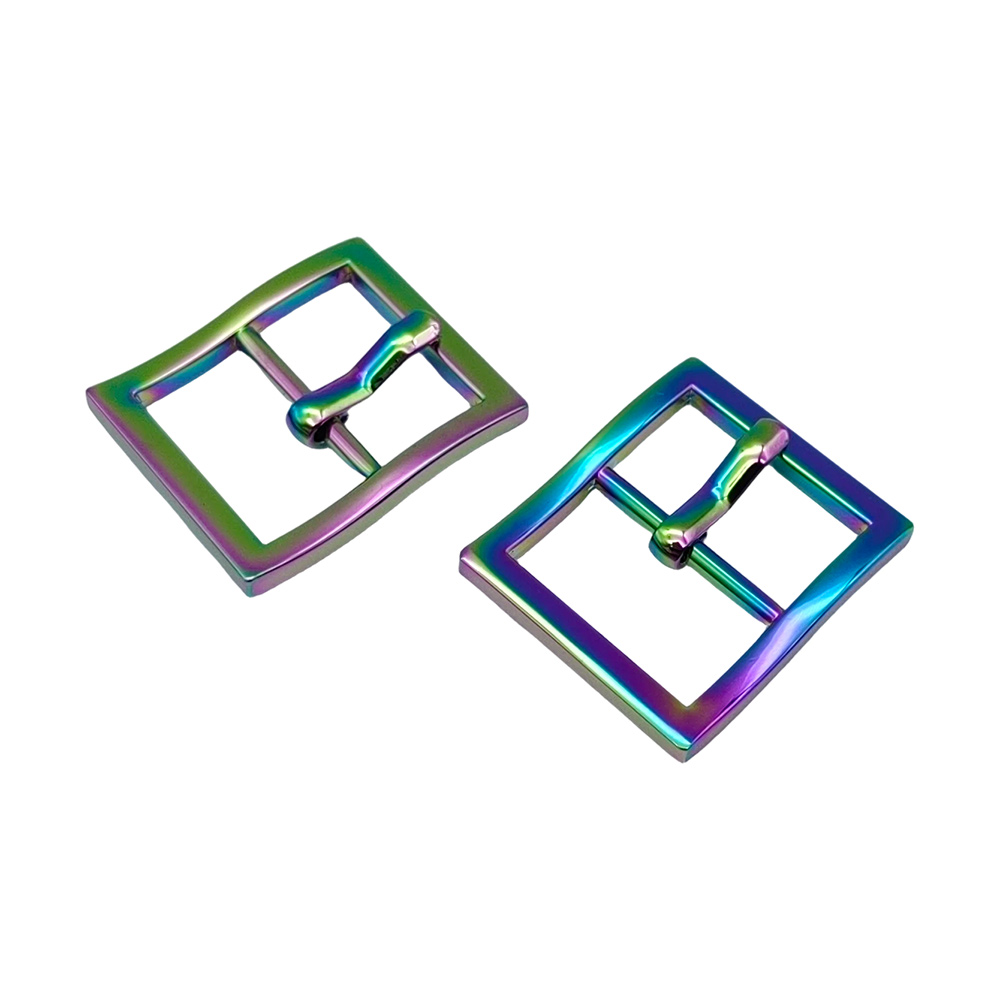
An adjustable metal buckle changes the effective strap length through a tongue-and-hole system. That distinguishes it from a plain rectangular ring, which may guide a strap but cannot provide the same indexed adjustment. It also differs from a decorative connector that is attached only for appearance.
The product shown here has a functional frame and a center-mounted tongue. That makes it relevant to pin buckles used on fashion accessories and strap assemblies. The frame can also act as a visual design element, especially when the color changes from blue to purple, green or other tones under different lighting angles.
Buyers should define the use before approving the production drawing. A light fashion strap, a handbag closure and a heavy belt can create very different requirements for tongue clearance, frame thickness, edge treatment and strength testing. The same exterior shape should not automatically be treated as suitable for every application.
When buyers compare types of metal buckles, the most useful starting point is the fastening mechanism. A pin buckle uses a tongue that enters a hole or slot. A roller buckle normally uses a rotating roller to reduce friction as the strap is pulled through. Both can be effective, but they create different assembly and appearance considerations.
| Buying Factor | Pin Buckle | Roller Buckle |
|---|---|---|
| Adjustment method | Tongue enters a selected strap hole | Strap passes around a rotating roller |
| Visual character | Classic, structured and easy to customize | Often more mechanical and movement-oriented |
| Strap requirement | Usually needs prepared holes or slots | May work with a continuous strap end |
| Assembly focus | Tongue alignment and hole position | Roller movement and shaft clearance |
| Common buyer concern | Frame tolerance and tongue stability | Roller friction and rotation consistency |
| Best evaluation method | Test fastening cycles with the final strap | Test pull-through force and roller rotation |
| Customization focus | Frame shape, tongue, finish and logo | Frame, roller, shaft and finish |
| Recommended application review | Fashion belts and adjustable strap products | Products requiring smoother continuous strap movement |
The question “pin buckle vs roller buckle” should therefore be answered through the finished product, not by appearance alone. A design team that wants visible adjustment holes and a classic hardware profile may prefer a pin structure. A team that wants a strap to slide continuously around a moving barrel may consider a roller structure.
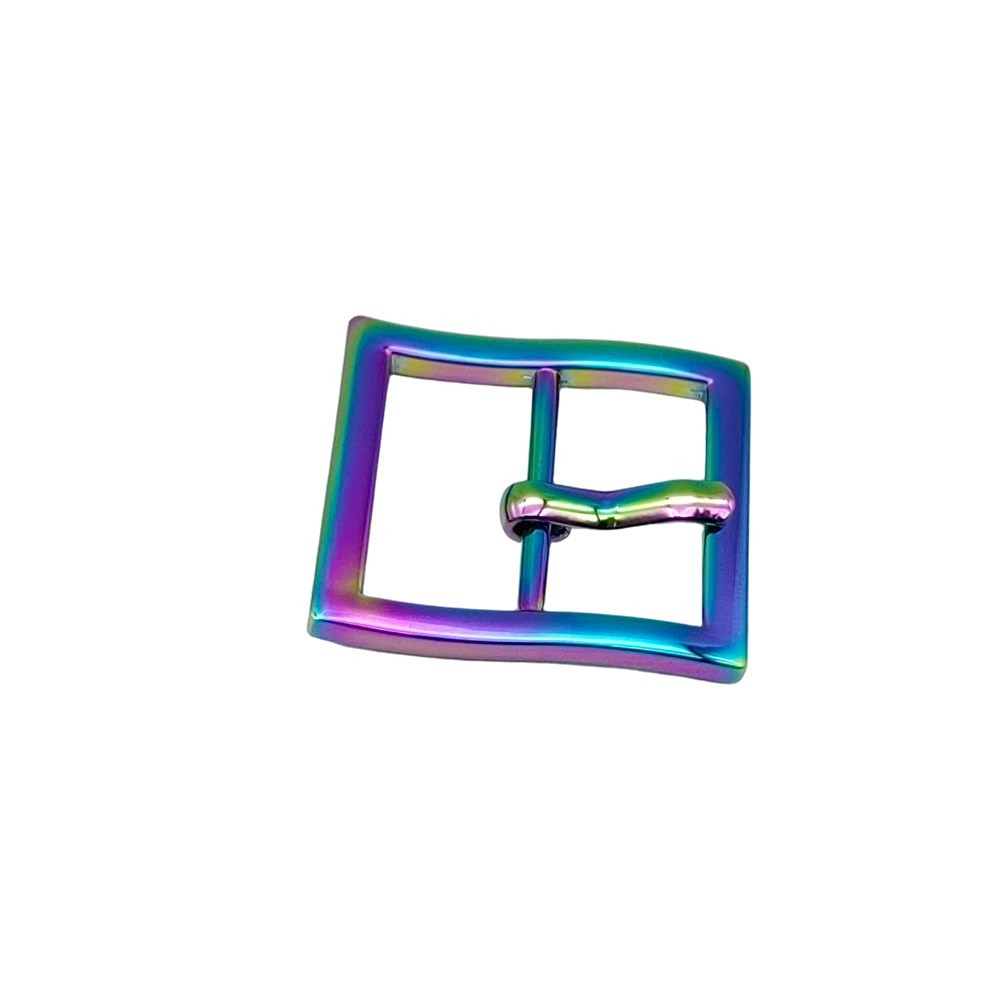
One thing buyers often ask is how to select a buckle from a drawing. Start with the actual strap path, not the outside length. Measure the strap width, folded thickness, reinforcement, edge finish and the space needed for stitching. Then check whether the buckle opening supports the assembly method.
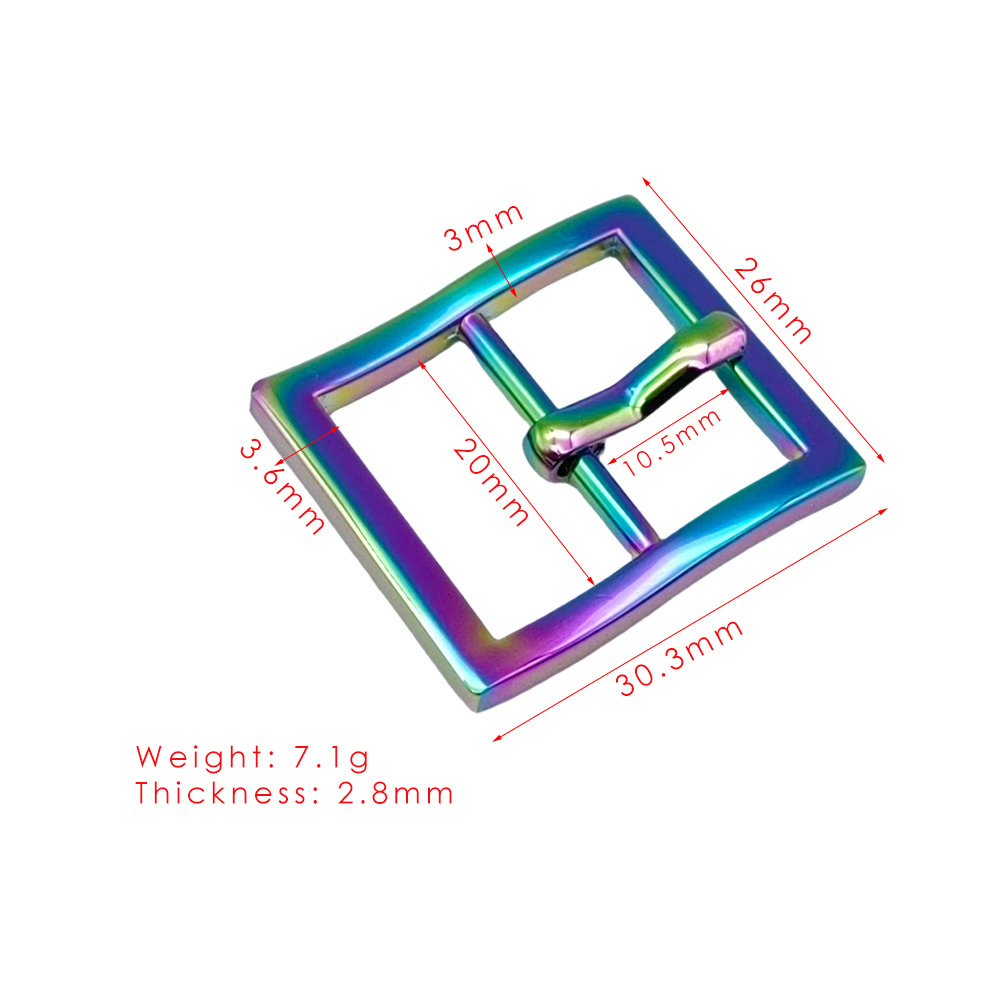
The image provides several reference measurements: approximately 30.3 mm overall length, 26.6 mm overall width, 20 mm at an internal reference location, 10.5 mm at the tongue reference area, 3 mm at one frame section, 3.6 mm at another reference area and 2.8 mm overall thickness. These values help with early design review, but they should be verified against a controlled technical drawing before a production order.
The Center Bar matters because it controls the strap route. If the bar is too close to the frame, a folded strap may be difficult to insert. If it is too loose, the strap can move visibly during use. Tongue clearance must be checked at the same time, since the tongue and bar operate as one adjustment system.
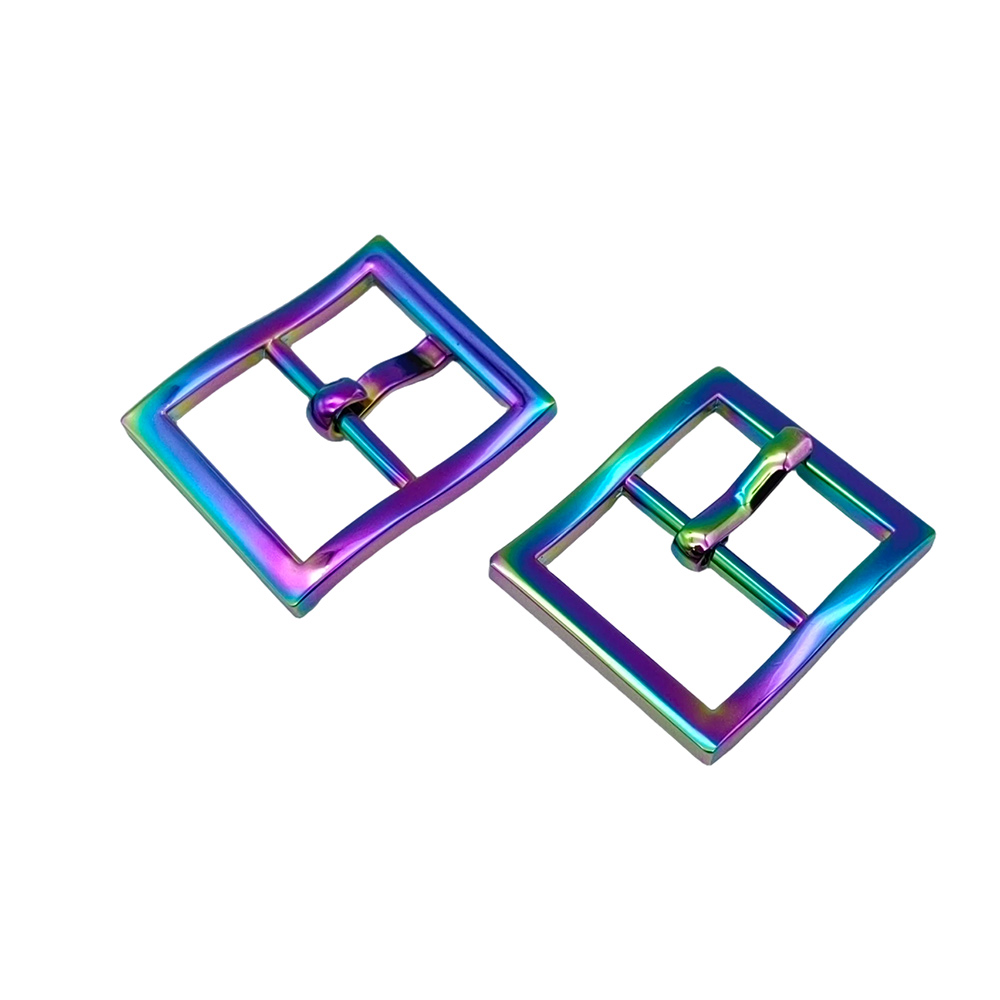
The rainbow appearance is a visual finish rather than proof of a specific material or process. Buyers should request a finish sample and define an acceptable color range before approving production. On curved surfaces, the color transition may vary with polishing direction, rack position, lighting and the final surface treatment.
If the approved specification uses a plated finish, the supplier should explain the preparation stages, including deburring, grinding, cleaning and polishing. If another coating route is used, it should be named accurately in the drawing and purchase order. The word “rainbow” should describe the requested appearance, while the process should be confirmed separately.
During inspection, compare samples under the same light source. Check the frame corners, tongue edges, recessed areas and contact points. A finish that looks consistent on a flat section may show a different transition near a curved corner. Buyers should also discuss rubbing, humidity, sweat exposure and packaging protection if the product will be handled frequently.
This type of buckle may be suitable for fashion hardware, but the exact alloy must be confirmed by the supplier. A zinc-based alloy, brass or stainless steel may be selected for different weight, strength or corrosion requirements. The right choice depends on the application, wall thickness, appearance, machining needs and target cost.
A pressure-forming process may be appropriate for a shaped frame with integrated details, but it should not be claimed until the factory confirms the process. A typical development route may include raw material preparation, forming, trimming, grinding, polishing, assembly, finish application, inspection and packing. Each stage has a purpose: trimming removes excess material, polishing improves the base surface, and assembly verifies that the tongue and frame work together.
In our factory, the practical control point is the approved sample. A buyer should retain a signed color and dimension sample so production, plating and QC teams use the same reference. This is more reliable than describing the finish only as “colorful” in an email.
A corrosion test should not be treated as a universal guarantee. The test method, duration, substrate, finish system and acceptance criteria must be agreed in writing. For fashion hardware, visual inspection and rubbing checks may be as important as a corrosion test because the buyer’s return risk often begins with color inconsistency or scratches.
Buy metal buckles only after the application, strap path and inspection points are clear. A fashion brand may prioritize color transitions and compact proportions. A technical buyer may prioritize tolerance, tongue movement and repeatability. An OEM project manager may need custom colors, private label packaging and a repeatable production record.
For early sourcing, provide the strap width, folded thickness, hole spacing, target finish, estimated quantity, logo requirement and delivery plan. If the design is still changing, ask for a development sample first. If the shape is confirmed, DG Buddy can review whether a standard frame or a new mold is more practical.
The phrase custom rainbow buckle manufacturer describes an OEM capability, not a finished specification. A responsible supplier should first confirm material, process, finish, model size and application before giving a final quotation.
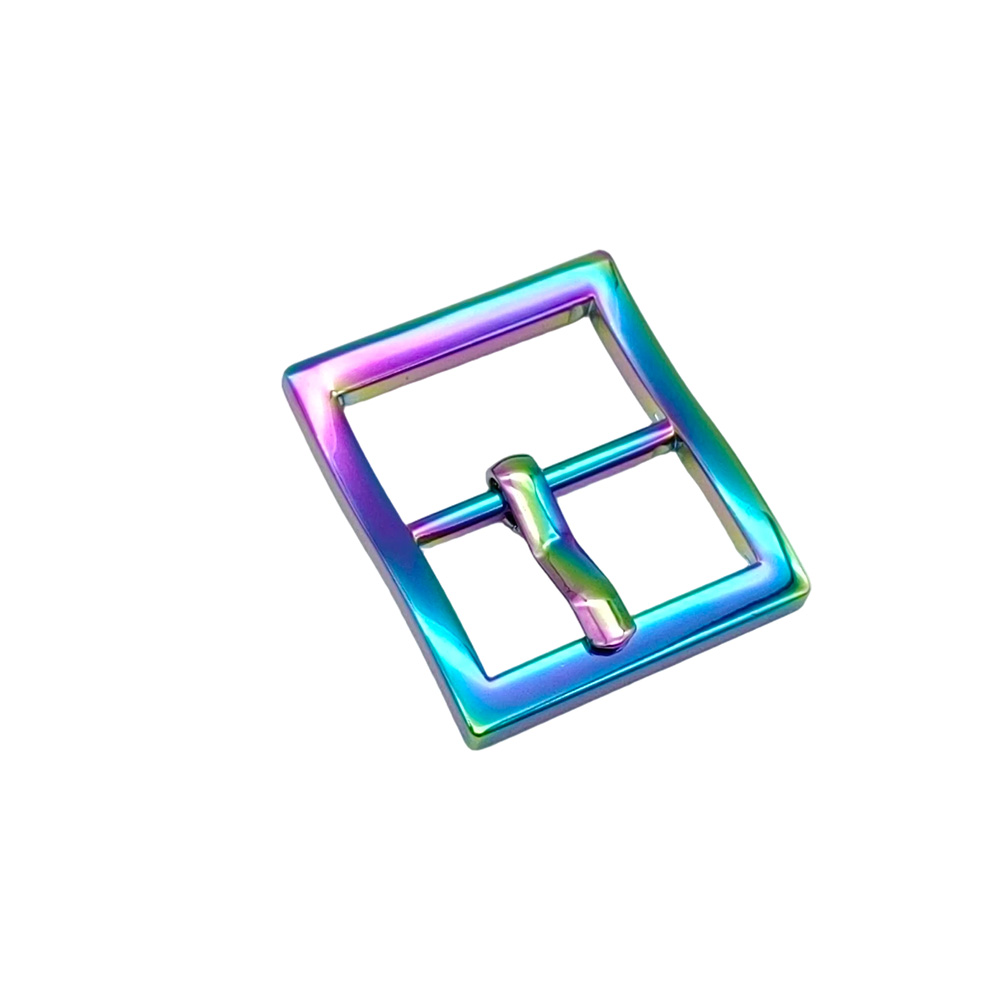
OEM development can include a Custom Mold for a revised frame, tongue or Center Bar. Depending on the surface and design, buyers may also evaluate Laser Logo, Emboss Logo, Deboss Logo, Oil Filling, plated finish, private label marking and customized color matching. Logo placement should be checked against the strap path so it remains visible after assembly.
Packaging can be planned around Pearl Foam + OPP Bag + Export Carton or Customized Packaging. A private label program may additionally require a barcode, Hang Tag or Retail Box. These details should be finalized before the production schedule because packaging dimensions and labeling often affect packing approval.
Free stock samples available. Custom samples require a sampling fee. Custom sample fees are fully deductible from bulk orders. Courier charges are borne by the customer.
This buckle can be evaluated for belt-style accessories, narrow fashion straps, selected purse components and DIY hardware projects after the application is confirmed. For each project, the buyer should test the actual strap, hole pattern, folding method and contact surfaces.
A typical development story begins when a designer wants a compact metal accent but finds that a standard buckle makes the strap look too heavy. The engineering team can compare the frame footprint, reduce unnecessary visual mass and test a rainbow finish on the revised sample. If the tongue catches during assembly, the solution may involve clearance or edge adjustment rather than simply changing the color.
Keep finished buckles dry and separated during storage. Humidity, sweat, acids from skin contact, abrasive dust and rough transportation can affect a decorative surface. Use protective inner packaging to prevent frame-to-frame rubbing. Do not clean the finish with abrasive pads or strong chemicals unless the surface supplier has approved the method.
For export shipments, review carton compression, inner separation and handling marks. If the hardware will be assembled shortly after arrival, store it in a clean, low-humidity area and inspect a sample from each carton before production use.
DG Buddy combines nearly 20 years of manufacturing experience with OEM development support for metal accessories. The practical value is not a general quality claim; it is the ability to discuss drawings, samples, finishing, assembly and packing as one sourcing process.
The standard MOQ for individual buckle hardware is 1000 pcs, negotiable based on order details. The final quantity may depend on the selected finish, packaging, tooling and customization scope.
Sample Time is 5–7 Days for a custom or development sample. Production Time is 10–15 Days, and Delivery Time is 10–15 Days. The schedule should be reconfirmed with the approved drawing and finish sample.
OEM/ODM customization can be discussed for size, color, material, logo, packaging and selected structural details. A Custom Mold may be needed when the frame or tongue differs from the standard design.
Free stock samples available; custom sample fees fully deductible from bulk orders. Courier charges are borne by the customer. Custom samples require a sampling fee.
We maintain quality certification documentation and are happy to provide the current valid certificates upon request during your sourcing evaluation.
Approve a physical color sample and compare production pieces under the same lighting. Check corners, tongue edges, recessed areas and rubbing points. If corrosion testing is required, define the method and acceptance criteria before production.
The structure may be evaluated for selected strap and purse projects, but the final fit should be confirmed with the actual strap width, folded thickness, hole spacing and assembly method. A sample review is recommended before bulk production.
Send the target strap width, finished strap thickness, estimated order quantity, desired rainbow appearance, logo requirements and packaging plan. DG Buddy can then review the application, confirm the specification, recommend a sample route and prepare an OEM quotation. This process helps buyers choose the right metal belt buckle before committing to tooling or bulk production.