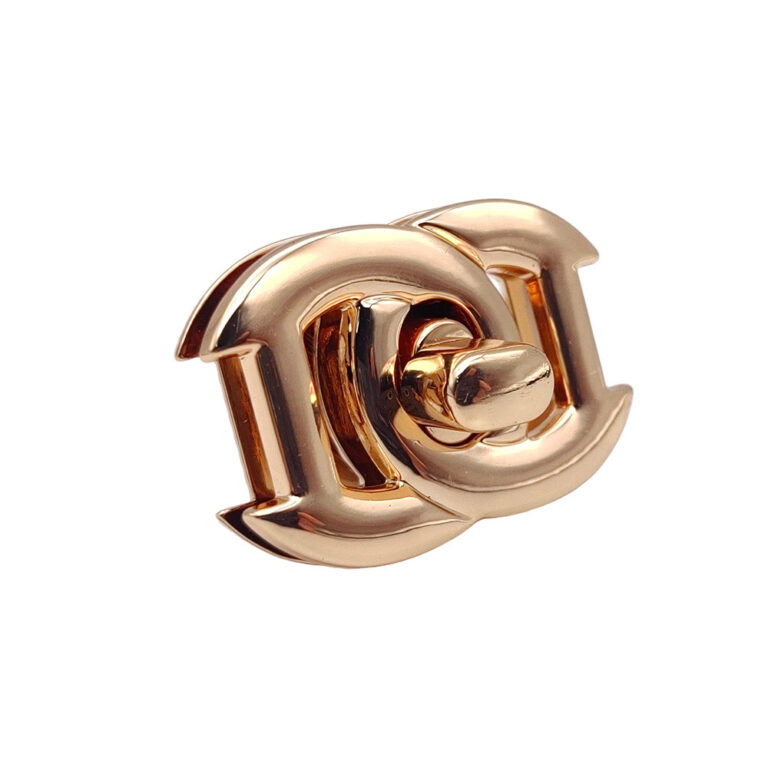
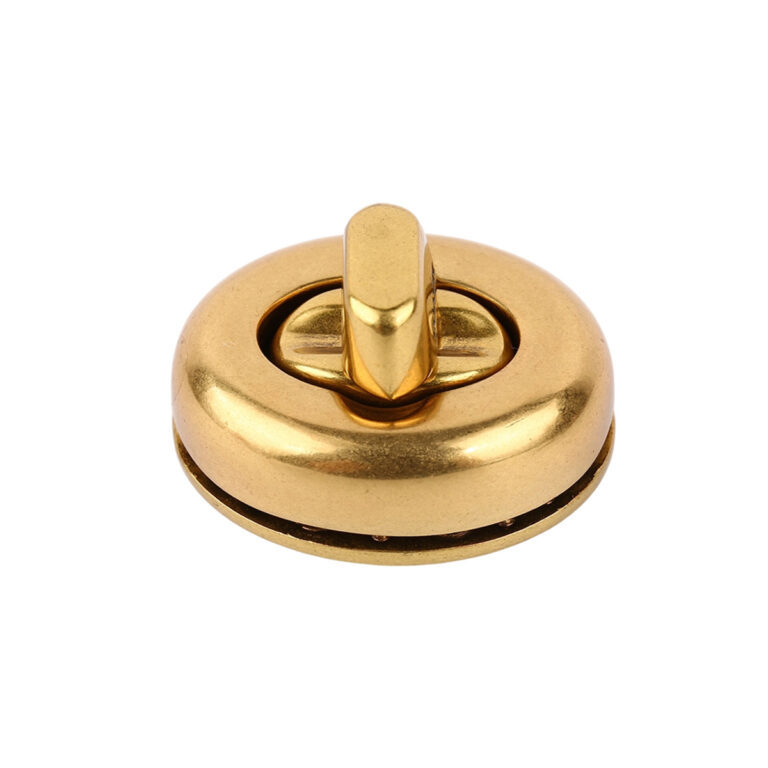
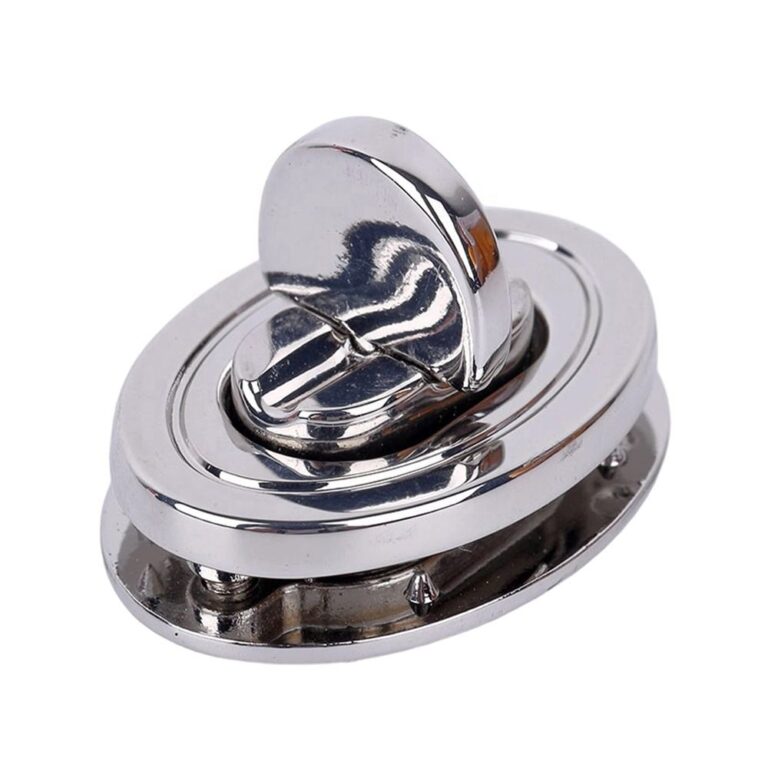
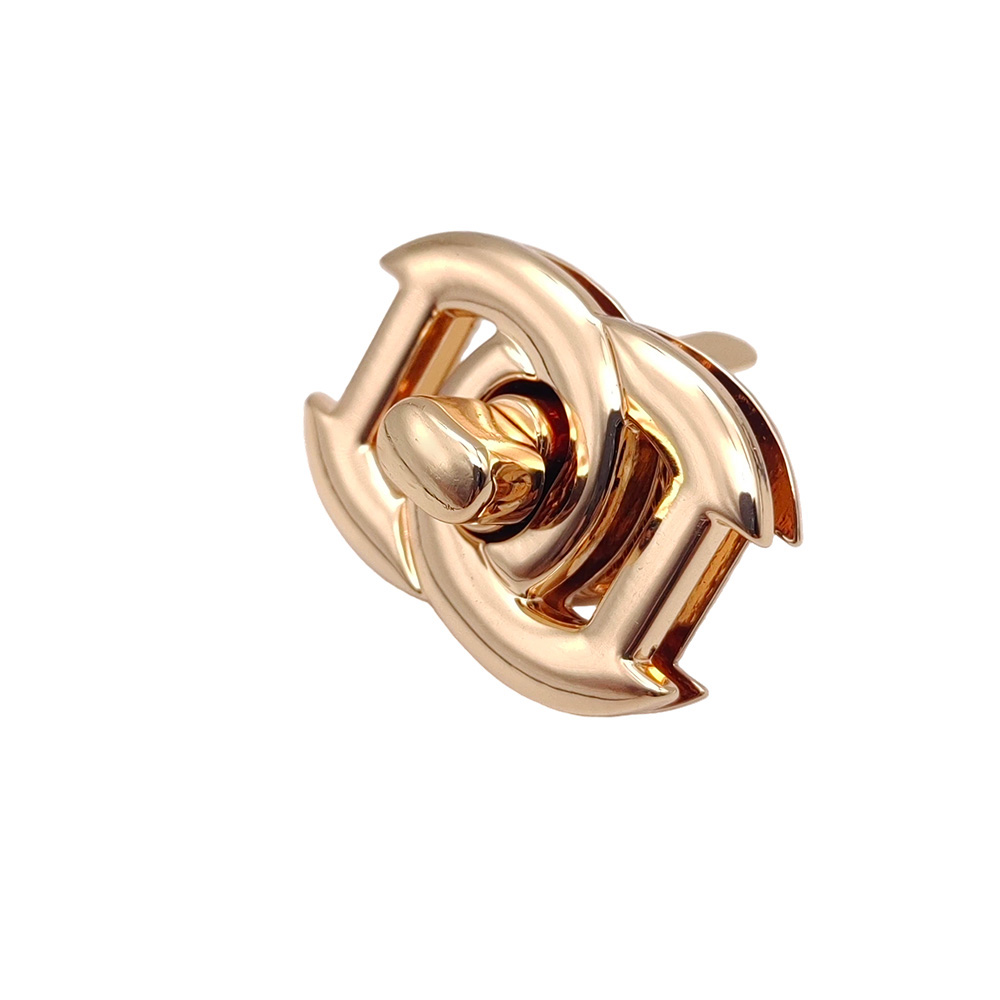
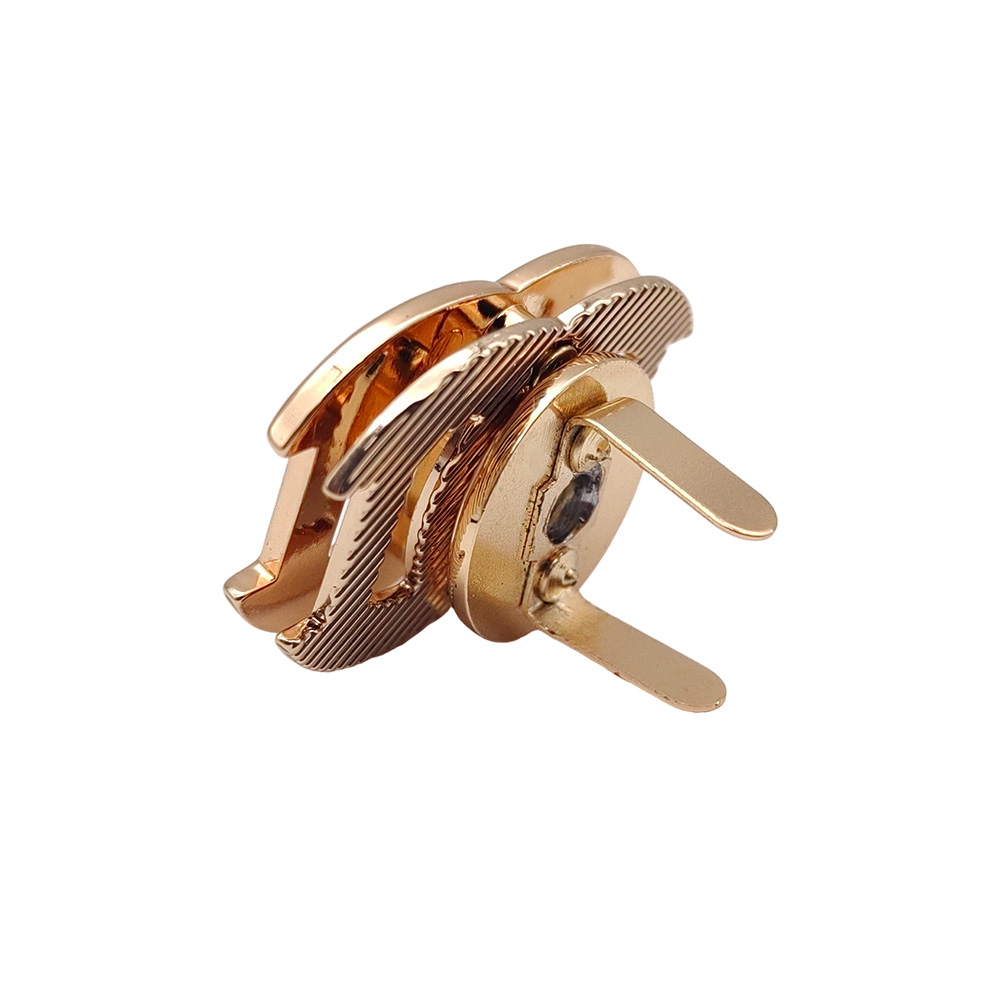
What is purse turn lock hardware? It is a two-piece closure set: a decorative frame plate that is fixed to the bag body, and a rotating tab post that is fixed to the flap. A quarter turn locks the flap, and a quarter turn back opens it. The DG-TL038 set pairs an interlocking twin-loop frame, 37.5 mm long, with a zinc alloy turn tab, shown here in light gold. It uses two-prong fixing through leather, weighs 27 g as labeled on the drawing, and suits flap-style crossbody, shoulder and satchel designs. MOQ is 1000 pcs (negotiable based on order details), and free stock samples are available.
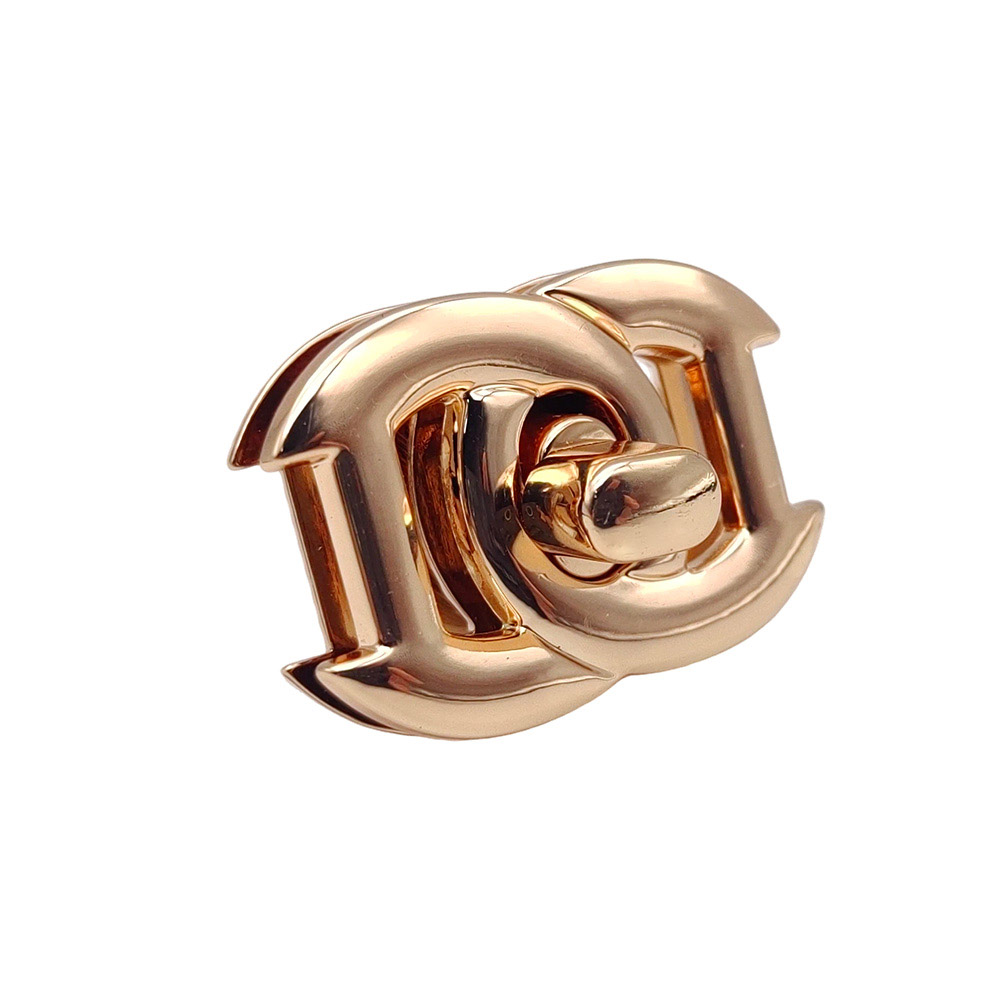
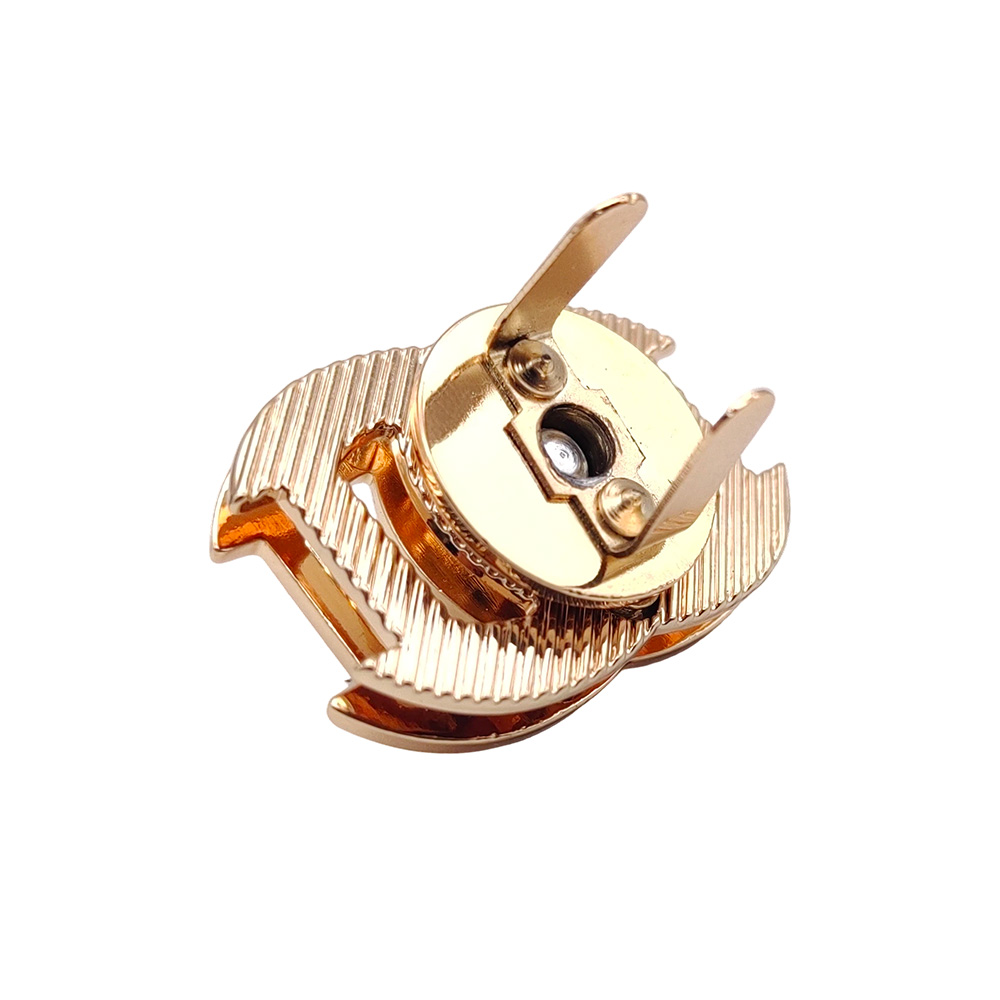
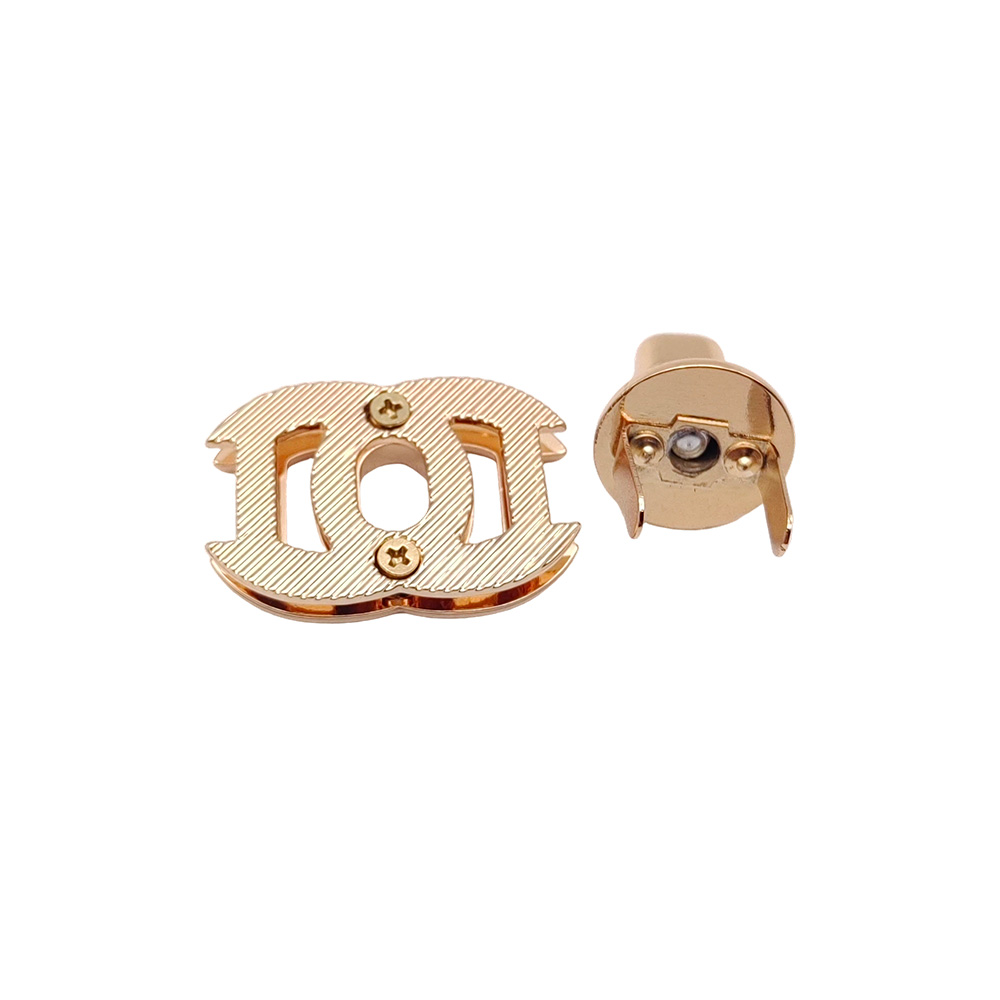
Buyers often assume a turn lock is one part. It is two. The frame plate, the interlocking twin-loop piece in the drawing, is fixed to the bag body. The turn tab post, with its round 20.3 mm base and 10.3 mm barrel, goes through the flap. When the flap closes, the oval tab drops into the frame opening, and a quarter turn locks it behind the plate. That is why some sourcing sites describe the same part as a bag twist lock: the hand movement is a twist, while the hardware name is a turn lock. On any purse turn lock hardware project, the tab-to-frame fit is the first thing we check on a sample.
One thing buyers often ask is whether the tab will loosen over time. In our experience, loosening comes from three places: a worn tab shoulder, a frame opening cast slightly oversize, or a flap too thin to hold the prongs. The first two are tooling and QC questions. The third is bag construction, so we ask for flap thickness with the drawing. Twist lock purse hardware lives or dies on that alignment.
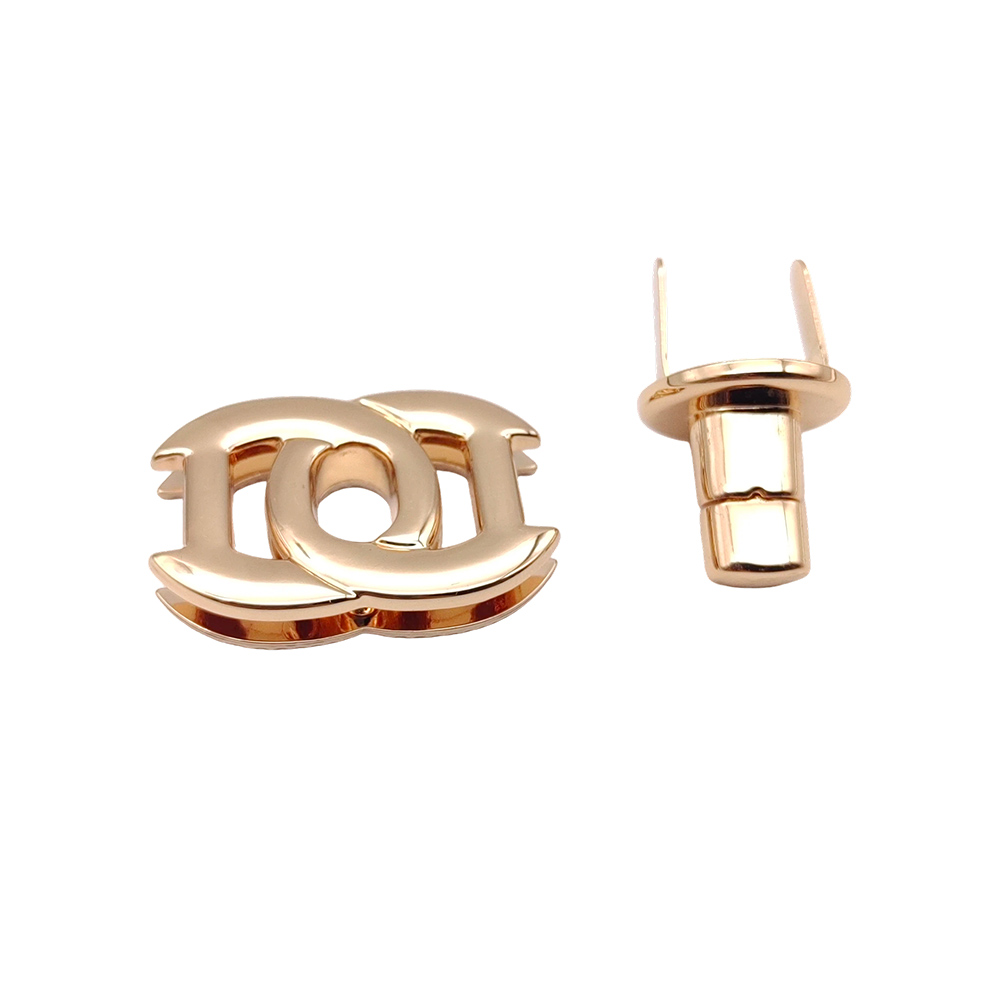
Two overlapping loops look simple on a drawing. On the casting they create an overlap zone where two curved faces meet, with a recess underneath. That recess is where polishing wheels struggle and where plating solution can pool. With a 7.5 mm bar width and a 3 mm edge shown on the drawing, the loops are slim enough to look refined on a purse, but there is little metal to spare if polishing is rushed. We polish in stages so the loop faces stay crisp instead of rounding off.
The shape also changes how light travels across the finish. Light gold is forgiving on flat plates but exposes uneven polishing on curves, because every ripple catches a highlight. When a Luxury Handbag brand asks for a mirror look, we agree the polishing standard on a physical sample rather than in words.
In real sourcing conversations, turn lock vs twist lock for handbags is mostly a naming difference. Both describe a tab that rotates to lock behind a frame. Some suppliers use twist lock for the whole set and turn lock for the tab only, so spec sheets from different factories do not always match. Ask for a drawing instead of relying on the name.
Handbag lock types fall into a few families, and each suits a different bag style and a different assembly method.
| Closure Type | How It Closes | Typical Use | Watch-Out |
|---|---|---|---|
| Turn lock (twist lock) | Tab rotates behind a frame | Flap bags, satchels | Tab-to-frame fit |
| Magnetic snap | Two magnets pull together | Soft totes, clutches | Weak hold under weight |
| Kiss clasp frame | Two balls snap in a frame | Coin purses, small pouches | Frame must match the bag shape |
| Press closure | Stud pushes into a socket | Wallets, envelope clutches | Spring fatigue over time |
| Strap buckle | Pin through a strap hole | Belt-style flaps | Strap stretch |
Zinc alloy flows well into fine detail and accepts plating easily, which is why most turn locks are made by Die Casting. The molten metal is forced into a steel mold under pressure, so the shape repeats across thousands of pieces. This die casting process overview explains the method.
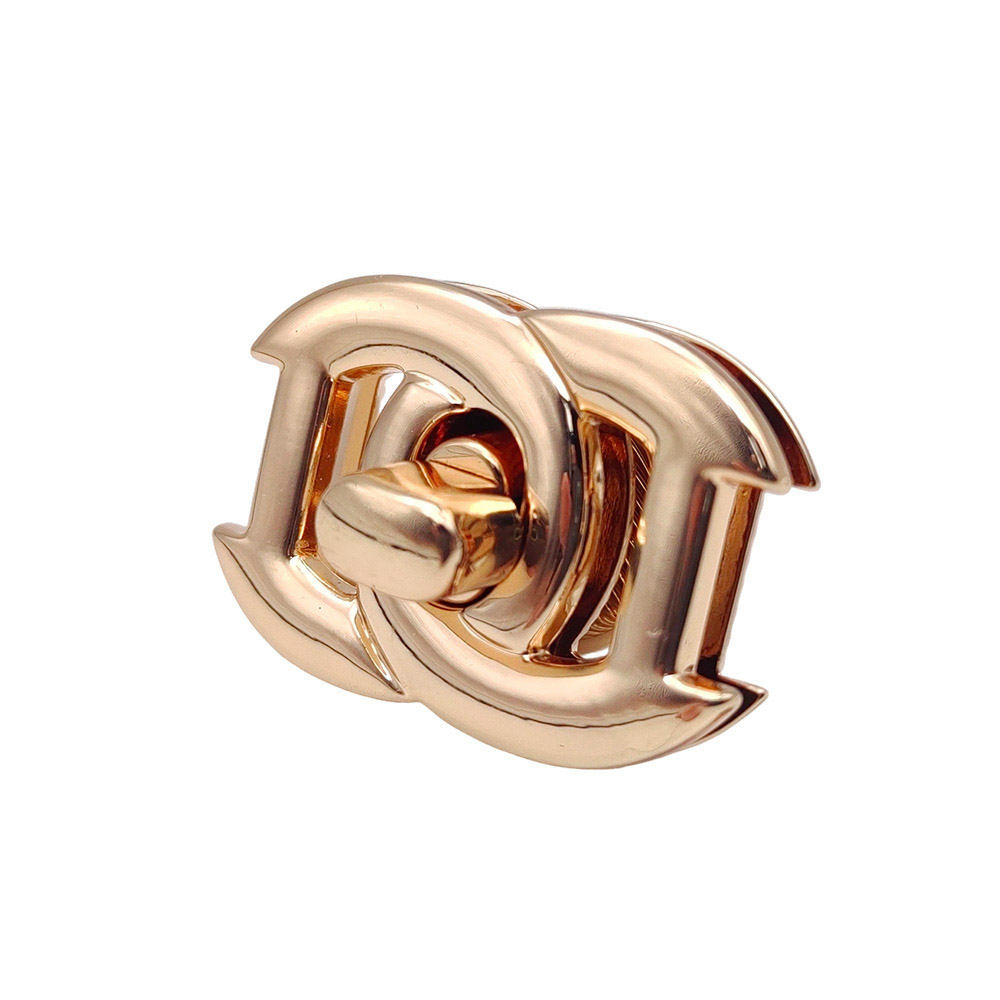
A metal bag lock sits on the front of the bag, so it gets touched, brushed against clothing and photographed. That makes the base metal and the plating a joint decision. Zinc alloy is our default for this set because the twin loops need a mold that can capture curved detail without heavy machining. Brass is available for a denser feel or a heritage look, but it costs more and the shape may need simplifying.
The light gold shown here is one of several options, alongside gold, silver, Nickel and Gunmetal. Electroplating deposits a thin metal layer onto the polished surface, and you can read the basics in this electroplating process reference. For parts with recesses we prefer Rack Plating, because each piece hangs in a controlled position and the plating reaches the curved areas more evenly.
| Factor | Zinc Alloy | Brass |
|---|---|---|
| Fine detail in the mold | Captures curves and thin bars well | Needs a simpler shape |
| Tooling approach | Die casting with a custom mold | Often casting or forging plus machining |
| Weight feel | Solid, moderate | Denser, heavier in the hand |
| Plating adhesion | Good after proper polishing | Good, with a different pre-treatment |
| Unit cost | Lower at volume | Higher |
| Design freedom for twin loops | High | Limited |
| Best fit | Fashion and Luxury Handbag lines with complex shapes | Heritage looks or brand-specified metal |
Brands building a turn lock handbag line usually place the frame on a front flap, where it doubles as the signature detail. A twist lock handbag in soft leather needs a lighter touch on the reinforcement behind the prongs, while a twist lock purse in a compact clutch format needs the barrel height checked against the flap stack.
This is a composite of the briefs we handle, not a single named customer. A European brand sends a sketch of two overlapping loops and asks for a light gold finish on a mid-priced flap bag. The first prototype looks right, but the tab drops into the frame with too much play. We trace it to the frame opening, adjust the mold, and cast a second round. The second sample fits, yet the plating pools in the overlap recess, so we change the hanging position on the plating rack. Three rounds later the set goes into bulk. The lesson: approve fit and finish on the same sample.
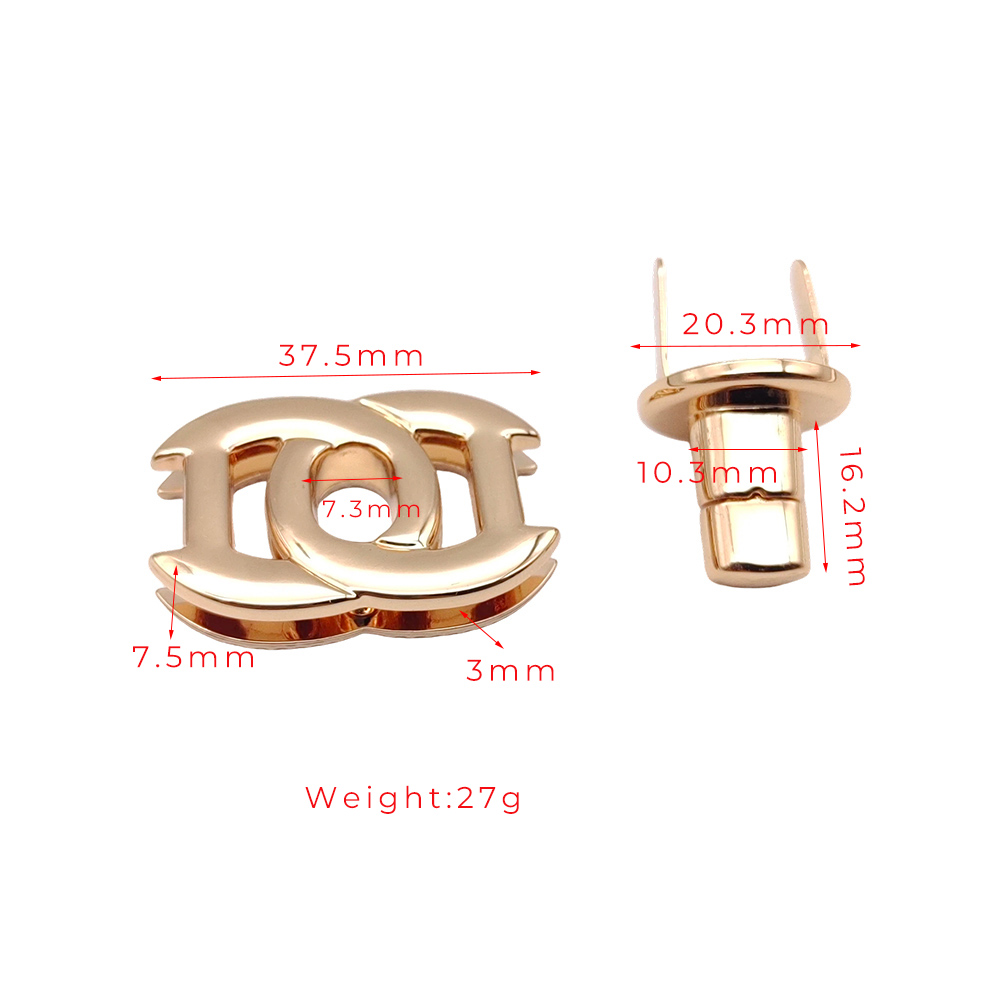
Here is how we read each number on this drawing, and why it matters.
| Dimension | Value | Why It Matters |
|---|---|---|
| Frame plate length | 37.5 mm | Sets the visual weight on the flap and the minimum flap width |
| Frame bar width | 7.5 mm | Controls strength of the loops and how bold the lock looks |
| Edge thickness | 3 mm | Affects comfort against skin and how much polishing the edge can take |
| Center opening | 7.3 mm | Defines the cutout in the leather and the clearance for the tab |
| Post base width | 20.3 mm | Sets how much flap surface the base covers and how the prongs spread |
| Post height | 16.2 mm | Must clear the flap stack and still reach into the frame |
| Barrel diameter | 10.3 mm | Decides the turning feel and the fit inside the frame opening |
| Weight | 27 g | Drives how much reinforcement a thin leather flap needs |
The drawing does not list the frame height or the prong length. Ask for both when you compare quotes, because a prong that is too long will lift on a thin flap and one that is too short will not clinch.
If we were taking you on a cloud tour of the floor, this is the order you would see, and the reason behind each step.
This set suits fashion brands and Luxury Handbag labels that want a distinctive front detail and are willing to approve a sample first. It also works for OEM factories that make bags for several clients and need a repeatable mold. Designers sourcing purse turn lock hardware for a first collection can use it, provided they accept a 1000 pcs MOQ (negotiable based on order details). Small brands that need a few dozen pieces will find stock hardware more practical.
It is a weaker choice for very thin flaps that cannot carry 27 g without sagging, and for minimalist lines where a bold decorative frame would fight the design. If you are still comparing closure families, our handbag turn lock types guide covers six styles side by side.
A custom purse turn lock starts with the mold. Once the shape is agreed, the rest of the finish can be adjusted without changing the tooling. Custom samples require a sampling fee, and the sample fee is fully deductible from bulk orders. Courier charges are borne by the customer. Here is what can be tailored:
Plated hardware lasts longest when the bag is stored dry. Humidity speeds up tarnish on any plated surface, so keep bags in a breathable dust bag instead of a sealed plastic one. Sweat and hand cream contain salts and acids that can dull plating over time. For cleaning, wipe with a soft dry cloth and avoid abrasive pads or chemical polish on light gold.
The MOQ for single hardware pieces like this one is 1000 pcs (negotiable based on order details). If your first order is smaller because you are testing a collection, tell us the plan and we will look at whether a mold already in the factory can be reused. Send us your expected annual volume with the inquiry, since we plan mold time around it.
Custom samples take 5–7 days, because a new mold or adjustment is needed. Free stock samples are usually ready in 1–3 days. Once the sample is approved, Production Time is 10–15 Days and Delivery Time is 10–15 Days. Late changes to the finish are the most common reason a schedule moves, so lock the swatch early.
Free stock samples available. Custom samples require a sampling fee, and the fee is fully deductible from bulk orders. Courier charges are borne by the customer. Request the stock sample first to check tab feel and finish, then order a custom sample only if you need changes. Stock samples let you judge the tab feel before any tooling money is spent.
Yes. Frame size, tab profile, loop shape and logo placement can be customized through a custom mold, and we support laser, emboss and deboss logo methods. Changing only the logo or plating color usually needs no new shape tooling. Send a drawing or sketch with the flap dimensions, and our engineers will say what is realistic.
The photographed set is light gold. We can plate gold, silver, nickel, gunmetal, black nickel and custom colors matched to your swatch. For a recessed twin-loop frame, Rack Plating helps the finish reach the overlap area. Ask for a physical sample before you decide, because plating colors look different on screens.
Our standard packing is Pearl Foam + OPP Bag + Export Carton, and Customized Packaging is available if your brand has specific requirements. Pearl foam separates polished frames so they do not scratch each other. Tell us before bulk production if you need barcode labels, hang tags or retail boxes.
We maintain quality certification documentation and are happy to provide the current valid certificates upon request during your sourcing evaluation. If your brand has its own restricted-substance or testing requirements, send them with the inquiry so we can plan testing before bulk production, not after it. Tell us which markets you sell into, and we will confirm what applies.
For practical purposes, yes. Both names describe a tab that rotates behind a frame. Different suppliers and marketplaces use different words, and many listings use both in the same title. When you request a quote, send the drawing and the dimensions rather than the name, because the dimensions are what the factory actually builds from.
If you already have technical drawings for purse turn lock hardware, send them with your flap thickness and target finish, and we will review the fit before you commit to a sample. If you are still evaluating suppliers, ask for the free stock sample first and judge the tab feel in your hand. You can also download our catalog to see what else can sit on the same bag.