
How to Choose an Airtight Waterproof Zipper: A Buyer’s Guide to IPX8 Sealing Technology
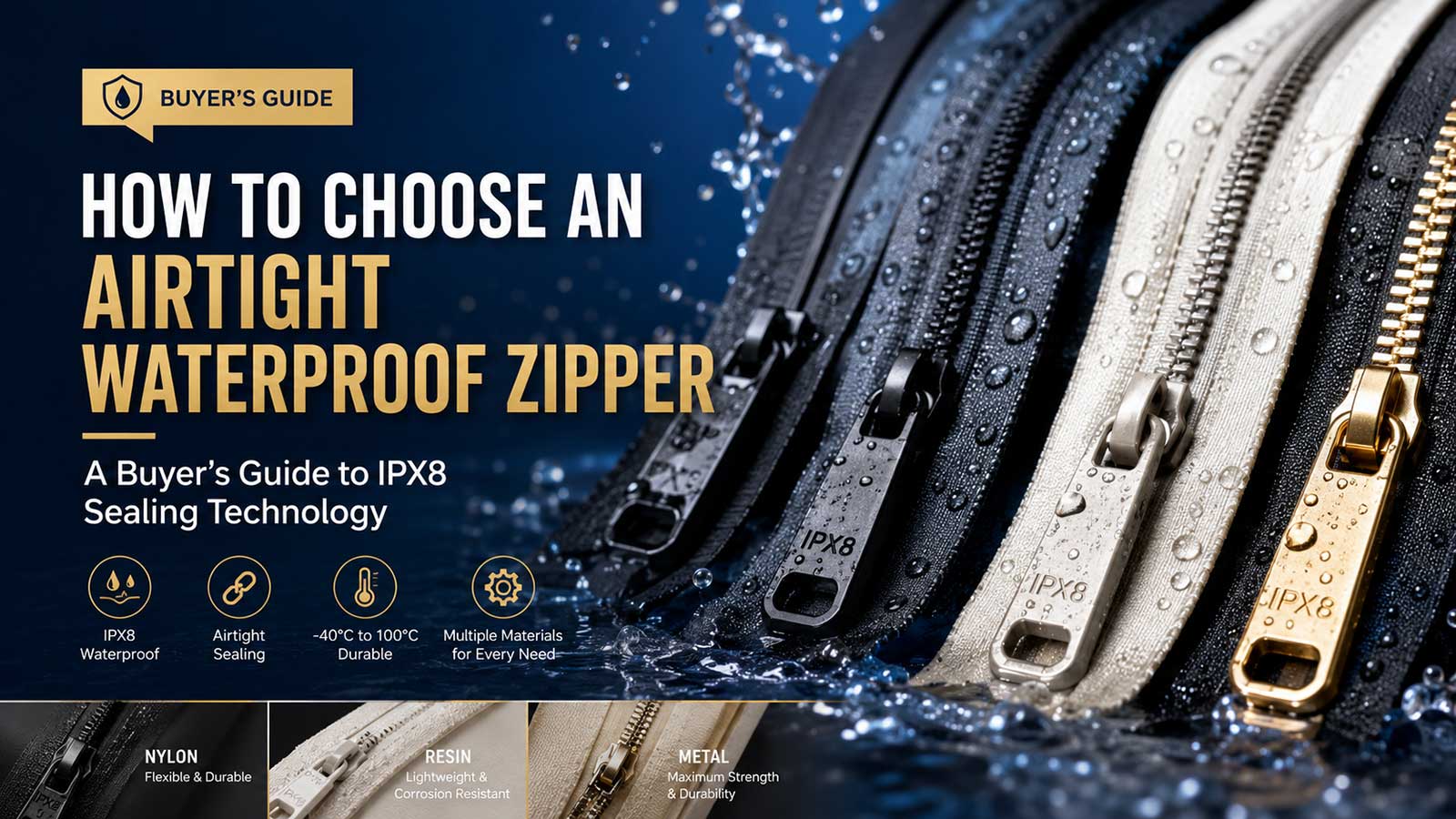
Choosing the wrong zipper can undo months of product development. A jacket that leaks at the seam, a dive bag that lets in water, or a protective suit that fails a pressure test usually traces back to one overlooked component: the zipper. This guide breaks down the main types of airtight and waterproof zippers, how their sealing performance is rated, and how to match the right one to your product and budget.
Quick Answer
The right airtight zipper depends on your required waterproof rating and use environment. For light rain and splash resistance, a TPU-laminated watertight zipper rated IPX-4 is usually enough. For full submersion — diving suits, protective clothing, inflatable boats — you need an IPX8-rated nylon, resin, or metal airtight zipper, each offering a different balance of flexibility, strength, and cost.
Key Takeaways
- IPX ratings, not marketing terms like “waterproof,” are the objective way to compare zipper sealing performance
- Nylon, resin, and metal airtight zippers all reach IPX8 but differ in flexibility, weight, and cost
- TPU-coated zippers add durability and a working temperature range of -40°C to 100°C
- Zipper structure (open-end, closed-end, two-way) affects both function and unit price
- Sample testing before bulk production is the single most effective way to avoid sourcing mistakes
Table of Contents
- What Is an Airtight Waterproof Zipper?
- Understanding IPX Waterproof Ratings for Zippers
- Types of Airtight and Waterproof Zippers
- Comparison Table: Airtight Zipper Materials
- How to Choose the Right Zipper for Your Product
- Pros and Cons by Zipper Type
- Common Sourcing Mistakes
- Factory Expert Tips
- Expert Recommendation
- Conclusion
- FAQ
What Is an Airtight Waterproof Zipper?
An airtight zipper is engineered to close into a fully sealed unit, blocking both water and air rather than simply resisting light moisture. This is achieved through a combination of elastomer-filled teeth grooves, a heat-pressed TPU membrane over the tape, and in some constructions a nano-coating on the zipper body. Together these layers stop water penetration even under sustained pressure, which is why airtight zippers are standard components in diving equipment, chemical protective suits, and inflatable gear.
Understanding IPX Waterproof Ratings for Zippers
The IEC 60529 IP rating system is the international standard buyers should reference when comparing zipper waterproofing claims. IPX-4 means resistance to splashing water from any direction — sufficient for rain gear and daily-use bags. IPX8 means the component can withstand continuous submersion beyond one meter, which is the benchmark for diving suits, dry bags, and marine equipment. Always ask a supplier which standard and test depth their IPX8 claim is based on, since testing conditions vary between factories.
Types of Airtight and Waterproof Zippers
Not every waterproof zipper performs the same job. The following breakdown covers the five main constructions used across outdoor, marine, and protective equipment applications.
Nylon Airtight Zipper — What, Why, How
What: A nylon airtight zipper uses specially engineered nylon teeth combined with a TPU-coated woven tape. Why: Nylon offers a strong balance of flexibility and sealing strength, making it suitable for garments that need to bend and move. How: When closed, the teeth interlock into a fully enclosed cavity, achieving true zero gas permeation and an IPX8 rating — making it a common choice for diving suits, chemical protective suits, and camera backpacks.
Resin Airtight Zipper — What, Why, How
What: Resin airtight zippers use injection-molded polyester teeth paired with TPU-coated tape. Why: Resin is self-lubricating, corrosion-resistant, and noticeably lighter than metal, which matters for gear worn for extended periods. How: The molded teeth form a tight, uniform seal at IPX8, and the material’s chemical resistance suits diving suits, protective clothing, and inflatable boats where exposure to salt water or chemicals is routine.
Metal Airtight Zipper — What, Why, How
What: Metal airtight zippers rely on high-strength metal teeth combined with a chloroprene rubber seal at the slider and stops. Why: Metal teeth offer the highest mechanical durability of the three, resisting repeated stress cycles better than resin or nylon. How: The precision interlock plus rubber gasket delivers IPX8 performance, making this the preferred option for heavy-duty diving equipment, protective suits, and inflatable devices subject to frequent handling.
🛠️ OEM/ODM Custom Hardware Solutions
Have a specific engineering drawing or custom design for luxury leather goods? Collaborate directly with our master engineers to transform your sketches into premium brass or zinc alloy components.
Start Your Custom Project →📂 Digital Product Catalog Access
Explore our comprehensive range of high-end handbag accessories, metal logo,zipper pulls,turn locks, buckles, and chains. Download the full specifications and options catalog for your sourcing library.
Download Full Catalog ↓Comparison Table: Airtight Zipper Materials
| Zipper Type | Waterproof Rating | Core Material | Best For |
| Watertight Zipper (TPU laminated) | IPX-4 | Nylon + TPU hot-pressed film + nano coating | Outdoor bags, tents, rain gear, cycling bags |
| Nylon Airtight Zipper | IPX8 | Nylon teeth + TPU-coated tape | Diving suits, camera backpacks, dive bags |
| Resin Airtight Zipper | IPX8 | Molded polyester resin + TPU tape | Diving suits, chemical suits, inflatable boats |
| Metal Airtight Zipper | IPX8 | Metal teeth + chloroprene rubber seal | Diving suits, protective suits, inflatable equipment |
| TPU Waterproof Zipper | Water-resistant (non-submersion) | Nylon base + eco-friendly TPU laminate | Ski wear, down jackets, tents, firefighter suits |
How to Choose an Airtight Waterproof Zipper for Your Product
Start with the environment your product will face, not the zipper itself. A jacket that only needs splash protection is over-engineered — and overpriced — with an IPX8 metal zipper. Conversely, a drysuit fitted with an IPX-4 watertight zipper will fail in real use.
Three factors decide the right fit: required IP rating, flex requirement (garments need more flexible nylon or resin; rigid cases can use metal), and operating temperature. TPU-based constructions in this product family are rated for -40°C to 100°C, which matters for cold-weather apparel and industrial packaging alike. Finally, confirm the zipper structure you need — open-end, closed-end, or two-way — since this affects both function and unit cost.
Pros and Cons by Zipper Type
Nylon airtight zipper
Pros: flexible, comfortable on garments, reliable IPX8 seal. Cons: slightly less abrasion-resistant than metal over very high cycle counts.
Resin airtight zipper
Pros: lightweight, self-lubricating, strong chemical resistance. Cons: teeth can be more brittle than metal under extreme impact.
Metal airtight zipper
Pros: highest mechanical durability, ideal for heavy daily use. Cons: heavier, less flexible, typically higher unit cost.
TPU waterproof zipper
Pros: eco-friendly, wide temperature tolerance, smooth operation. Cons: not rated for submersion, so unsuitable for diving-grade applications.
Common Sourcing Mistakes
- Choosing a zipper based on price alone without confirming the actual IPX rating and test method
- Ignoring the working temperature range, causing seal failure in cold-weather or industrial use
- Ordering the wrong structure — open-end, closed-end, or two-way — for the product’s opening design
- Skipping sample testing before committing to a bulk production run
- Overlooking whether the supplier can support color, logo, and length customization for brand consistency
Factory Expert Tips
From production experience manufacturing airtight zipper series: the sealing performance of a watertight or airtight zipper comes from layering, not a single feature. A typical construction combines an elastomer-filled tooth groove, a heat-pressed TPU film across the tape, and — for higher-grade products — a nano-coating on the zipper body. Each layer is tested separately during quality control before the finished zipper is submitted for IPX-rated water testing. Buyers requesting OEM development should also confirm whether the factory can adjust structure (open-end, closed-end, two-way) and length in the same production run, since retooling mid-batch adds cost and lead time.
Expert Recommendation
Choose a TPU or watertight (IPX-4) zipper for daily-use bags, cycling gear, and rainwear where occasional splashing is the main concern. Choose a nylon airtight zipper when the product needs to flex — wetsuits, dive bags, and soft protective garments. Choose resin when weight and chemical resistance matter more than raw impact strength — inflatable boats and chemical suits are typical cases. Choose metal airtight zippers when the product will see heavy daily handling and durability outweighs weight, such as professional diving and protective equipment.

Conclusion
Matching zipper type to real-world conditions — not just a waterproof label — is what prevents costly product failures downstream. Compare the IPX rating, material, and structure against your product’s actual use case, and request physical samples before finalizing an order. For brands developing new outdoor, diving, or protective equipment products, working with a manufacturer that offers OEM/ODM support for color, logo, length, and structure customization makes it easier to match the zipper exactly to the product spec. If you’re evaluating suppliers for an upcoming order, request test samples and ask for documented IPX test results before moving to bulk production.
FAQ
What does IPX8 mean for a zipper?
IPX8 means the zipper has been tested to withstand continuous submersion beyond one meter of water, per the IEC 60529 standard, making it suitable for diving and marine equipment.
Is a nylon or metal airtight zipper more durable?
Metal airtight zippers generally offer higher mechanical durability under heavy daily use, while nylon zippers offer more flexibility for garments that need to bend and move.
Can airtight zippers be customized with a brand logo?
Yes. Most airtight zipper manufacturers support logo printing or embossing on the zipper tape, along with color matching and length customization for OEM orders.
What temperature range can these zippers handle?
TPU-coated constructions in this product family are typically rated from -40°C to 100°C, suitable for both cold-weather apparel and industrial applications.
Do I need a sample before placing a bulk order?
Yes. Requesting a physical sample and reviewing documented IPX test results is the most reliable way to confirm sealing performance before committing to production quantities.
Need Custom Handbag Hardware?DG Buddy specializes in OEM & ODM manufacturing of premium handbag hardware, including turn locks, zipper pullslogo plates, snap hooks, buckles, chains, zipper pulls, feet studs, and other custom metal accessories. Whether you need custom branding, special finishes, prototype development, or mass production, our engineering team can support your project from concept to delivery.
✓ 20+ Years Manufacturing Experience |