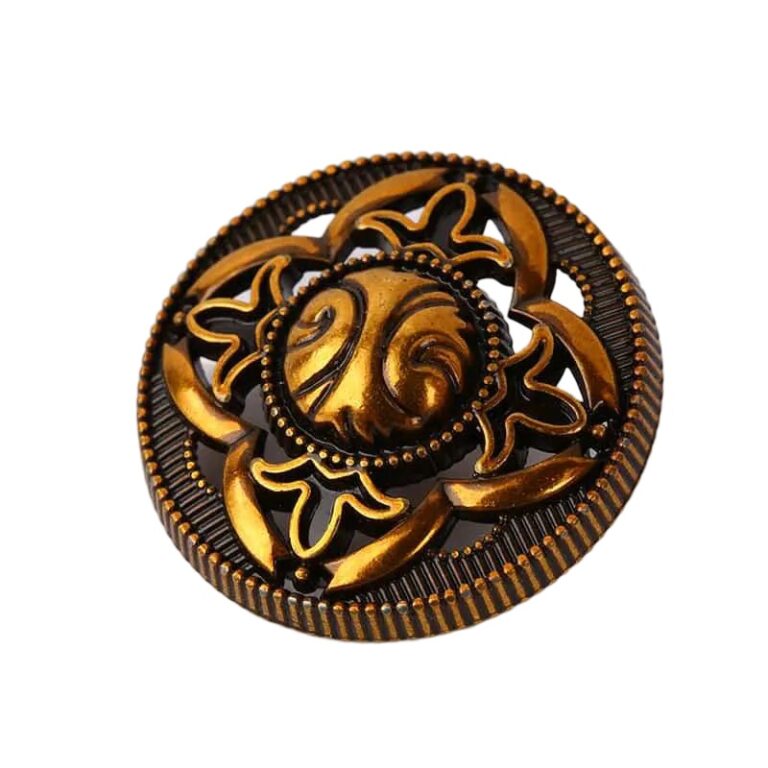
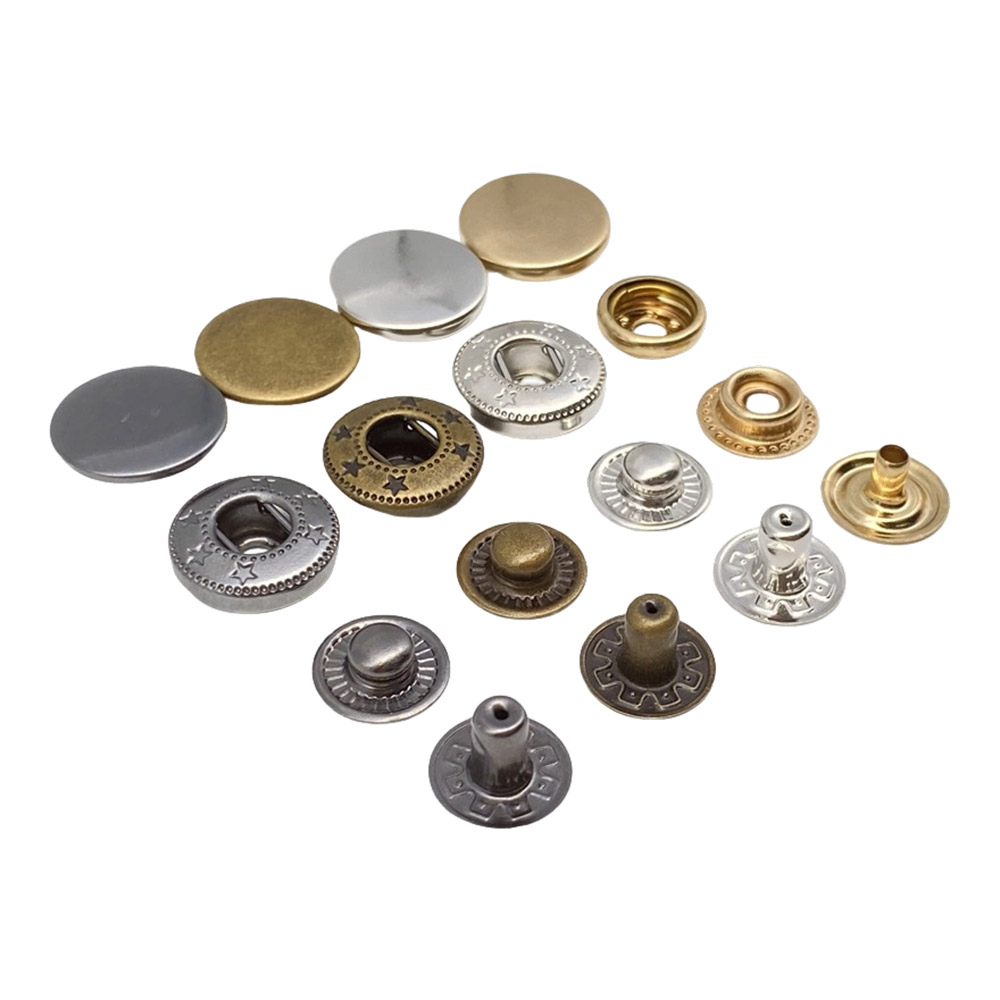
An antique brass snap fastener is a 4-part press stud made up of a top cap, a female snap, a male snap, and a long stud, mechanically set through fabric or leather to create a secure, repeatable open-close connection. This version uses a hollow base long stud snap design, built to pass through thicker leather panels, canvas layers, or reinforced webbing without the shank bending. Buyers researching this as a metal snap button for bags, or comparing snap fastener manufacturers for a jacket line, typically weigh it against rivets and standard short-stud snaps before finalizing specifications.
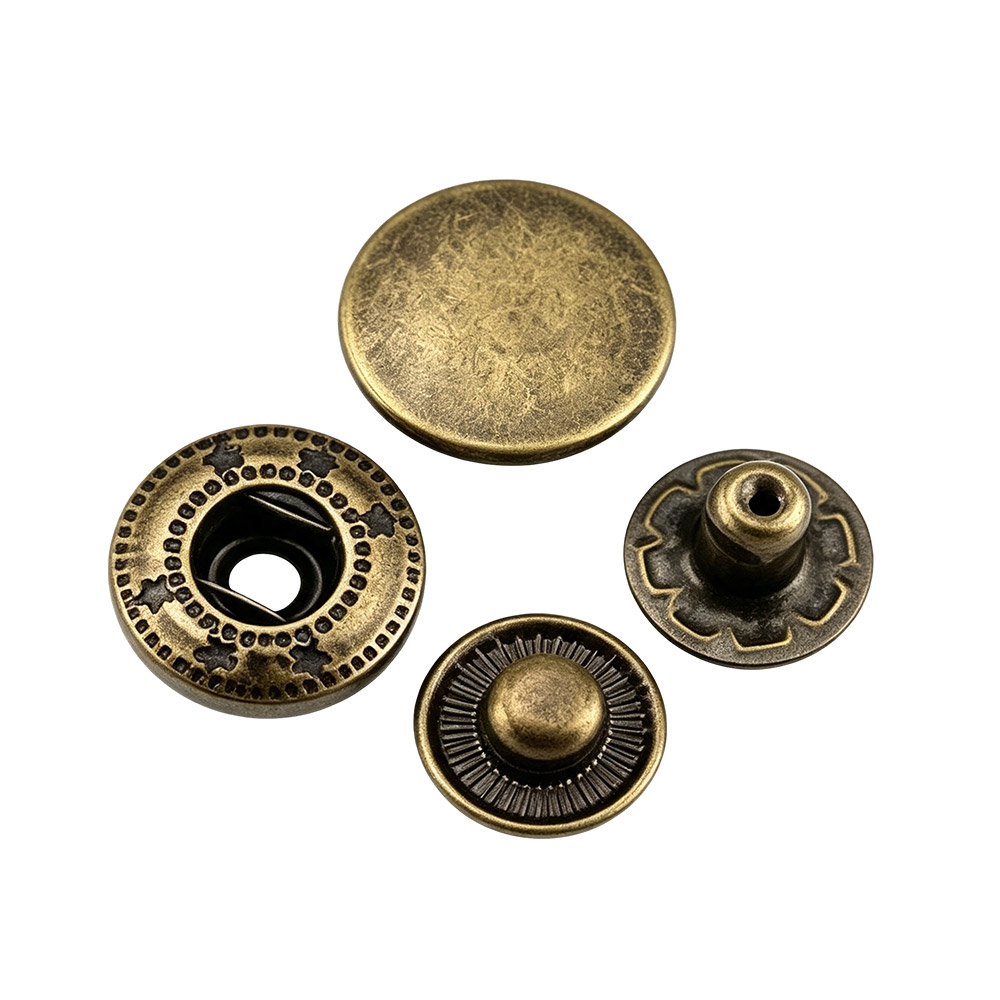
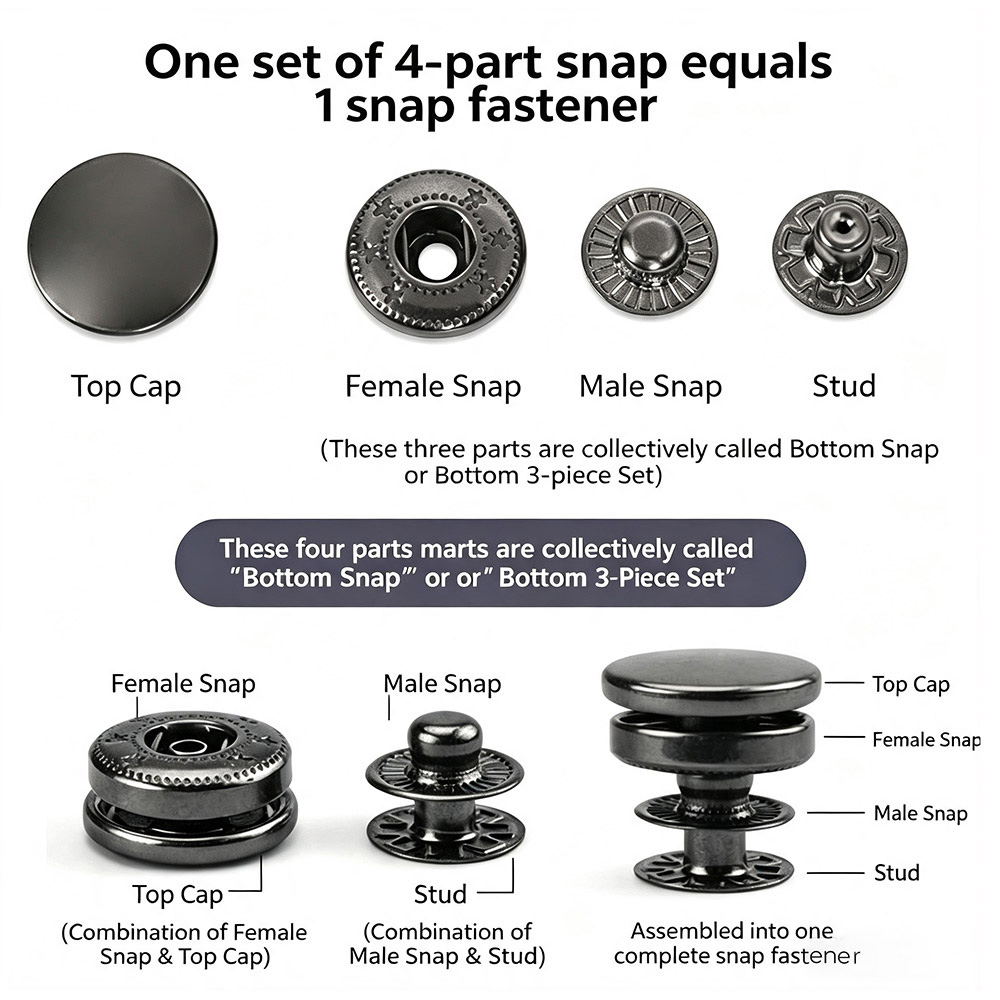
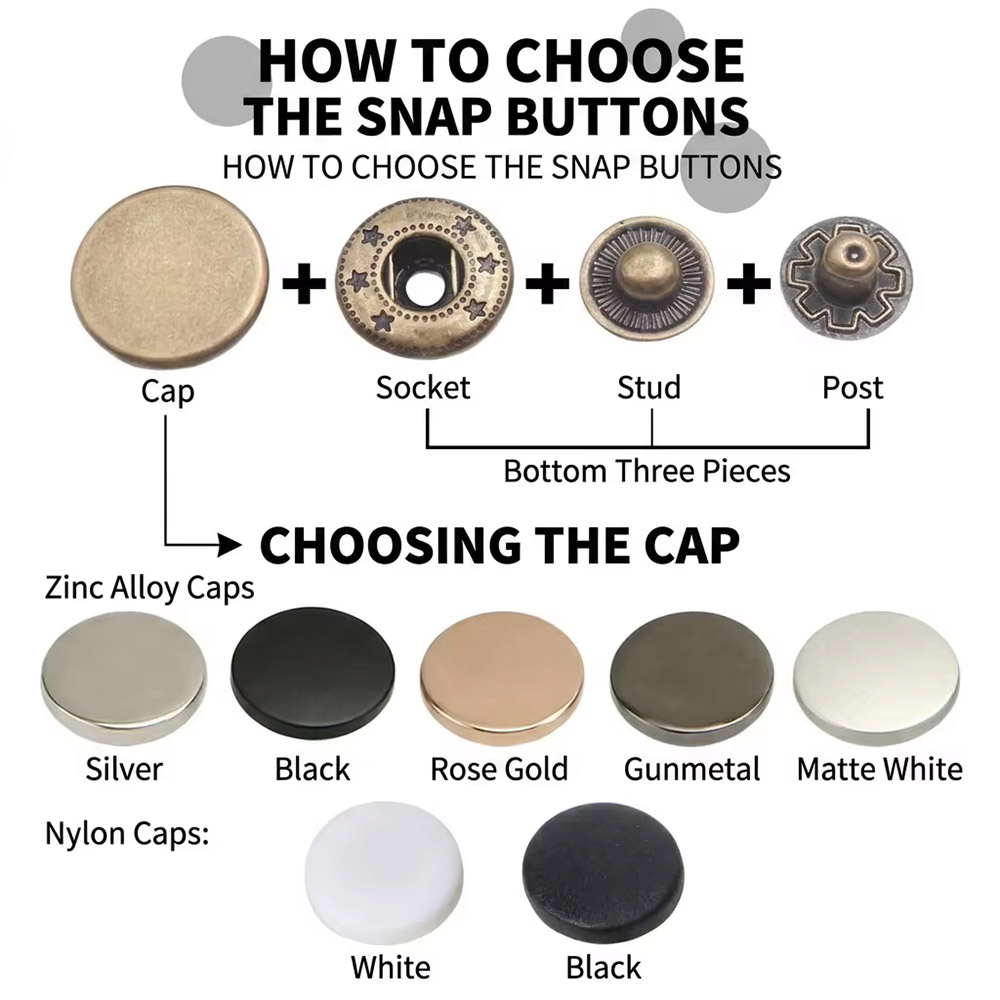
One thing buyers often ask when they first see this hardware is why it comes in four separate pieces instead of one assembled button. The answer comes down to how the snap fastener is set. The top cap is the visible decorative face. It sits over the female snap, which houses the spring mechanism that grips the male snap. On the opposite side of the garment or bag panel, the long stud attaches through the male snap to hold everything together once pressed through a setting machine or hand press.
In our factory, we describe the female snap, male snap, and stud together as the “bottom snap” or “bottom three-piece set,” since these three parts create the actual fastening action. The top cap is really a cosmetic layer that can be swapped for different finishes or logo treatments without changing how the mechanism performs.
This is one of the most common questions we get from first-time buyers of metal hardware. A snap fastener is designed to open and close repeatedly, while a rivet creates a permanent, fixed joint that isn’t meant to be undone. The table below breaks down the practical difference between snap fastener and rivet hardware when specifying for a new product line.
| Feature | Snap Fastener | Rivet |
|---|---|---|
| Function | Repeated open-close | Permanent fixed joint |
| Removable by user | Yes, by design | No |
| Common Use | Jackets, bags, flaps | Structural reinforcement, straps |
| Component Count | 4 parts | 2 parts |
| Setting Method | Snap press or die | Rivet press or hammer die |
A standard stud has a solid shank, which limits how much material thickness it can pass through cleanly. A hollow base long stud snap, like the one used here, has an open channel at the base. This lets it accommodate multi-layer leather, doubled canvas, or webbing-reinforced panels without the shank bending during setting. Buyers working with heavier leather goods or outerwear tend to specify this hollow base stud over a solid one for that exact reason.
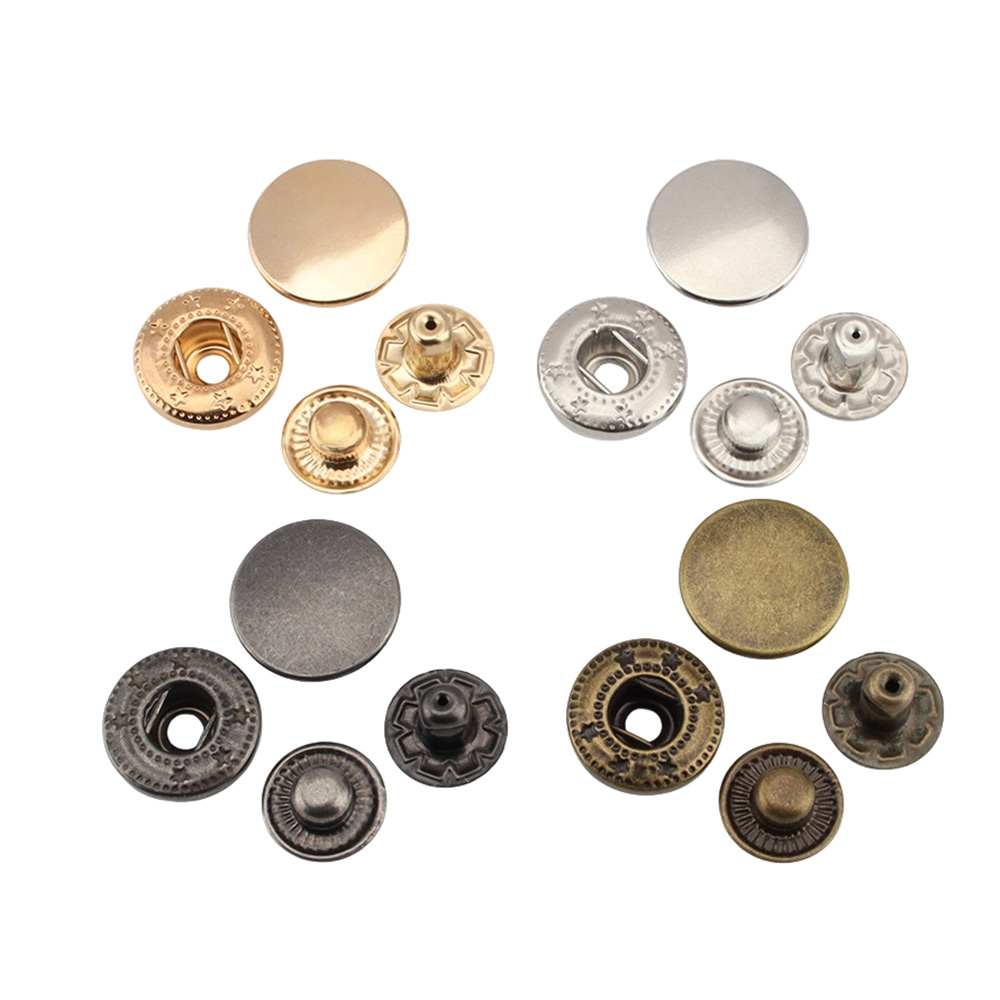
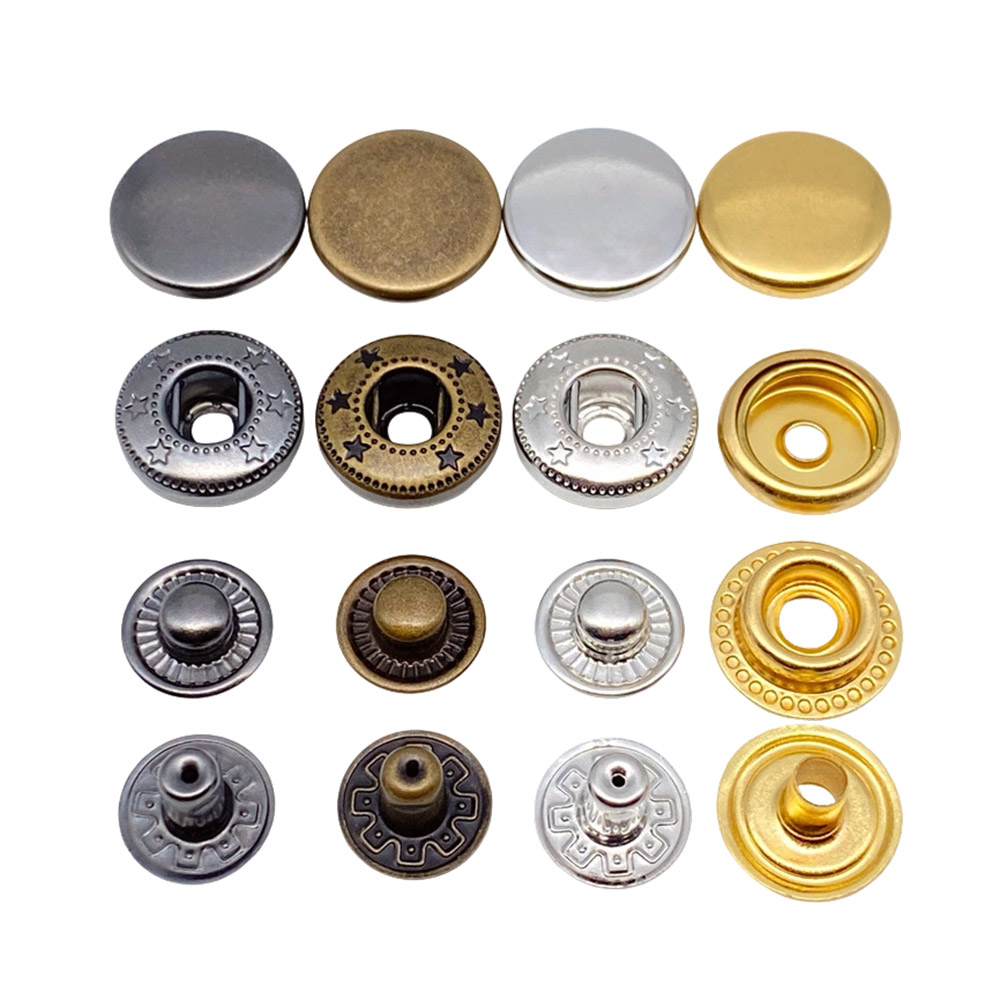
When customers compare suppliers on this type of hardware, material choice is usually the second question after price. Zinc alloy is the more common base for die casting because it takes electroplating well and holds fine surface detail, such as the star-and-dot embossing seen on the female snap socket. Brass costs more but offers slightly better corrosion resistance in humid or coastal climates without plating touch-ups.
| Property | Zinc Alloy | Brass |
|---|---|---|
| Cost | Lower | Higher |
| Detail Retention | Excellent for die casting | Good, requires stamping precision |
| Corrosion Resistance | Good with plating | Naturally higher |
| Weight | Lighter | Slightly heavier |
| Typical Use | Fashion bags, garments | Premium leather goods |
| Plating Response | Very good | Very good |
| Recyclability | High | High |
| Common Buyer Choice | Mid-market and mass production | Premium and small-batch OEM |
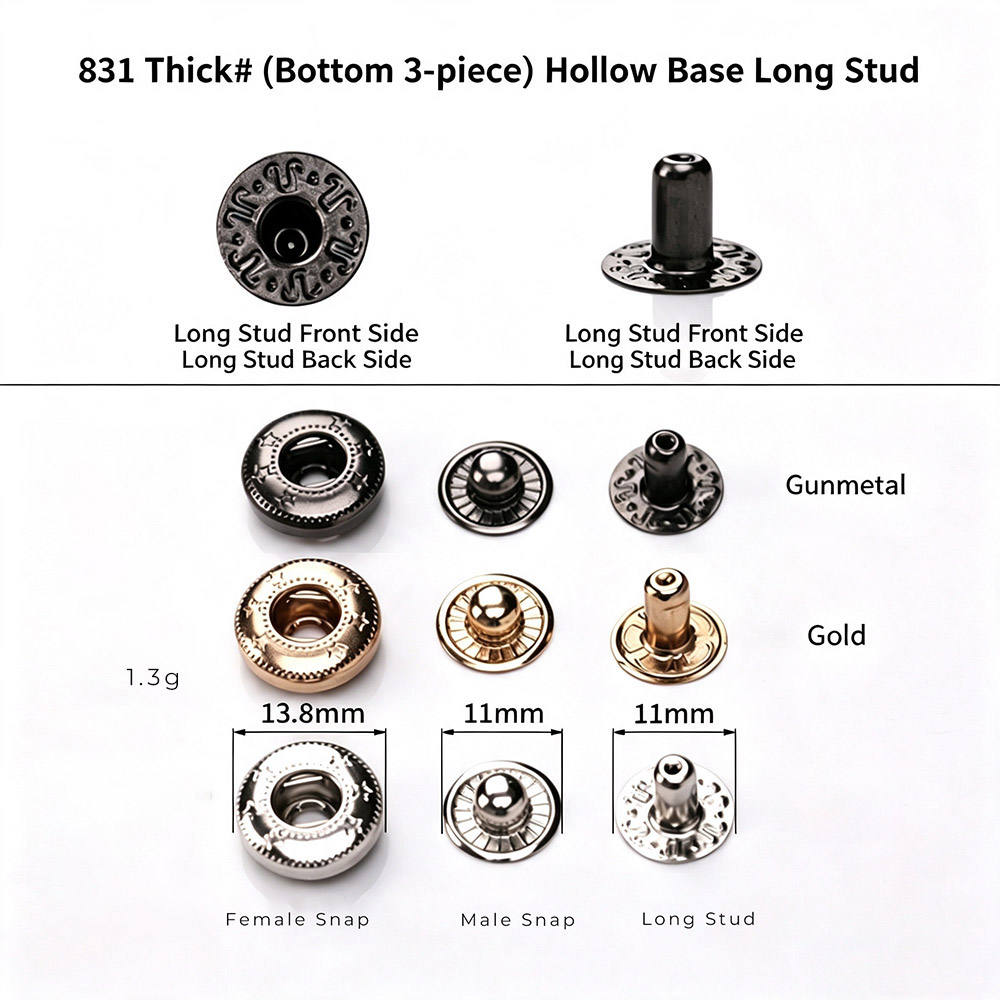
Buyers who send us technical drawings early in development get faster, more accurate samples. Here’s what each measurement on this snap fastener drawing actually controls in the finished product.
During prototype development, we walk most new customers through the production sequence so they understand what drives lead time and cost. It starts with raw material, either zinc alloy ingot or brass coil, which goes into die casting or stamping depending on the component. The top cap and female snap body are typically die cast for detail consistency, while thinner components may be stamped.
After casting, parts go through trimming to remove flash from the mold line, followed by grinding to knock down sharp edges. Polishing comes next, done in multiple stages rather than once — a single polishing pass leaves inconsistent light reflection across curved surfaces and recessed detail like the embossed socket ring, so we run parts through progressively finer abrasives before electroplating.
Assembly follows, where the female snap spring is inserted and spring tension is tested before the batch moves to electroplating. Plating is applied by hanging racks through the tank rather than barrel plating, because barrel plating can wear down fine detail on decorative caps over time. Every finished batch then goes through salt spray testing to check corrosion resistance under accelerated humidity exposure, followed by 100% QC inspection before packing.
This is one of the most practical questions we walk buyers through, since sizing mistakes are the top cause of field returns. A few factory rules we give customers directly:
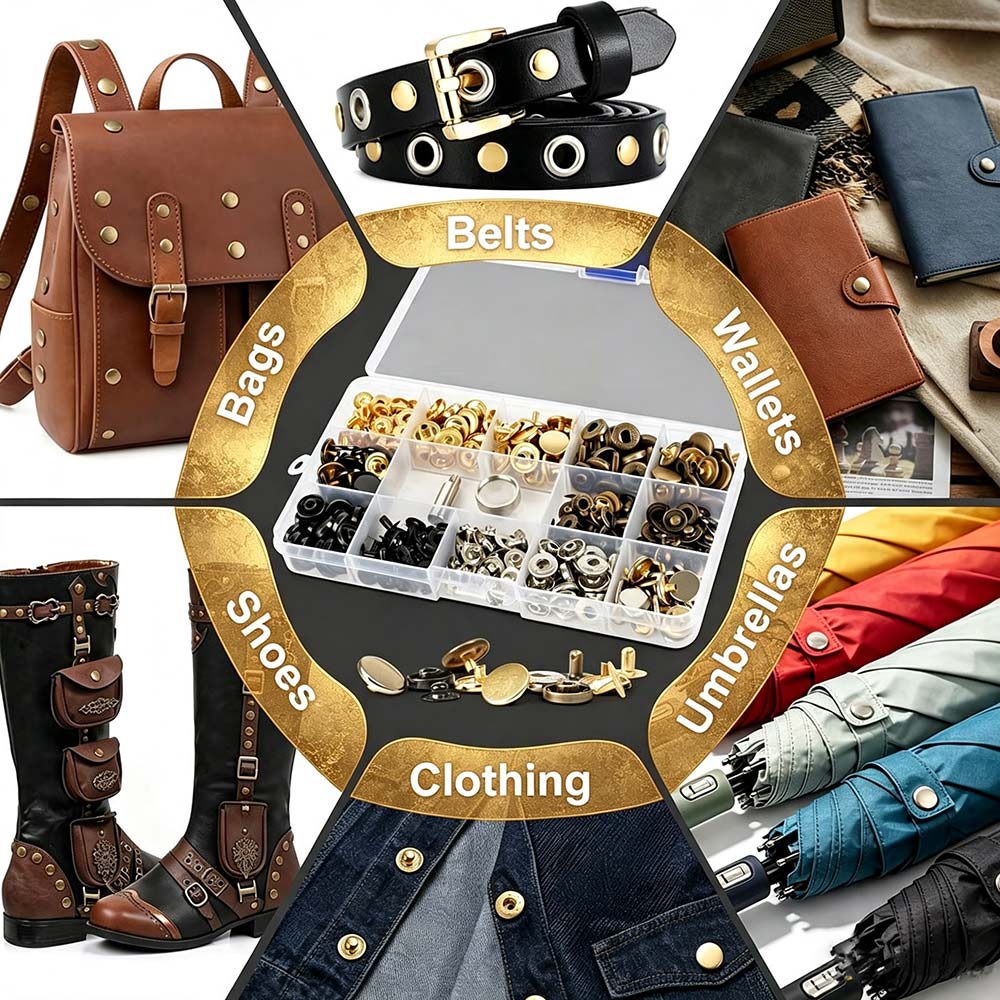
As a snap fastener manufacturer, we get asked fairly often what the best snap fastener for jackets and bags actually looks like, and the honest answer depends on material thickness more than brand positioning. This style tends to work well for fashion and workwear brands producing jackets, canvas totes, and mid-weight leather goods where the fastener needs to be functional first and decorative second.
Luxury handbag brands sometimes specify this hardware for structured flap closures, though many prefer a twist lock or turn lock for front-facing hardware and reserve snap fasteners for interior pockets or adjustable straps. Small MOQ brands and designers testing a new product line often start with our stock antique brass finish before committing to a custom plating run once the design is finalized.
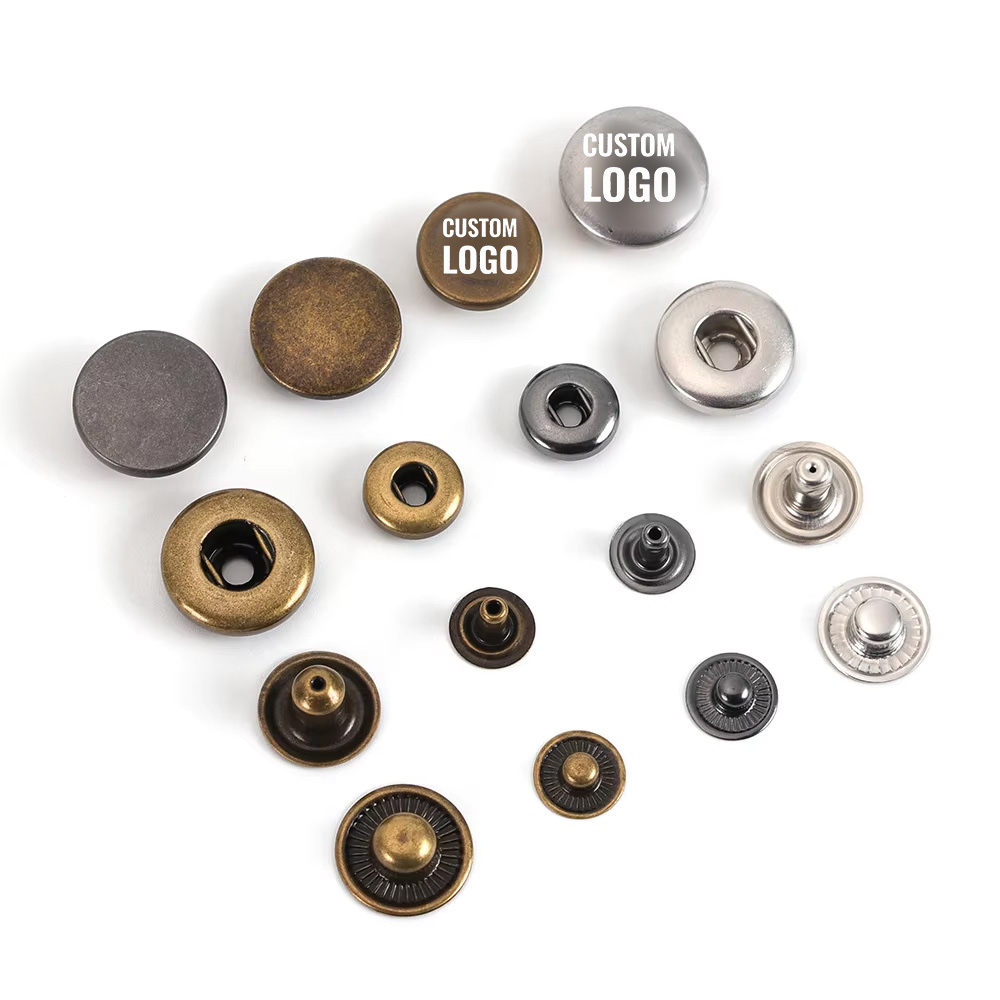
Beyond the stock antique brass finish, this component can be developed through a custom mold if your cap diameter or embossing pattern needs to be brand-specific. As a custom logo snap button manufacturer, the most common request we get is laser logo marking or emboss/deboss branding directly on the top cap, which doesn’t require new tooling and keeps lead time close to standard production. Oil filling is sometimes added to recessed logo areas for contrast.
On the plating side, we can match a target finish using a physical reference sample. Packaging can extend to private label cards, custom hang tags, or retail-ready boxes if the fastener is being sold as a standalone accessory rather than shipped in bulk for garment assembly.
One customer, a mid-size outerwear brand in the US, came to us after their previous supplier’s snap fasteners kept popping open during wear testing on a heavier canvas jacket. When we reviewed their spec, the stud length had been sized for a lighter fabric than what was actually going into production, so the hollow base stud wasn’t seating fully through the doubled canvas panel.
We recommended stepping up to the longer hollow base long stud snap used here, ran two rounds of samples to confirm spring tension held after 500 open-close cycles on our test rig, and adjusted the die recommendation for their in-house setting machine. Production samples passed their wear test on the second round, and the jacket shipped on the original timeline with only a two-day delay from the initial sampling stage.
Antique brass plating holds up well under normal handling, but a few material-specific points are worth passing along to end customers or including in product care instructions. Prolonged humidity exposure without airflow can dull the finish over time, so garments or bags with this hardware should be stored somewhere dry rather than sealed in plastic for long periods.
Direct contact with sweat or skin acids, common on bag straps and jacket cuffs, can gradually wear plating at high-contact points, which is one reason we recommend a slightly heavier plating thickness for hardware placed in those positions. During transportation, loose bulk packing of finished caps can cause surface-to-surface rubbing, so we pack decorative caps separately from the bottom three-piece set. For cleaning, a dry or barely damp soft cloth is sufficient; ultrasonic cleaners and abrasive polish should be avoided since they can strip plating faster than normal wear would.
The standard MOQ for this metal snap button for bags and garments is 1000 pieces, and this can be negotiated based on finish complexity, order value, and whether tooling changes are involved.
Free stock samples are available for this antique brass snap fastener in our standard finish. Custom samples, such as a new plating color or logo embossing, involve a sampling fee that is fully deductible from your bulk order once confirmed.
Custom or mold-based samples typically take 5–7 days. If you only need a stock sample to evaluate the base hardware, that usually ships within 1–3 days since no tooling work is involved.
Yes. As a custom logo snap button manufacturer, we support laser logo marking, emboss or deboss branding on the cap, and custom plating color matching against a physical reference sample.
Yes, we ship wholesale metal snap fasteners China-manufactured directly to buyers worldwide, with standard export packaging and consolidated shipping options for larger orders.
We maintain quality certification documentation and are happy to provide the current valid certificates upon request during your sourcing evaluation.
Standard packaging is pearl foam trays with an OPP bag and export carton. Customized packaging, including private label cards or retail boxes, is available on request.
Production time is 10–15 days after sample confirmation, and delivery time is typically 10–15 days depending on shipping method and destination.
We’ve been running this factory for close to two decades, which mostly shows up in the small things: knowing which electroplating process holds up on curved cap surfaces, catching a stud-length mismatch before it becomes a field failure, or having the right die on hand when a customer’s setting machine is a less common brand. Our engineering team reviews technical drawings directly rather than routing everything through a sales layer, which tends to shorten the back-and-forth during development. Every production batch goes through salt spray testing and QC inspection before packing, and we stay responsive through WhatsApp or email once a project is underway rather than going quiet between order confirmation and shipment.
If you already have technical drawings for this snap fastener or a similar closure, send them over and we can confirm feasibility and sampling lead time within a day. If you’re still evaluating suppliers and want to see the spring mechanism up close before committing, we’re happy to send a cut sample along with the standard stock piece so you can compare both.
Want to see how our hardware feels in your hand? Download our 2026 Premium Hardware Catalog today, or request a batch of free stock samples for your next quality test—we usually ship them out within 12 hours.