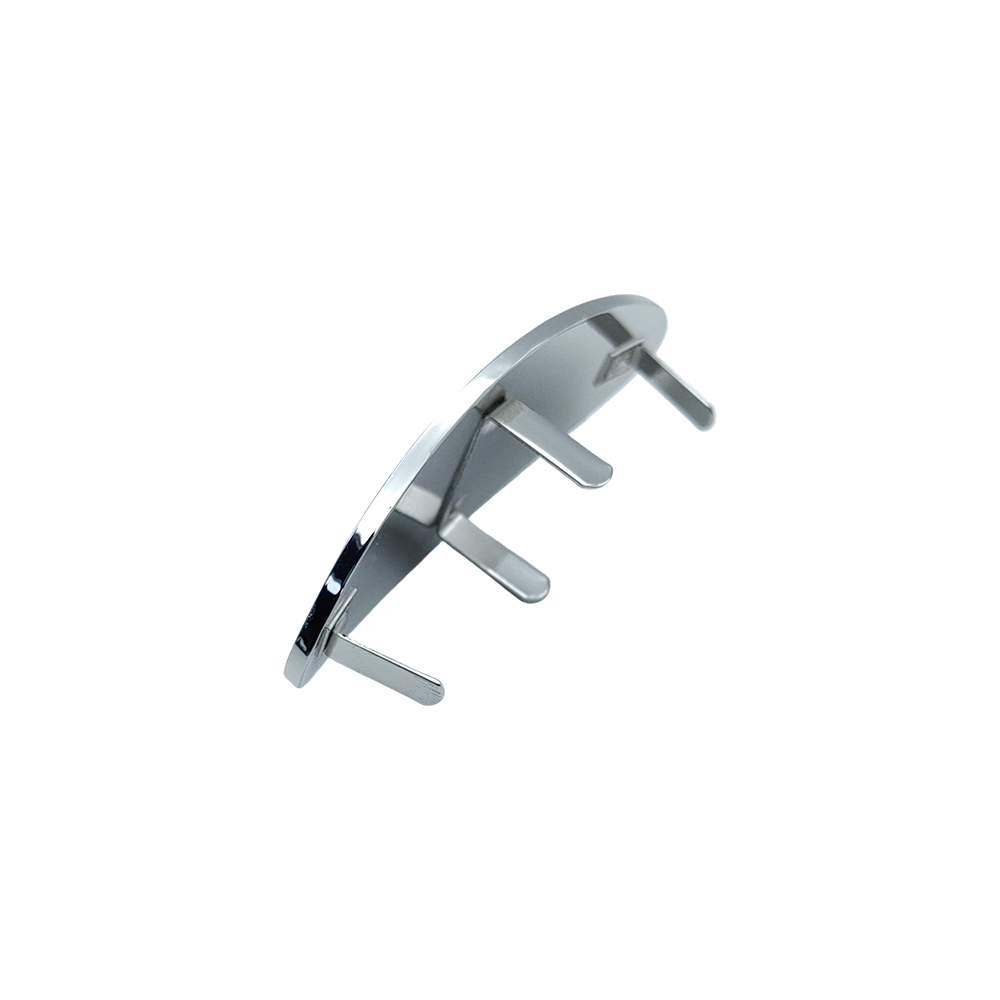
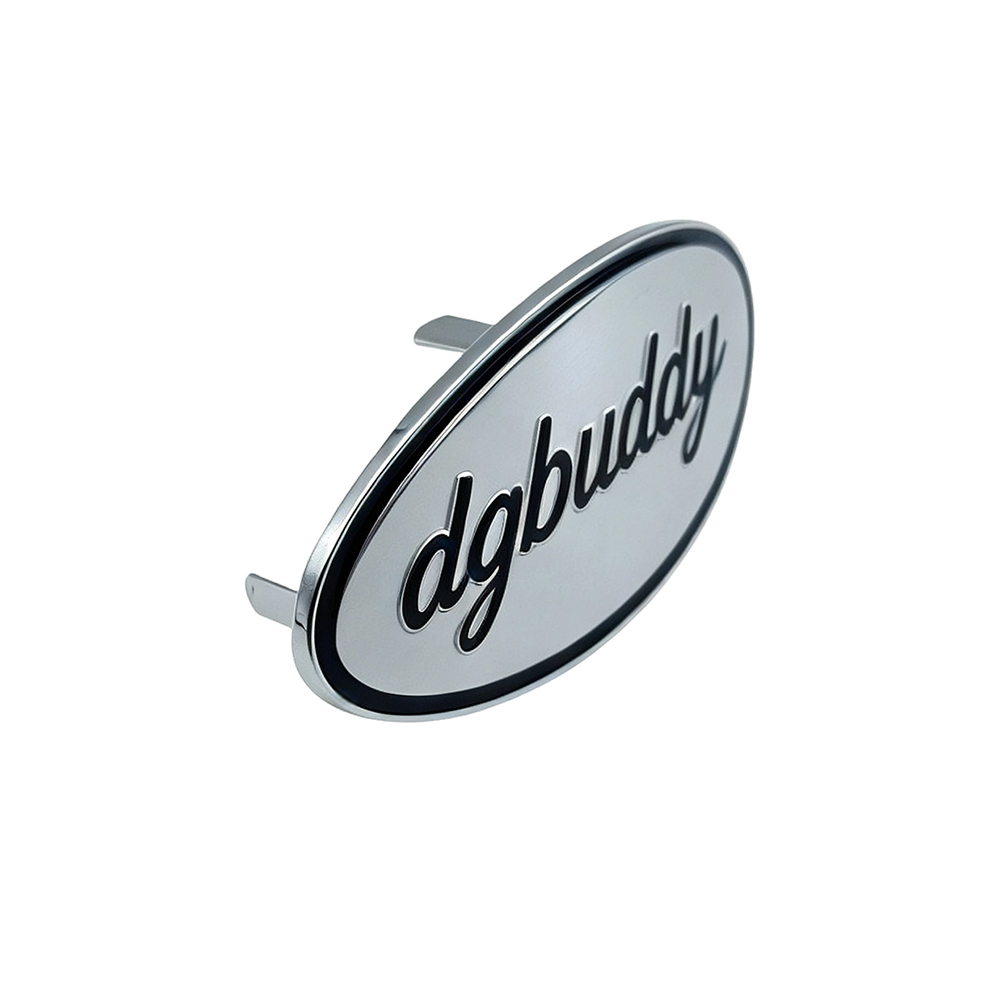
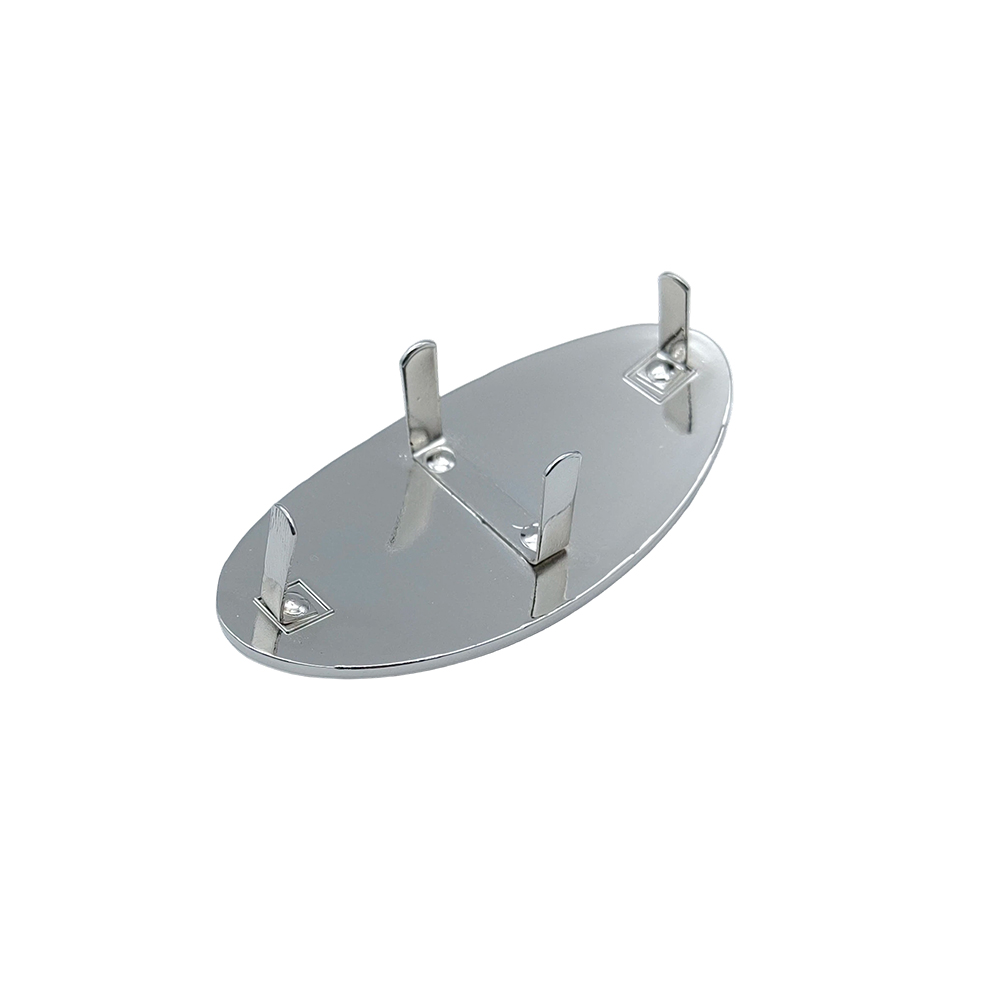
A custom handbag metal logo plate is a branded metal component installed on a handbag, wallet, luggage item, or leather accessory to identify the brand and add a finished hardware detail. The product shown is an oval raised-letter logo plate with four rear prongs, designed to be inserted through prepared holes in the host material and secured from the reverse side. For OEM buyers, the key decisions are not only the logo appearance: material selection, lettering depth, plate thickness, prong location, plating compatibility, and installation testing all affect whether the logo plate performs reliably in bulk production. DG Buddy supports custom logo artwork, custom mold development, finish matching, private-label packaging, and sampling for fashion hardware programs.
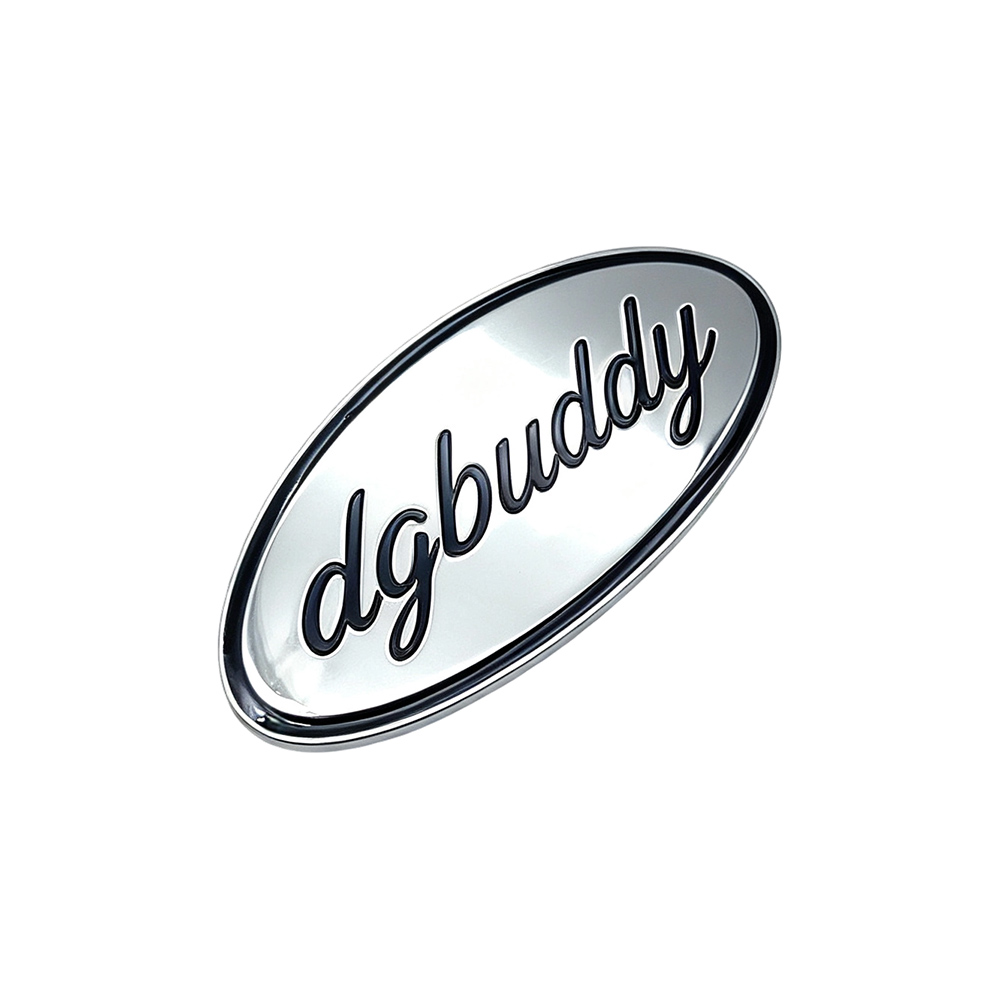
A prong-mounted handbag logo plate uses metal tabs on the reverse side instead of front screws. During assembly, the operator places the plate on the visible side of leather, PU, canvas, microfiber, or another panel material. The rear prongs pass through precisely positioned holes and are folded, clinched, or secured against the reverse surface. This creates a cleaner front appearance than a screw-fixed plate and is often selected for luxury handbag, fashion wallet, and private-label accessory collections.
The attachment system should be treated as an engineering detail rather than a simple decorative feature. A logo plate can look correct during sampling but still create problems in bulk if prongs are too short for the material stack, too soft to hold their shape, too sharp near the lining, or placed outside the tolerance of the leather cutting pattern. During prototype development, one thing buyers often ask is whether the logo plate can be installed before or after lining. The answer depends on the bag structure, prong length, backing reinforcement, and whether the rear side will remain visible after assembly.
A decorative badge may only need visual consistency. A handbag logo plate must also work as part of a repeatable assembly system. It needs accurate rear mounting points, controlled edge treatment, suitable thickness, stable plating, and a logo profile that remains clear after die casting and polishing. For a luxury handbag or private-label leather goods collection, the logo plate is often viewed at close range, so small defects such as blurred lettering, pinholes, uneven plating, or burrs around the rim become noticeable.
Raised lettering has physical limitations. Thin strokes, tight spaces between letters, deep internal corners, and very small script details may not reproduce cleanly in a die-cast mold. The factory should review the vector artwork before creating a custom mold and recommend adjustments where necessary. For example, a narrow gap between two letters may need to be widened so that die casting material can flow properly and polishing does not soften the logo definition. This review helps avoid a sample that looks acceptable in CAD but loses readability after production finishing.
| Comparison Point | Prong-Mounted Logo Plate | Adhesive-Mounted Logo Plate |
|---|---|---|
| Primary Fixing Method | Mechanical attachment through rear prongs | Bonding through adhesive tape or glue |
| Front Appearance | Clean surface without visible screws | Clean surface when adhesive remains stable |
| Suitability for Leather Goods | Suitable when the panel can be punched accurately | Suitable for flatter surfaces and light decorative use |
| Resistance to Heat and Humidity | Generally less dependent on environmental bonding conditions | Can be affected by adhesive grade, humidity, heat, and surface preparation |
| Assembly Requirement | Requires hole positioning and prong-clinching control | Requires clean surface preparation and pressing control |
| Rework Risk | Removal can damage the host material after prongs are folded | Removal can leave adhesive residue or surface marks |
| Best Use | Handbags, wallets, structured leather goods, branded accessories | Temporary branding, lightweight accessories, flat promotional items |
| Buyer Checkpoint | Prong length, prong spacing, backing clearance, leather thickness | Adhesive type, bonding temperature, cure time, and surface energy |
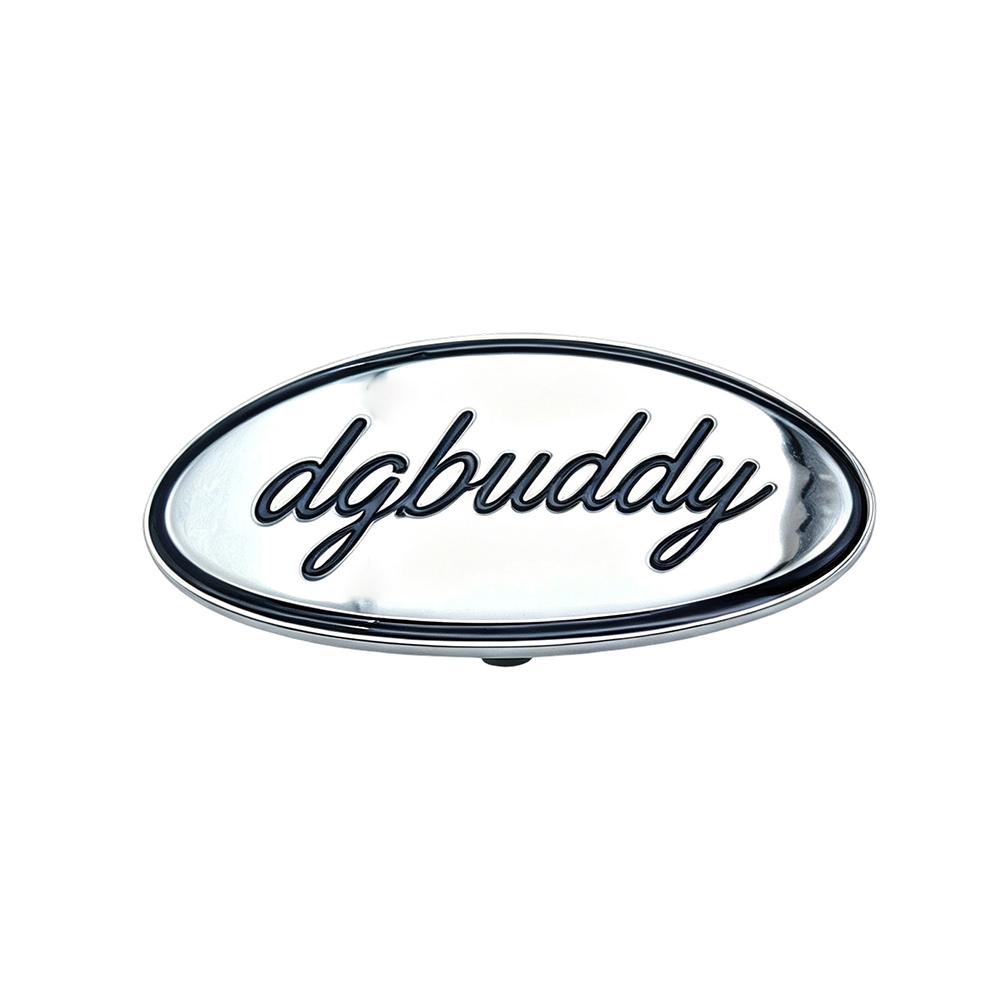
The supplied product appears to be suitable for zinc alloy die casting, especially because it uses a shaped oval body and raised script lettering. Zinc alloy is commonly chosen when a logo design needs three-dimensional detail, controlled relief, integrated prongs, and a repeatable metal shape. Brass remains a useful option for certain stamped logo plates, thinner constructions, or applications where a buyer has a specific brass-based finish target. The right material depends on artwork, thickness, expected quantity, finish, budget, and installation method.
| Evaluation Item | Zinc Alloy Logo Plate | Brass Logo Plate |
|---|---|---|
| Common Manufacturing Route | Die Casting | Stamping, etching, CNC, or forming |
| Complex Raised Lettering | Suitable for shaped, dimensional logo profiles | Suitable for selected designs but may require different tooling routes |
| Integrated Prong Structure | Can be developed as part of the casting and assembly design | May use separate formed pins or tabs depending on the design |
| Tooling Consideration | Custom mold required for proprietary shape and lettering | Stamping die or other dedicated tooling may be needed |
| Design Flexibility | Good for curves, recessed areas, raised logos, and sculpted surfaces | Good for flatter profiles and selected stamped details |
| Weight | Depends on plate thickness and back structure | Depends on material gauge and logo design |
| Polishing Focus | Important for curved surfaces and cast lettering edges | Important for stamped edges and face uniformity |
| Typical Buyer Use | Luxury handbag hardware, fashion accessories, molded logo plaques | Logo tags, flatter nameplates, selected premium leather goods hardware |
Rather than selecting material only by unit cost, buyers should submit the logo artwork and intended installation method for review. A design that works well as a brass stamping may not deliver the same visual depth as zinc alloy die casting. Conversely, a very thin logo plate may require a different approach from a thicker cast badge. DG Buddy can review the artwork, target dimensions, host material, and finish expectation before quoting the appropriate OEM route.
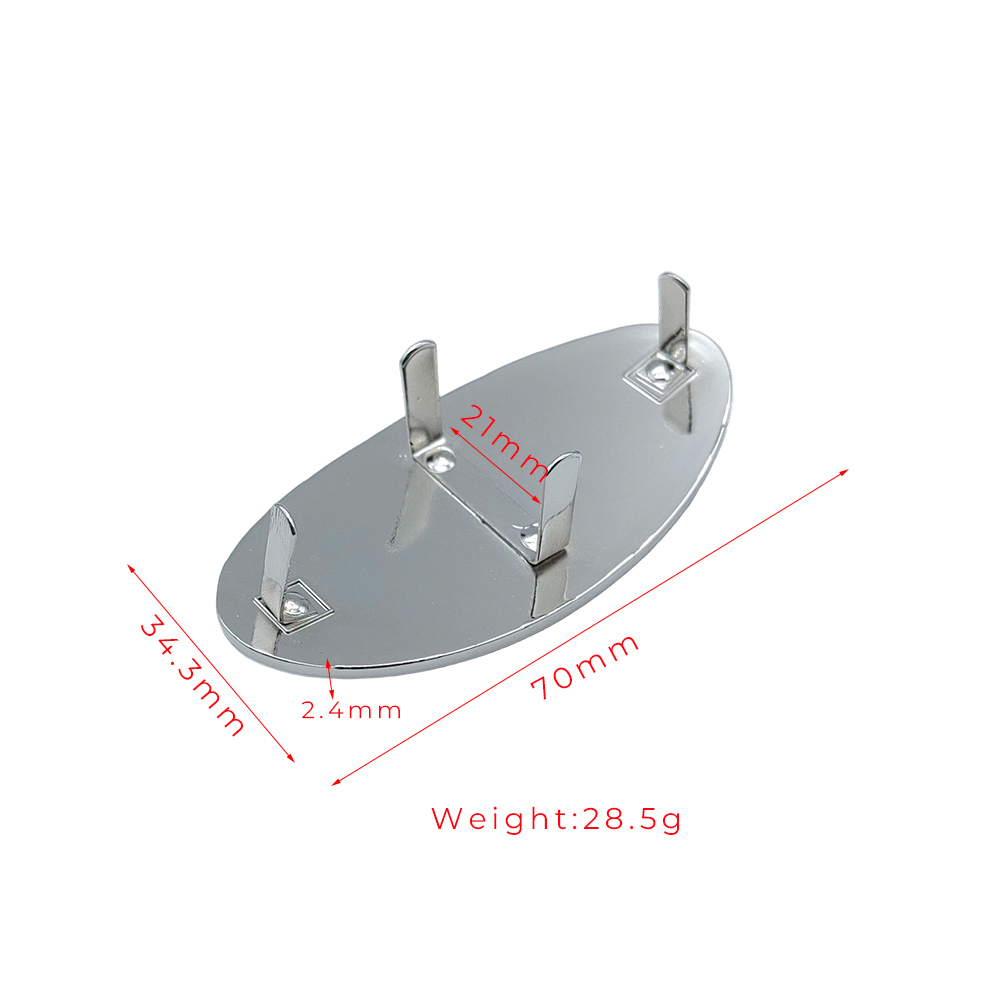
The supplied dimensional image indicates an approximate overall plate size of 70 mm × 34.5 mm with a stated thickness of 2.4 mm and an image-listed weight of 28.5 g. The image also shows a 21 mm reference dimension that may relate to rear-prong spacing or a rear mounting feature. These figures should be confirmed against the final drawing before tooling or mass production, particularly because logo plate installation is sensitive to prong placement.
Overall length determines where the logo plate can be placed on the handbag panel. A long plate may suit a front flap, tote panel, luggage face, or wide wallet construction, but it may be unsuitable for narrow straps or curved seams. Buyers should check available flat space and seam clearance before locking the size.
Width affects visual balance. On a soft bag, a wide metal plate can change the drape of the material. On a structured handbag, it can become a central branding feature. The width should be evaluated alongside the logo lettering height and the finished product’s front-panel proportions.
Thickness affects strength, visual depth, weight, and the profile created above the leather surface. A thicker plate can present raised lettering more clearly but may require longer prongs or greater interior clearance. It should be assessed with the host material, reinforcement board, lining, and packing method.
Prong spacing is one of the most important production controls. The leather cutter, punching die, or sewing-line template must align with the actual prong positions. Even a small mismatch can cause the logo plate to sit crooked, create surface tension, or make assembly slower.
Prong dimensions should match the full thickness of the assembly stack, including leather, PU, lining, interlining, reinforcement, and any backing layer. Prongs that are too short may not clinch securely. Prongs that are too long can create excess bulk, scratch adjacent material, or interfere with internal pocket construction.
The oval edge should be rounded and polished so it does not cut or wear against leather, thread, fabric, or packaging materials. This matters during transportation because metal plates can rub against each other if packing separation is inadequate.
Weight affects the feel and balance of a bag. For a large handbag, 28.5 g may be acceptable as a focal hardware element. For a small wallet, mini bag, or lightweight fabric accessory, buyers may prefer a thinner plate, a smaller logo area, or a revised back structure. Confirm the final weight using an approved production sample.
In our factory workflow, the process begins with the buyer’s vector artwork, target dimensions, finish reference, and mounting requirement. Before opening a custom mold, we review line thickness, letter spacing, internal corners, logo relief, and prong placement. This is where practical changes can prevent later production problems. A logo that appears sharp on a computer screen may need slight adjustments to maintain clean raised lettering after casting, grinding, polishing, and electroplating.
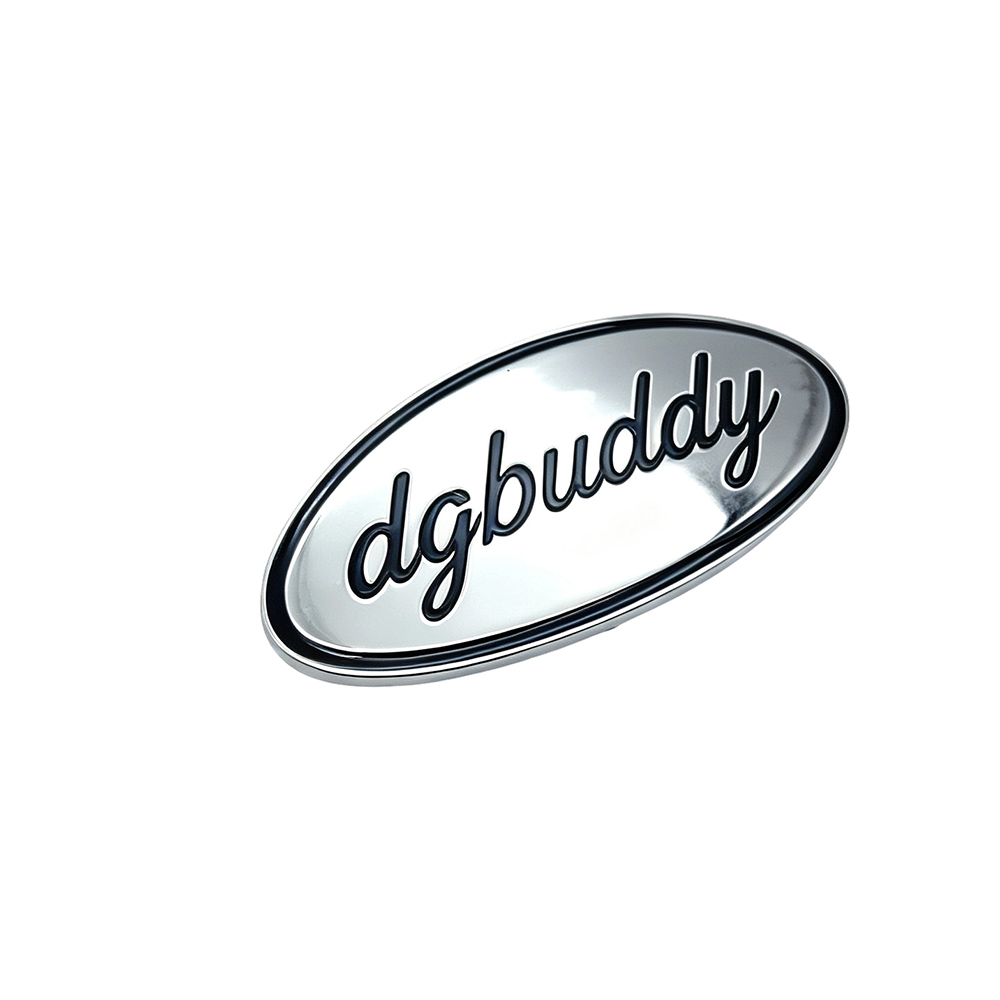
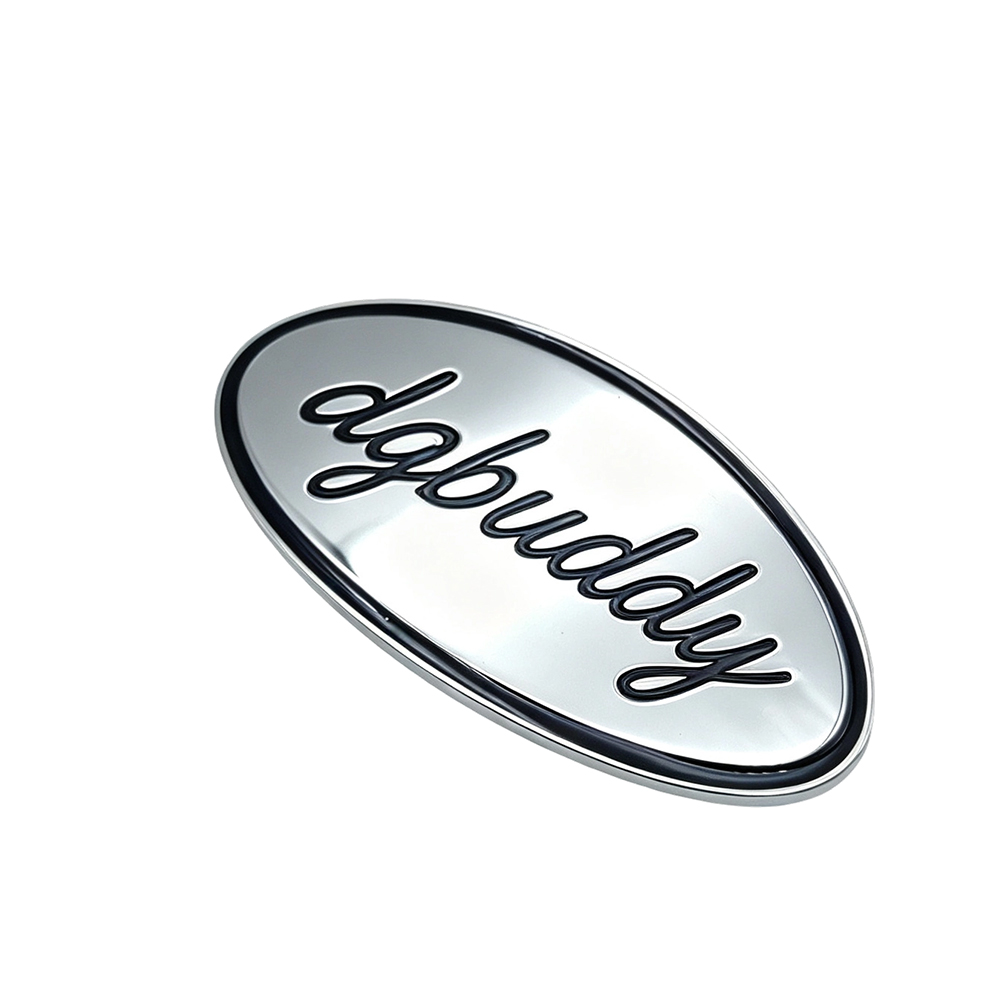
This oval metal logo plate can be used on the front panel of structured handbags, the flap of shoulder bags, travel bags, wallets, cosmetic cases, luggage accessories, and branded leather goods. It is most suitable where the product has a reasonably flat mounting area and enough internal clearance to secure the rear prongs. The polished oval outline works well with rounded bag silhouettes, while raised lettering creates a visible branding point without adding a separate printed label.
During a typical product-development discussion, a fashion brand may initially select a logo plate based on front appearance, then discover that the planned location overlaps a seam allowance or an interior pocket. The practical solution is often not to change the logo itself, but to revise prong location, reduce plate thickness, add a backing support, or move the logo position slightly. This is why a technical drawing and sample installation review are useful before a collection enters bulk production.
| Buyer Type | Suitability | Recommended Discussion Points |
|---|---|---|
| Luxury Handbag Brand | Suitable | Raised lettering definition, finish matching, edge polish, logo placement, and scratch-protective packing |
| Fashion Bag Brand | Suitable | Brand visibility, seasonal finish options, plate weight, assembly speed, and cost target |
| Leather Goods OEM Factory | Suitable | Prong spacing, punching template, material stack thickness, lining clearance, and bulk assembly workflow |
| Private-Label Seller | Suitable after artwork review | Custom mold, logo ownership, packaging, barcode, finish selection, and MOQ planning |
| Small Designer Collection | Suitable for planned bulk programs | Sample evaluation, design simplification where needed, finish options, and custom sample fee policy |
| Temporary Promotional Product | May be less suitable | An adhesive label, printed badge, or lighter hardware option may be more appropriate |
DG Buddy can support OEM and ODM development for custom metal logo hardware. Customization begins with the logo artwork and continues through mold design, size confirmation, raised or recessed lettering, plate thickness, prong layout, finish selection, and packing requirements. A custom mold is normally required when the buyer needs proprietary logo artwork, an exclusive plate contour, special lettering, or a revised back mounting configuration.
Metal logo plates should be protected from prolonged moisture, salt exposure, acidic substances, perfume, cosmetics, and heavy sweat. Electroplated surfaces can be affected when stored in damp conditions or packed before the product is fully dry. For leather goods, keep the finished bag in a dry, ventilated place and avoid stacking metal hardware directly against other metal parts during storage or transportation.
For routine cleaning, use a soft dry microfiber cloth. Do not use abrasive pads, strong solvents, or aggressive metal cleaners because they may scratch the surface or affect the electroplated finish. When cleaning a handbag, avoid soaking the logo plate area. If the product is used in humid climates, packing with suitable separation materials and moisture control can help reduce surface-contact marks during shipping and warehouse storage.
The standard MOQ for individual hardware is 1000 pcs (negotiable based on order details). Final MOQ may depend on the material, custom mold requirement, finish, dimensions, packaging specification, and whether the buyer is ordering matching handbag hardware in the same program. Please share the expected quantity and artwork so the project can be evaluated accurately.
Yes. DG Buddy can support OEM and ODM logo hardware development using your own artwork, provided you have the right to use the design. A vector logo file is preferred for custom mold review. We can evaluate whether the lettering, line width, spacing, raised profile, plate size, and rear prong structure are appropriate for the intended die casting or other manufacturing method.
Custom samples require 5–7 Days after key details are confirmed, including artwork, dimensions, material direction, finish, and mounting structure. Free stock samples available; custom sample fees fully deductible from bulk orders. Courier charges are borne by the customer. A custom sample should be evaluated on the intended leather or material stack whenever possible.
Production Time is 10–15 Days after the approved sample, final specification, and order details are confirmed. Delivery Time is 10–15 Days. Actual scheduling can be affected by custom mold work, plating requirements, package customization, order quantity, and production capacity at the time of order. For time-sensitive launches, provide the requested delivery date early in the sourcing process.
Yes, finish matching can be discussed for coordinated metal hardware programs. For the most reliable evaluation, provide a physical approved sample, color standard, or reference part rather than relying only on digital images. Electroplating appearance can vary with base material, polishing level, lighting, and finish system, so approval should be based on a physical sample whenever a close match is required.
Yes. The rear prong position, length, width, and quantity can be discussed during custom development. The factory should know the thickness of the leather, PU, lining, reinforcement, and backing layers. If possible, provide a panel sample or technical drawing. This helps determine whether the prongs should be folded, clinched, used with a backing plate, or redesigned for the assembly line.
We maintain quality certification documentation and are happy to provide the current valid certificates upon request during your sourcing evaluation. If your project has specific market, material, plating, or testing requirements, please state them before sampling so the project requirements can be reviewed together with the product specification.
The standard packaging is Pearl Foam + OPP Bag + Export Carton. For highly polished, mirror-like, or appearance-sensitive finishes, separation between parts is especially important because metal-to-metal contact can create handling marks. Customized Packaging Available when your project requires individual sleeves, divided trays, labeled bags, barcode packaging, or retail-ready presentation.
DG Buddy works from the perspective of a hardware development partner rather than treating a logo plate as a generic metal accessory. With nearly 20 years of manufacturing experience, our work includes reviewing the connection between logo design, mold feasibility, casting detail, polishing, electroplating, rear mounting, and final assembly. That approach matters because the most visible part of a bag can also become one of the easiest areas for buyers to identify defects.
For OEM projects, communication should cover more than a front-view reference image. We encourage buyers to share the intended application, material thickness, drawing, finish target, installation location, and order plan. This gives the project team a better basis for discussing custom mold requirements, sample priorities, prong layout, QC inspection points, and packaging protection before production begins.
If you already have technical drawings, logo artwork, a physical bag sample, or a target finish, send them to DG Buddy for review. We can help assess whether the logo geometry, custom mold structure, prong layout, and plating direction are appropriate before sampling. If you are still comparing suppliers, share your application, target size, expected quantity, and packaging needs, and we will help clarify the production details that matter for a reliable custom handbag metal logo plate program.
Want to see how our hardware feels in your hand? Download our 2026 Premium Hardware Catalog today, or request a batch of free stock samples for your next quality test—we usually ship them out within 12 hours.