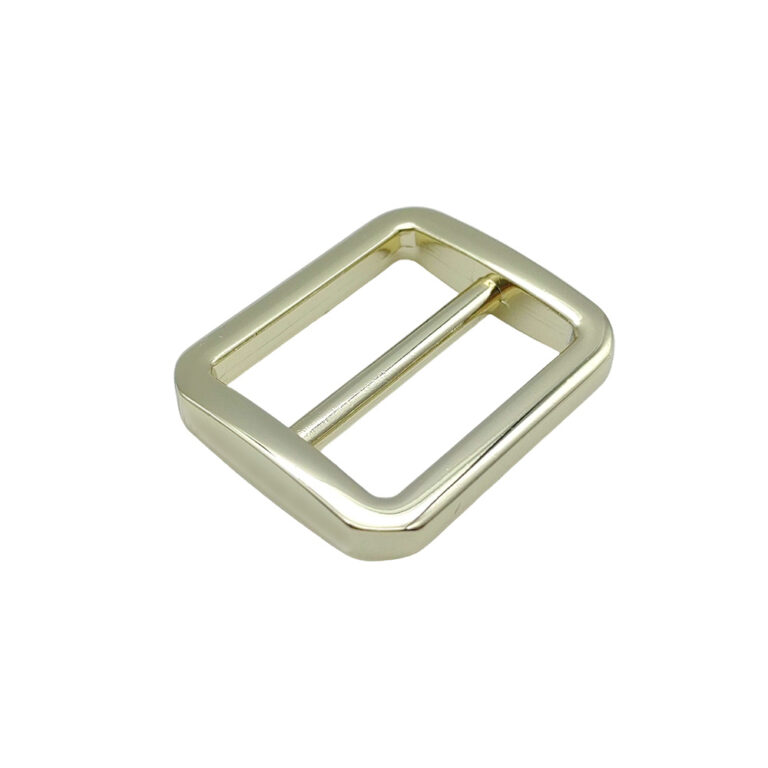
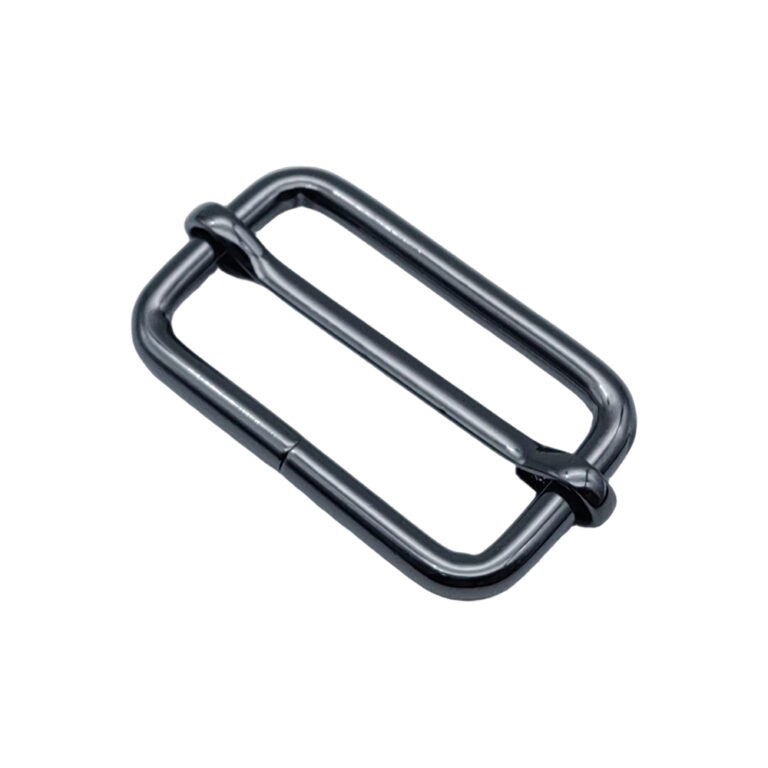
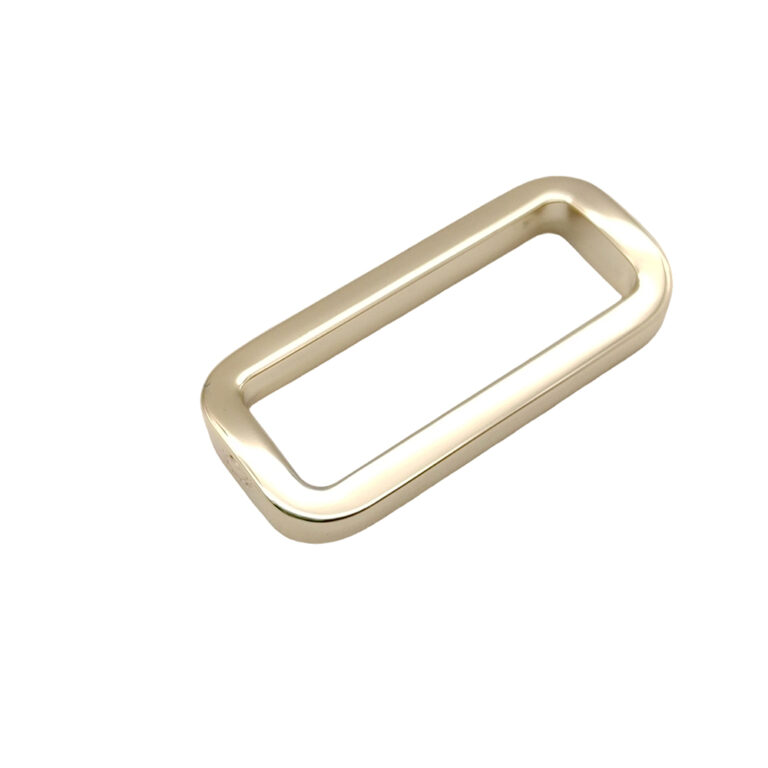
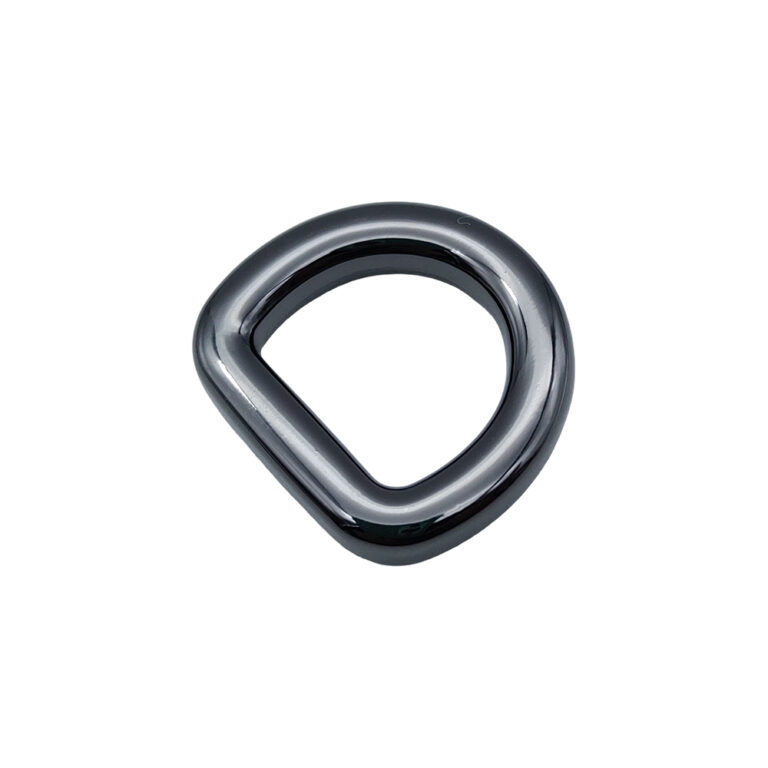
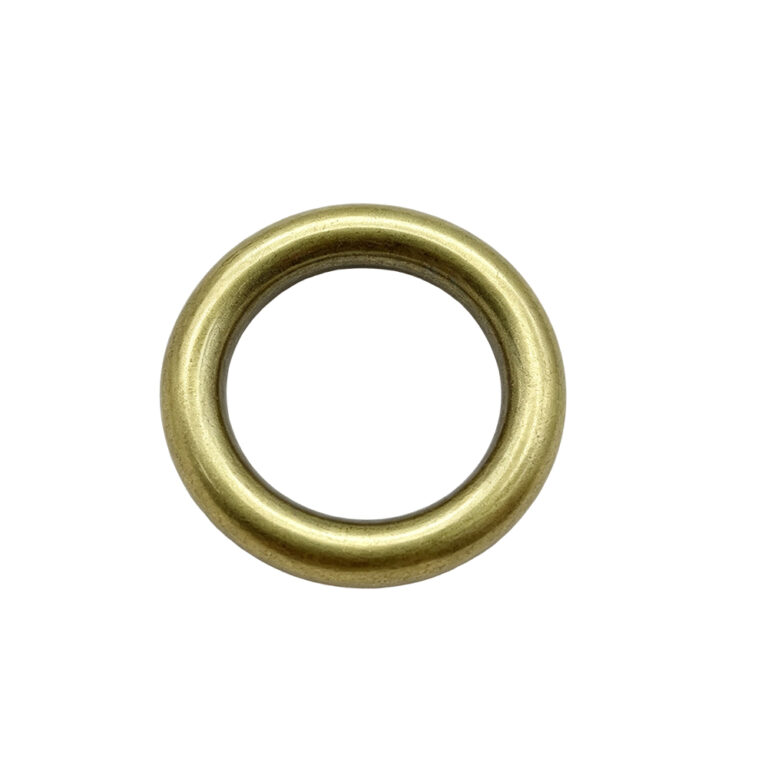
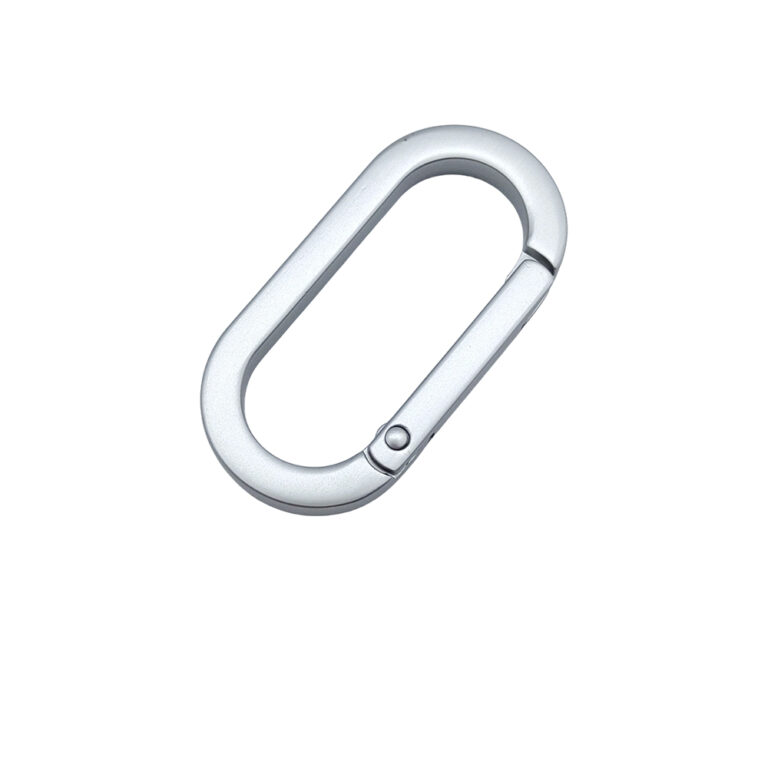
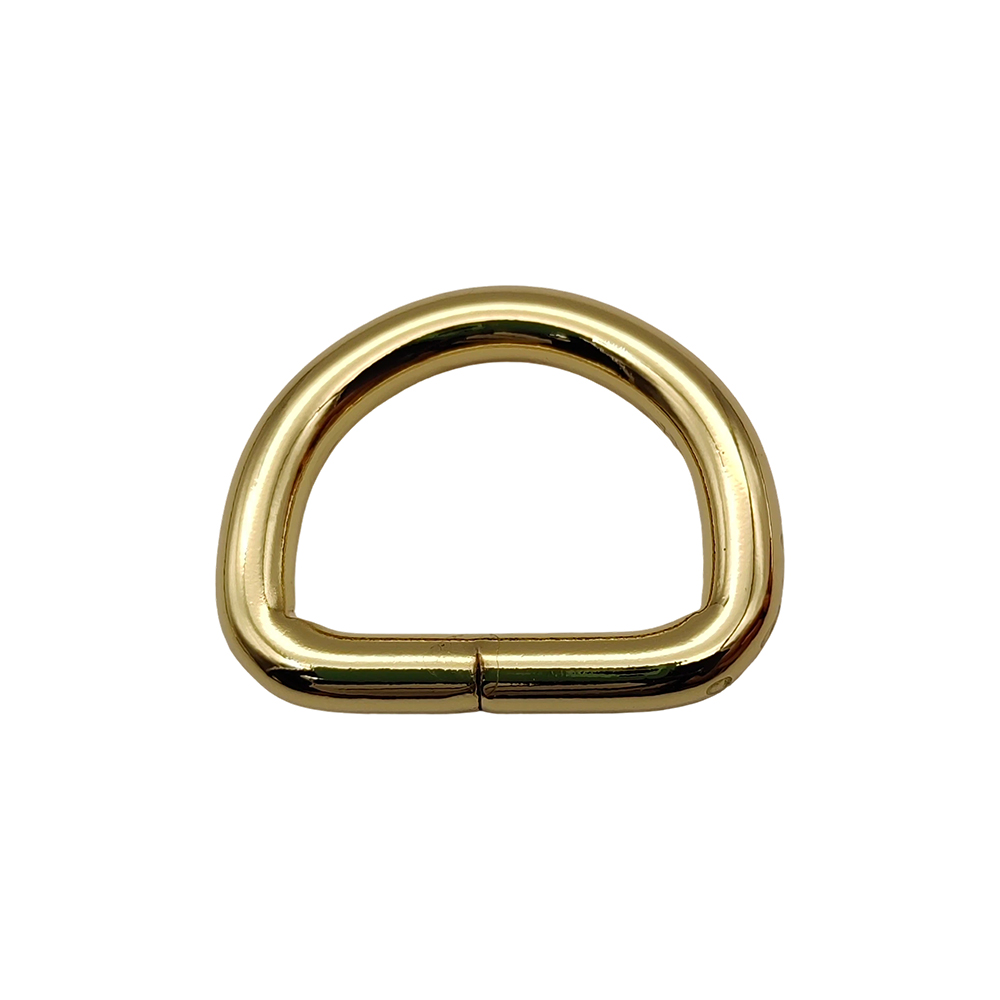
A D ring is a die-formed or wire-bent metal loop shaped like the letter “D,” used to connect straps, charms, and hardware components on handbags and accessories. This gold D ring hardware for bags is available in two base materials — welded iron wire and die-cast zinc alloy — each with different strength, cost, and finish characteristics that buyers should match to the load requirements of their strap design.
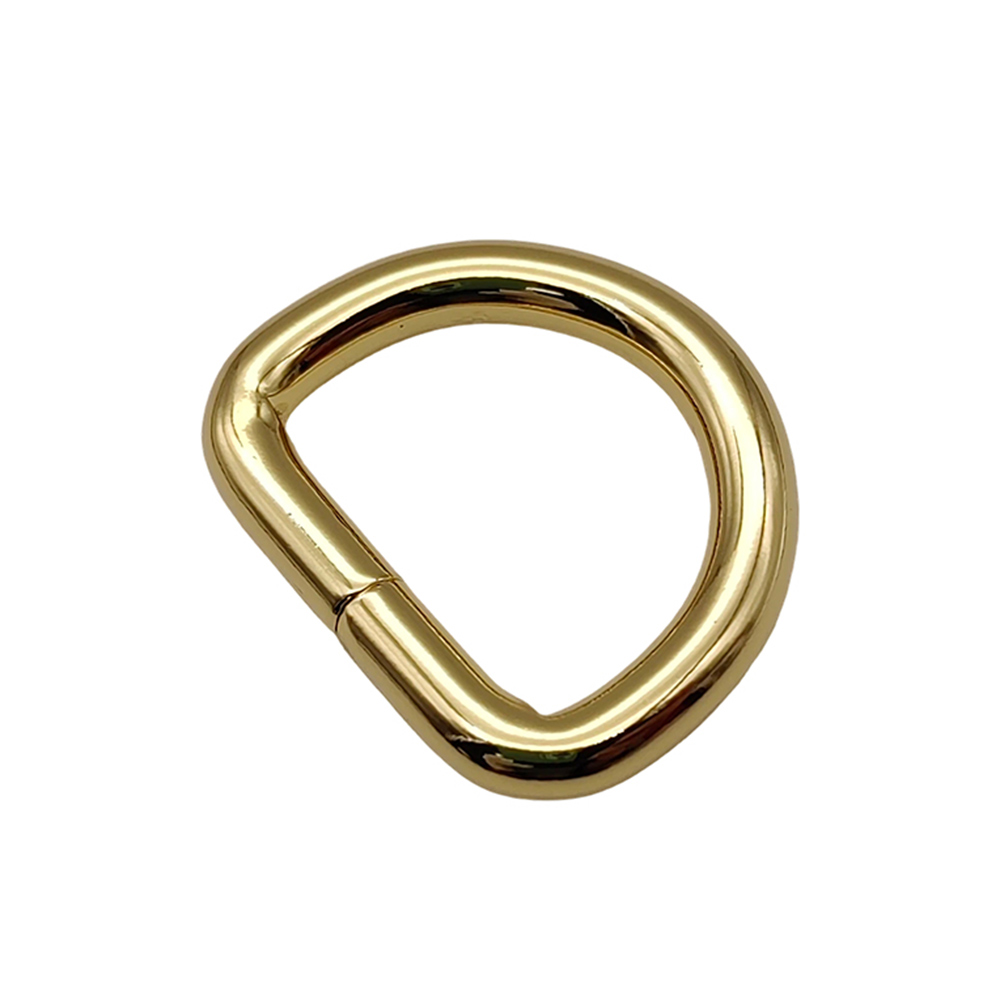
When we build a D ring on the shop floor, the two numbers our customers ask about first are wire diameter and inner opening size. Wire diameter determines how much metal cross-section is actually carrying the load — on this piece it is 5mm, which is a common gauge for mid-weight tote and crossbody straps. The inner opening, 25.5mm here, needs to match the webbing or chain width it will hold, with enough clearance for movement but not so much that the strap can twist and bind.
For the iron version, the ring starts as straight wire cut to length, bent around a forming die, and closed with a spot weld or laser weld at the straight edge. That weld point is the one place on the ring where the metal has been reheated and rejoined, so during prototype development we always check it under magnification before it goes into a die-casting-style bulk run — for iron, that means a wire-forming bulk run. If the weld is undersized or off-center, it becomes the first point of failure under repeated pulling.
Zinc alloy D rings skip the weld step entirely. Molten zinc alloy is injected into a closed mold cavity, so the ring comes out as one continuous piece with no seam. This is why zinc alloy is often the default recommendation when a buyer cannot inspect every unit for weld quality, or when the ring will see frequent, repetitive stress rather than one-time heavy loads.
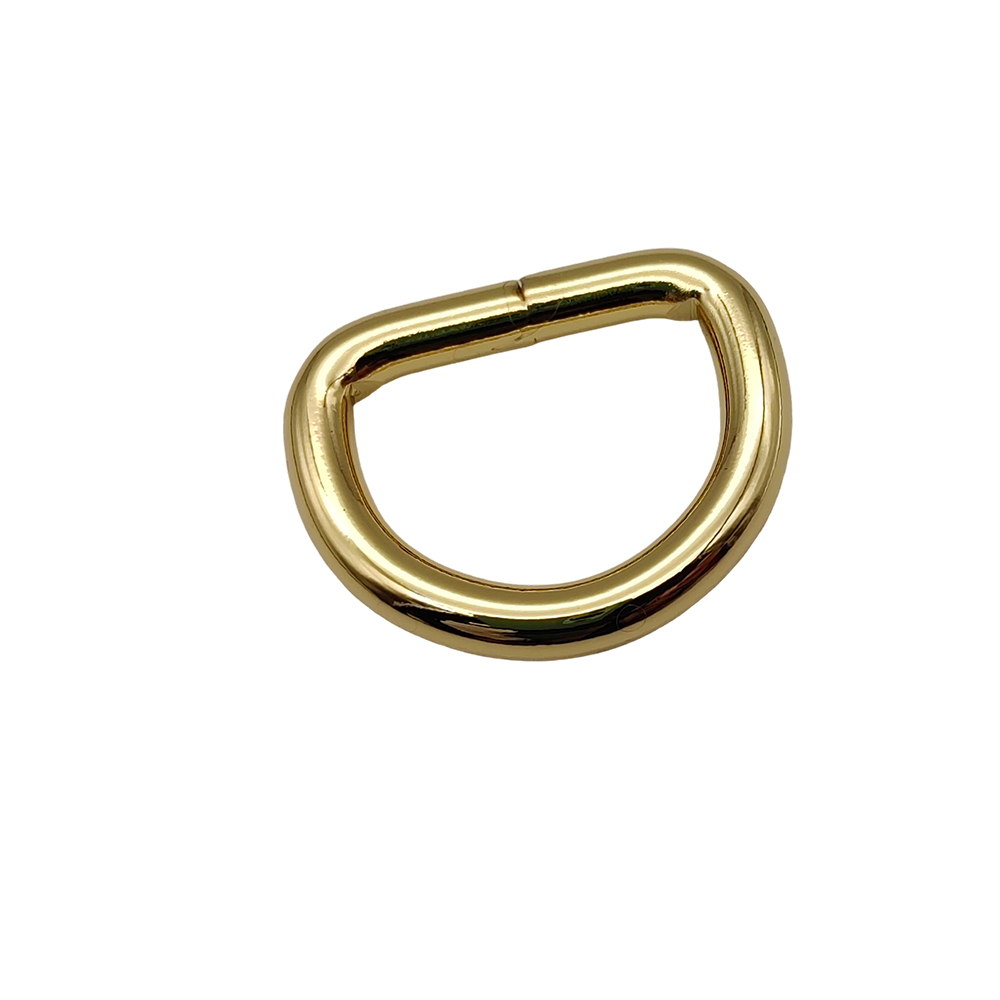
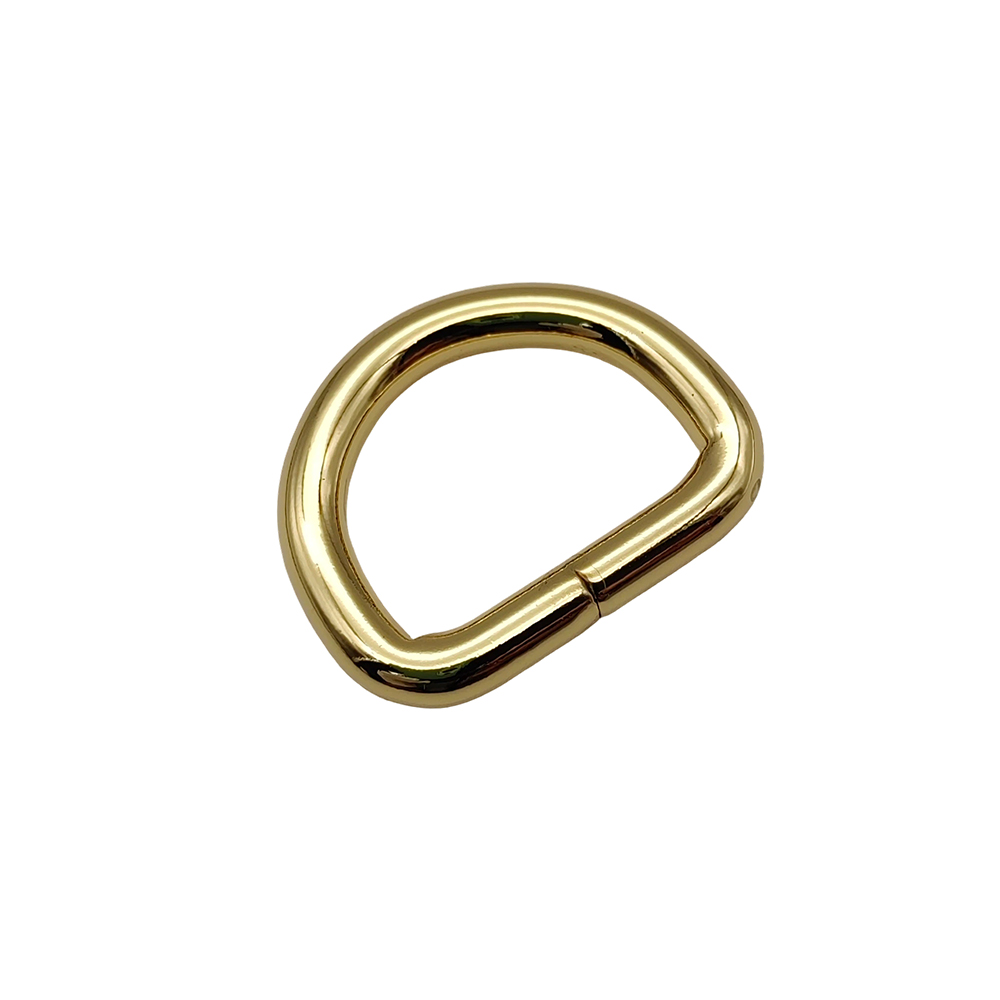
A welded D ring is formed from a single length of wire bent into shape, with the two ends joined by resistance or laser welding at the flat bar. It is the standard method for iron and stainless steel D rings because these materials are not easily die-cast at this size.
The seam is a byproduct of the wire-bending process, not a defect. Zinc alloy rings avoid a seam because they are formed in one shot inside a mold, rather than bent and closed afterward.
| Factor | Iron (Welded) | Zinc Alloy (Die-Cast) |
|---|---|---|
| Tooling cost | Low — no mold required for standard sizes | Higher — custom mold needed for non-standard shapes |
| Unit cost at low MOQ | Generally lower | Generally higher until mold cost is amortized |
| Unit cost at high volume | Similar or slightly higher due to labor-intensive welding | Lower per piece once mold is paid off |
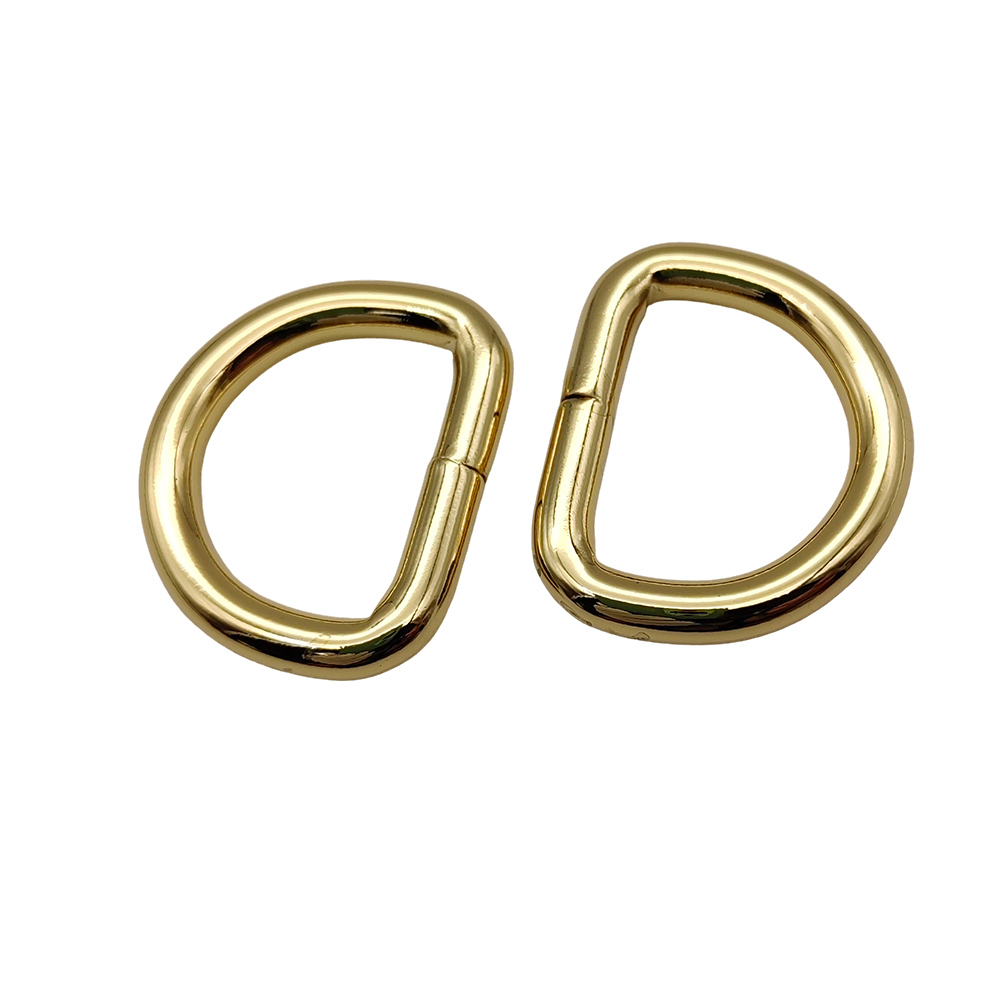
Buyers comparing an iron D ring hardware option against a zinc alloy D ring are really deciding between two different manufacturing philosophies — formed wire versus die casting — and the practical differences show up in strength, appearance, weight, and customization.
| Comparison Point | Iron (Welded Wire) | Zinc Alloy (Die-Cast) |
|---|---|---|
| Construction | Bent wire, closed with a weld seam | One-piece, seamless die casting |
| Weak point | Weld joint under repeated flex | Thin cross-sections near the mold gate |
| Best load type | Steady, in-line pulling load | Mixed directional and rotational load |
| Shape flexibility | Limited to wire-formable shapes | Can include logos, bevels, and complex profiles |
| Typical weight | Lighter for the same wire diameter | Slightly heavier due to solid cross-section |
| Surface finish result | Slight seam line may show through thin plating | Smoother, more uniform plating surface |
| Recycled content availability | Widely available as recycled steel wire | Available but less commonly sourced as recycled zinc |
| Typical unit price at 1,000 pcs MOQ | Lower | Moderate, mold cost dependent |
Neither material is universally “better.” A crossbody strap that sees constant swinging motion benefits from the more even stress distribution of a die-cast zinc alloy D ring, while a structured tote handle with mostly straight-line pulling can perform well with a properly welded iron D ring at a lower initial cost.
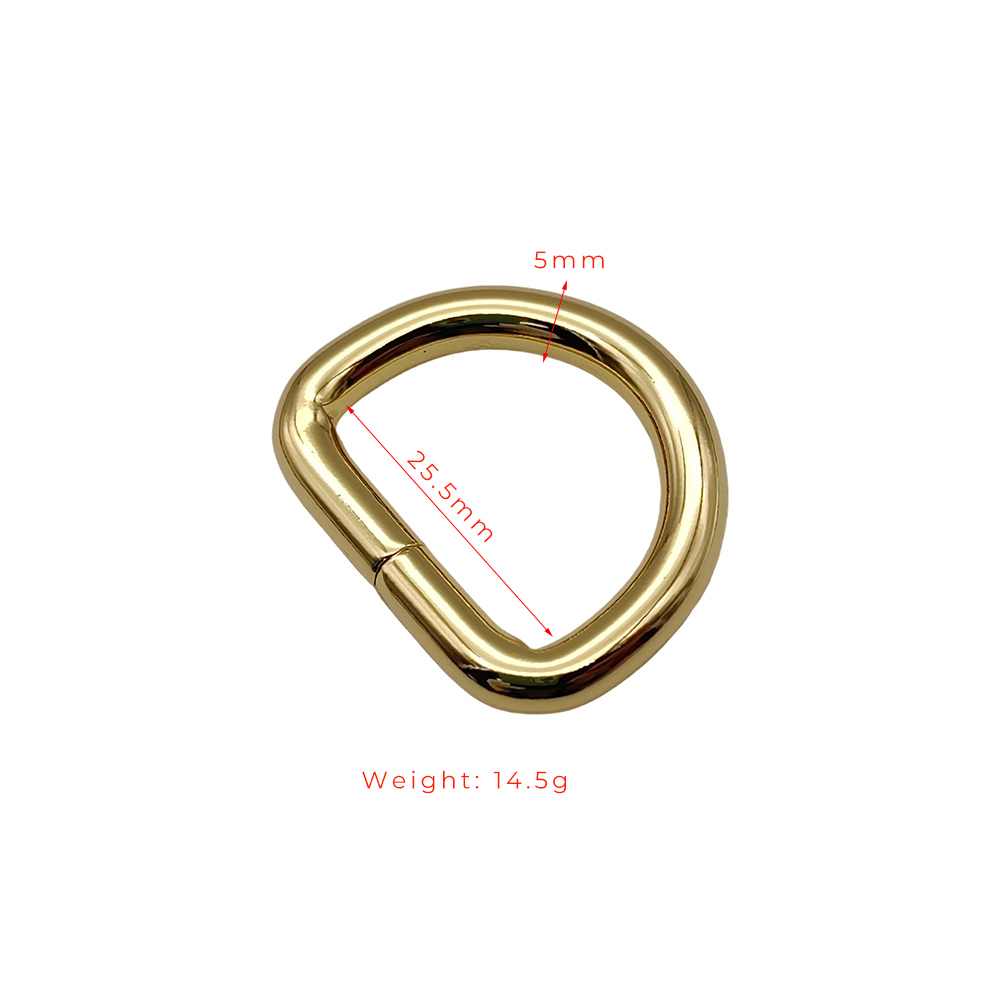
Reading a D ring’s technical drawing correctly prevents most sizing disputes at the sampling stage. Here is what each dimension on this drawing actually controls:
Raw iron wire arrives on the shop floor by the coil, cut to length, then run through a bending fixture that shapes the D profile in a single pass. The two ends are welded closed, and the weld bead is ground flush so it doesn’t create a rough edge against strap webbing. From there, every ring goes through multiple stages of mechanical polishing — this step exists because a single polishing pass leaves micro-scratches that show up clearly once gold plating is applied, especially on a curved surface where light reflects unevenly.
Only after polishing does the ring go to the electroplating line, where it is hung on racks and run through a series of plating baths to build up the gold-tone layer. Hanging, rather than barrel plating, is used for this size and finish because barrel plating can create uneven wear patterns on rings that knock against each other in the drum. A sample batch is then put through salt spray testing to check how the plating holds up under simulated humidity and corrosion exposure before the order proceeds to full production. Every finished lot passes through 100% visual inspection for plating consistency, followed by weight-based spot checks and packing.
Suitable for:
This D ring can be adapted through custom mold development for non-standard shapes (zinc alloy only), laser logo marking, emboss or deboss logo detailing, oil filling for color-filled logos, alternative electroplating finishes such as nickel, gunmetal, or antique brass, private label packaging, barcode labeling, hang tag attachment, and retail box packing for direct-to-shelf brands. Iron wire rings support laser marking and alternative plating but cannot accommodate embossed logo faces, since there is no flat cast surface for the detail to sit on.
One customer developing a mid-size crossbody line came to us with a strap design rated for a specific pull-test threshold. Their original supplier had quoted a zinc alloy D ring, but the buyer wanted to compare cost against an iron alternative. During prototype development, we ran both versions through the same pull test — the iron ring performed well in a straight pull but showed early stress marks near the weld under a twisting motion that simulated how the strap actually moves when worn crossbody.
Based on that test, the customer stayed with zinc alloy for the crossbody line but switched to iron for a separate tote handle design where the load is mostly straight-line. That kind of side-by-side testing, rather than a generic “which is better” answer, is usually what settles the material question.
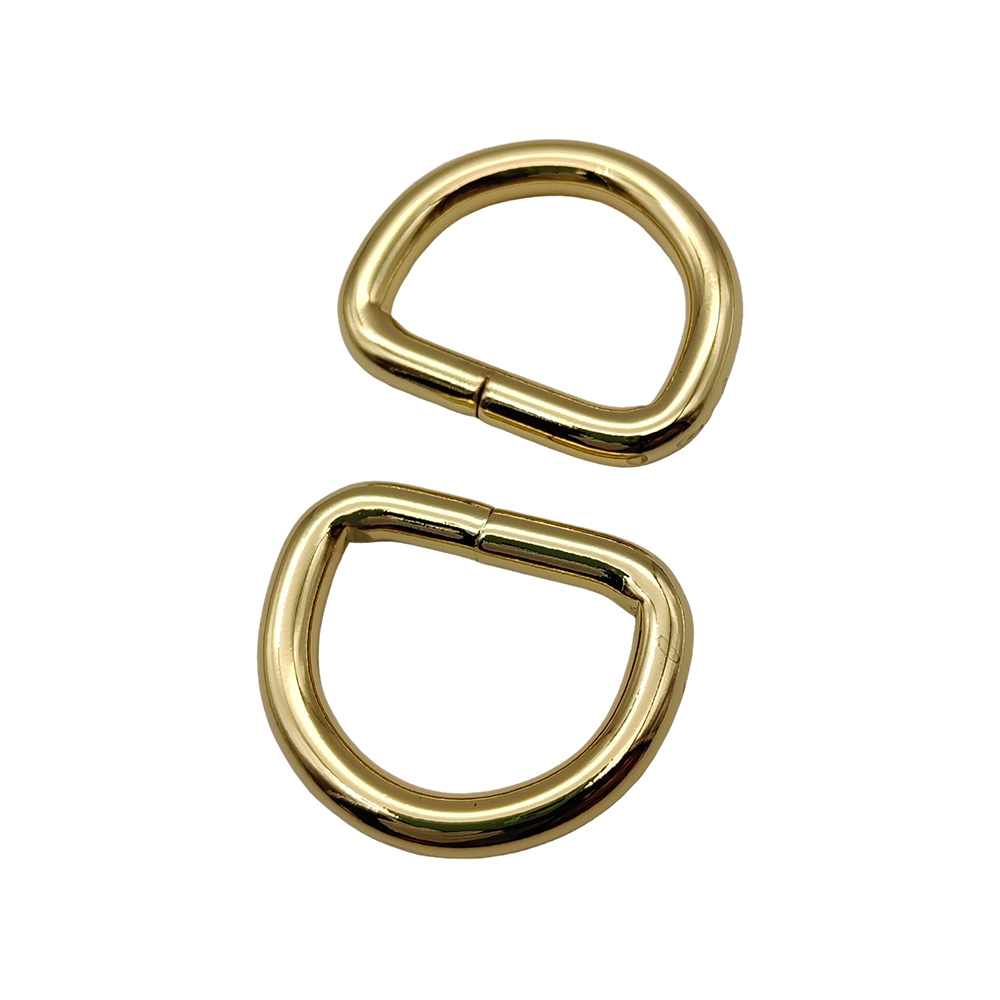
Typical applications include handbag strap connectors, bag charm attachment loops, keychain hardware, luggage tag rings, and belt or harness accessory loops.
Gold-plated hardware, whether on iron or zinc alloy, responds to humidity and acid exposure in similar ways since the visible surface is the same plating layer. Store finished bags away from high-humidity environments to slow oxidation at the plating edges.
Sweat and skin oils carry acids that can dull gold plating over time, so wiping hardware after direct skin contact helps preserve color depth. During transportation, keep hardware wrapped or separated to avoid metal-on-metal contact, which is the most common cause of surface scratching in transit. Clean with a soft, dry cloth only — avoid ammonia-based or abrasive cleaners, which can strip thin plating layers faster on the sharper contours of a welded iron ring than on the smoother cast surface of a zinc alloy ring.
The standard MOQ for individual hardware items like this D ring is 1000 pcs, negotiable based on order details such as custom finish or logo requirements.
Custom or tooled samples take 5–7 days. Free stock samples, where available in standard sizes and finishes, typically ship within 1–3 days.
Free stock samples are available for standard sizes and finishes. Custom samples requiring new tooling or specific wire diameters carry a sampling fee, which is fully deductible from a confirmed bulk order.
Yes. Zinc alloy is available as an alternative material for this shape, typically recommended when the design needs a seamless finish or a custom logo face.
Laser marking works on both iron and zinc alloy. Emboss and deboss detailing require a die-cast zinc alloy construction since iron wire has no flat surface for the logo to sit in.
We maintain quality certification documentation and are happy to provide the current valid certificates upon request during your sourcing evaluation.
Production time is 10–15 days, and delivery time is typically 10–15 days depending on destination and shipping method.
Standard packaging is pearl foam plus OPP bag inside an export carton, or customized packaging on request. Courier charges for samples are borne by the customer.
We have spent close to two decades working specifically in handbag hardware, which means our engineering team has seen both wire-forming and die-casting processes fail in the same ways enough times to catch problems before they reach a customer’s production line.
We support OEM development from early prototype through bulk production, run 100% inspection before packing, and keep sampling turnaround fast enough that material comparisons like iron versus zinc alloy can be tested side by side rather than guessed at. Our team communicates directly with your development or sourcing staff throughout the project, not through a layer of sales intermediaries.
If you already have technical drawings for your strap hardware, send them over and we can confirm whether iron or zinc alloy fits your load requirements before you commit to tooling. If you’re still evaluating suppliers and want to compare both materials side by side, we’re happy to prepare matched samples in each so you can run your own pull tests.
Whether you need custom logo engraving on stock designs or fully custom molded shapes, our factory handles it all. From initial 3D engineering to zinc alloy die casting, 48-hour salt spray tested electroplating, and strict manual QC, we support complete OEM/ODM hardware development.
Tell us your project requirements today. We offer free stock samples (shipped within 12 hours) and our mold fees are credited back to you on mass production orders.