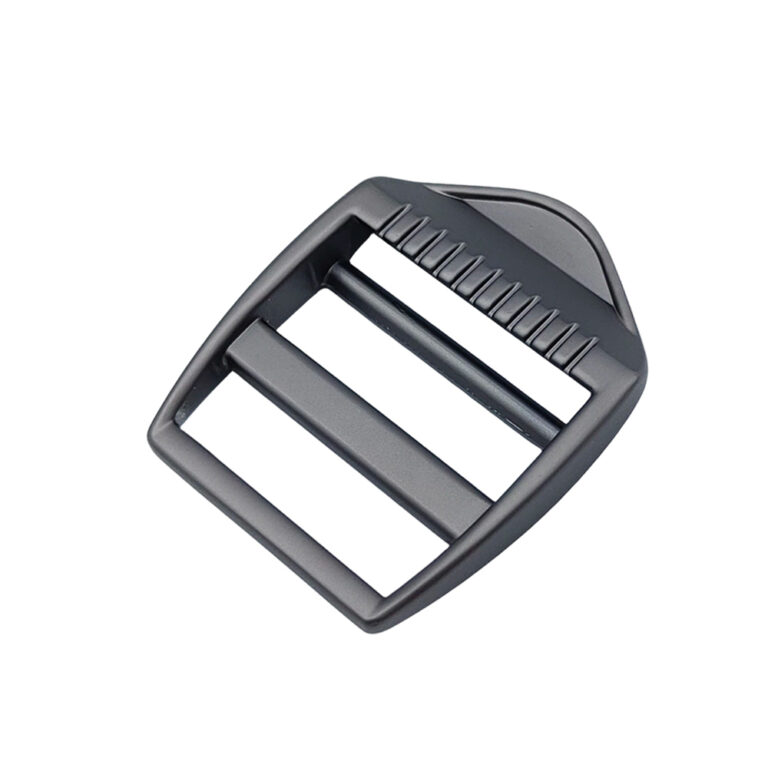
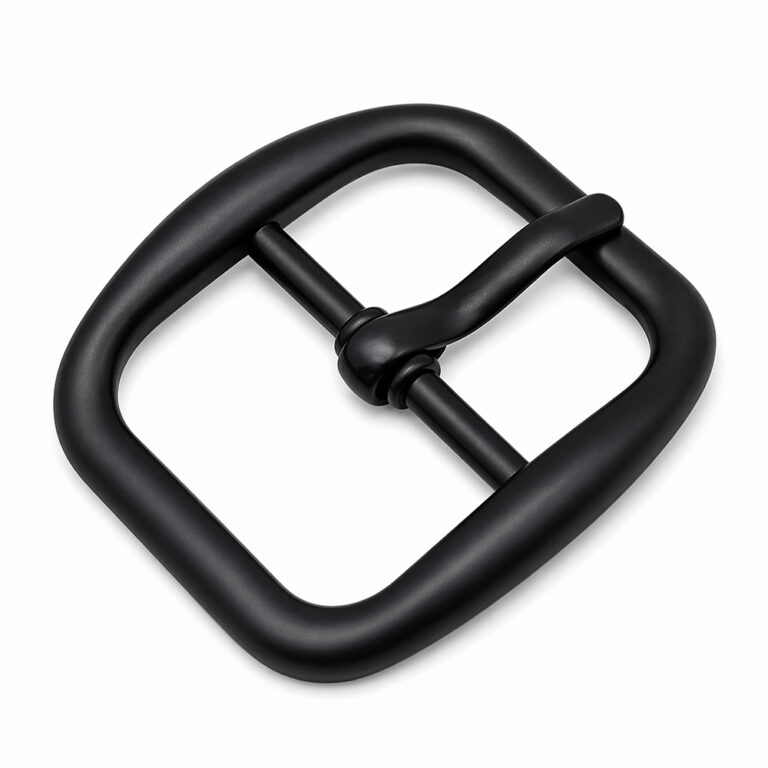
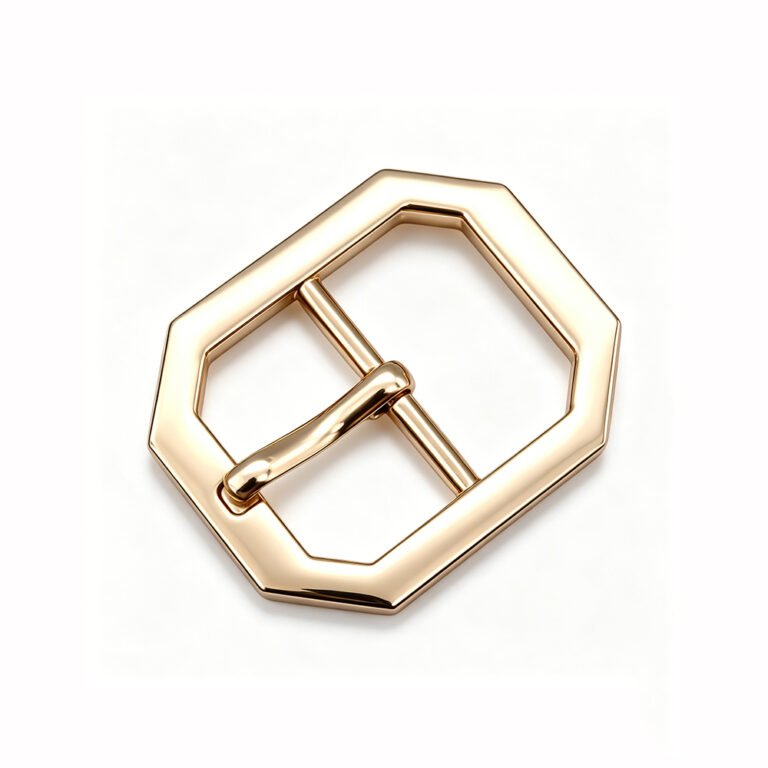
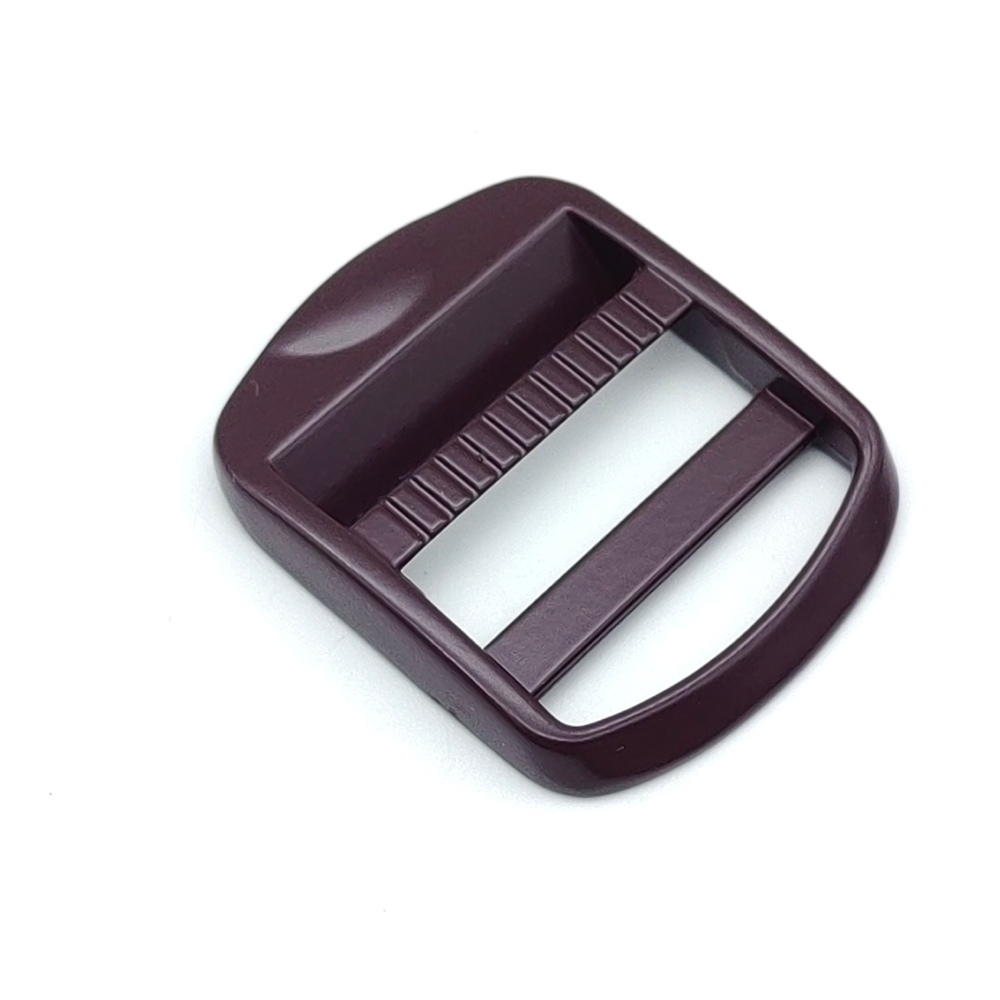
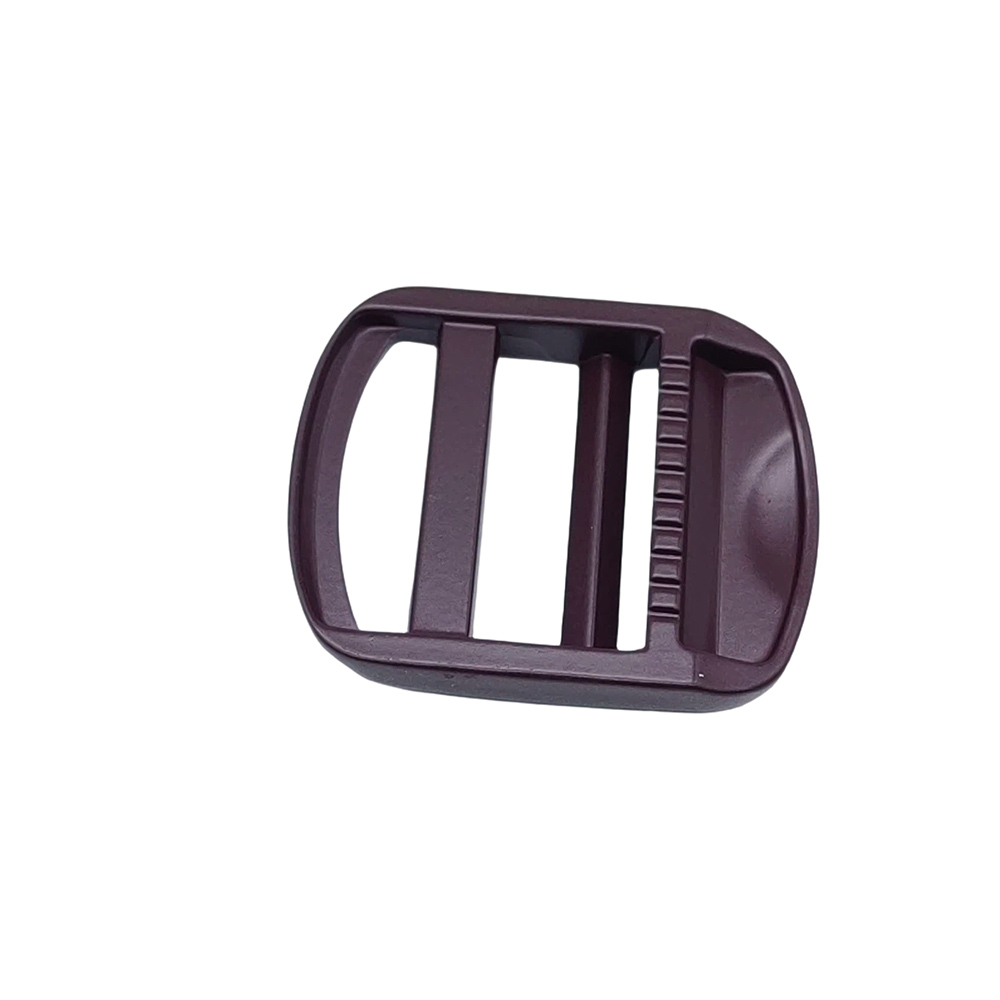
A 25mm ladder lock buckle is a single-piece zinc alloy strap adjuster designed to thread webbing through dual parallel slots and lock tension against a central toothed bar. Buyers use the 25mm ladder lock buckle when they need reliable length adjustment on backpack straps, luggage, outdoor gear, or pet collars without adding bulk or requiring tools. The die-cast construction delivers consistent rigidity, while the burgundy finish allows color-matched hardware. Free stock samples are available and custom sample fees are fully deductible from bulk orders. Nearly 20 years of manufacturing experience supports both standard and OEM runs.
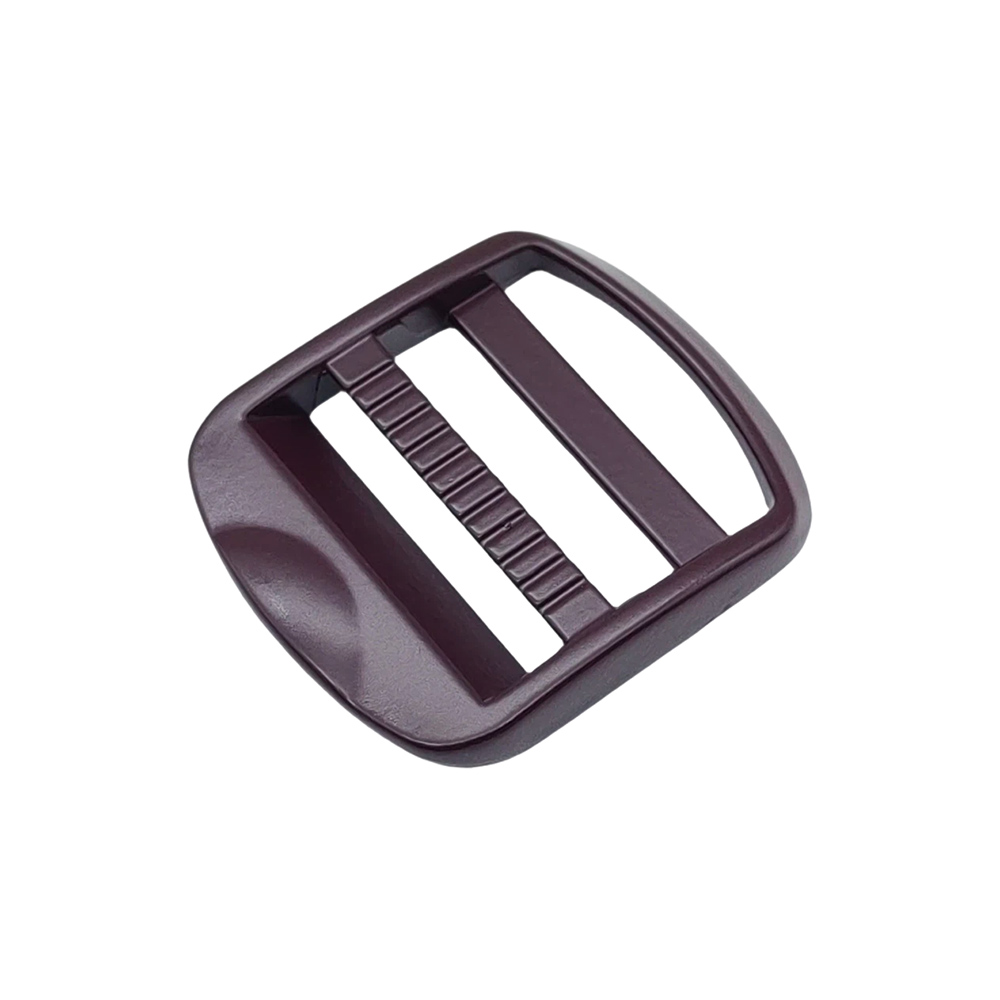
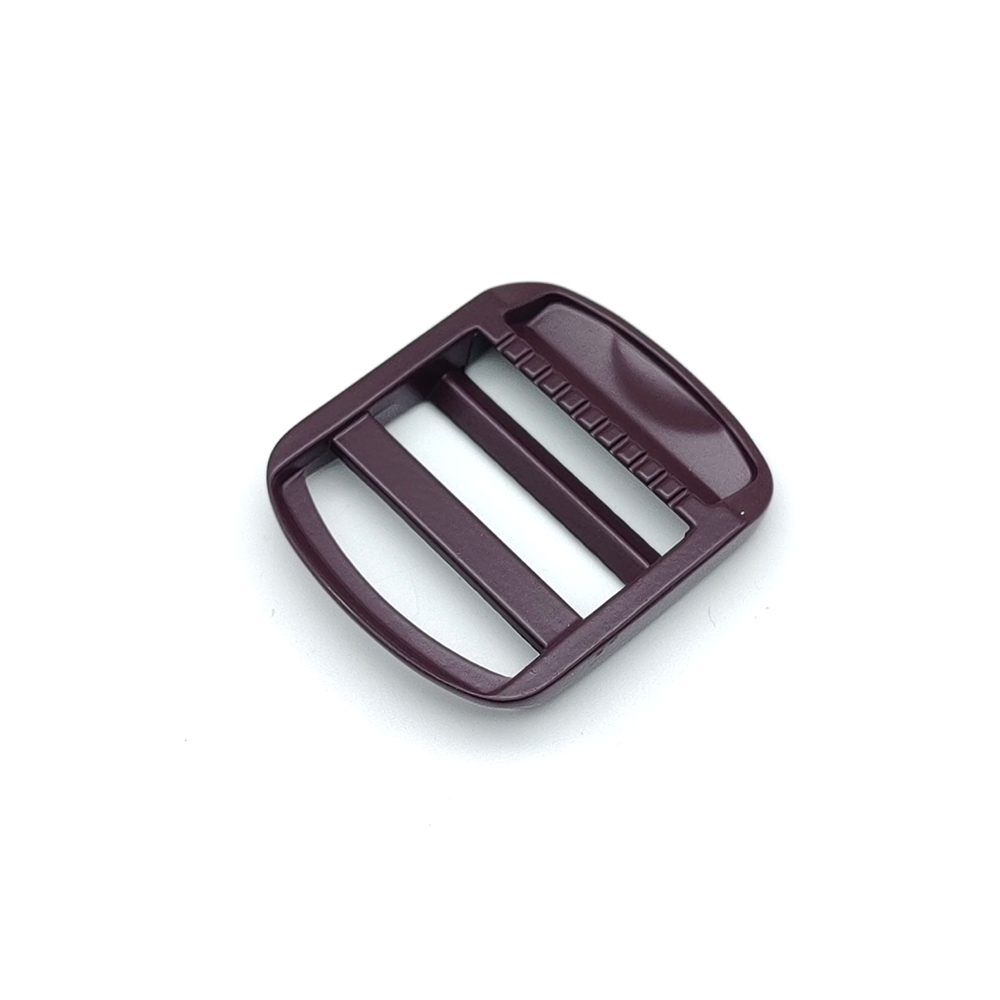
One thing buyers often ask is how a ladder lock slider actually holds under load. The webbing enters the first slot, passes under the central toothed bar, and exits the second slot. When the free end is pulled, the teeth dig into the webbing fibers and create a self-locking friction force. Releasing tension requires lifting the webbing slightly off the teeth—an intentional design that prevents accidental slippage during movement. In our factory we see this geometry used across backpack strap adjuster applications because it balances security with single-hand operation.
The same principle applies whether the part is called a tension lock buckle, webbing ladder lock, or Tri-Glide Slider Buckle. What changes performance is the tooth profile depth, the clearance between the bar and the frame, and the stiffness of the zinc alloy body. A soft or poorly filled casting can flex enough under repeated load to reduce tooth engagement. That is why we run every new mold through a simple pull-test protocol before releasing samples.
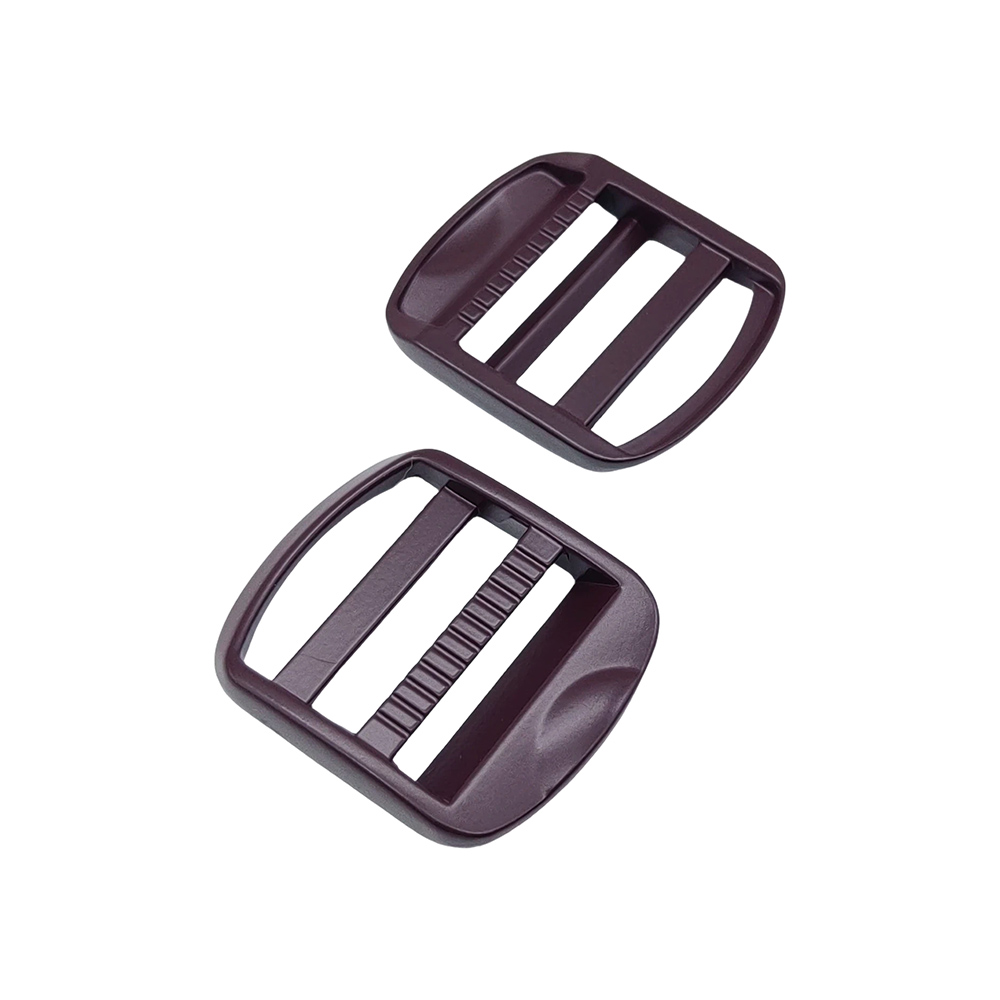
Both terms describe the same basic family of strap adjusters. “Ladder lock” emphasizes the sequential slot-and-bar geometry that resembles climbing a ladder. “Tri-glide” refers to the three contact points the webbing makes with the frame. In practice the industry uses the names interchangeably for the same part. When a buyer searches for ladderlock buckle or ladder lock slider buckle they are usually looking for this exact style.
The 25 mm slot is the functional interface. If the webbing is even 1 mm narrower, lateral movement can reduce tooth contact. If it is wider, threading becomes difficult and the edges of the webbing can fray against the frame. Overall length (shown as 37 mm on the drawing) mainly affects how the part sits on the finished strap; it does not change the locking force.
| Attribute | Zinc Alloy Ladder Lock | Typical Plastic Ladder Lock |
|---|---|---|
| Frame Rigidity | Higher under sustained load | Can flex or creep over time |
| Weight (25 mm size) | Approx. 9.5 g | Often 4–7 g |
| Surface Options | Electroplating or solid color paint | Molded-in color only |
| Heat Resistance | Better in high-temperature environments | Can soften near 80–90 °C |
| Cost at Volume | Higher material cost, longer tool life | Lower unit cost |
| Recycling | Metal stream | Plastic stream |
| Typical Use | Premium outdoor, luggage, pet gear | High-volume apparel and light packs |
| Customization | Easy color and logo options | Limited to mold changes |
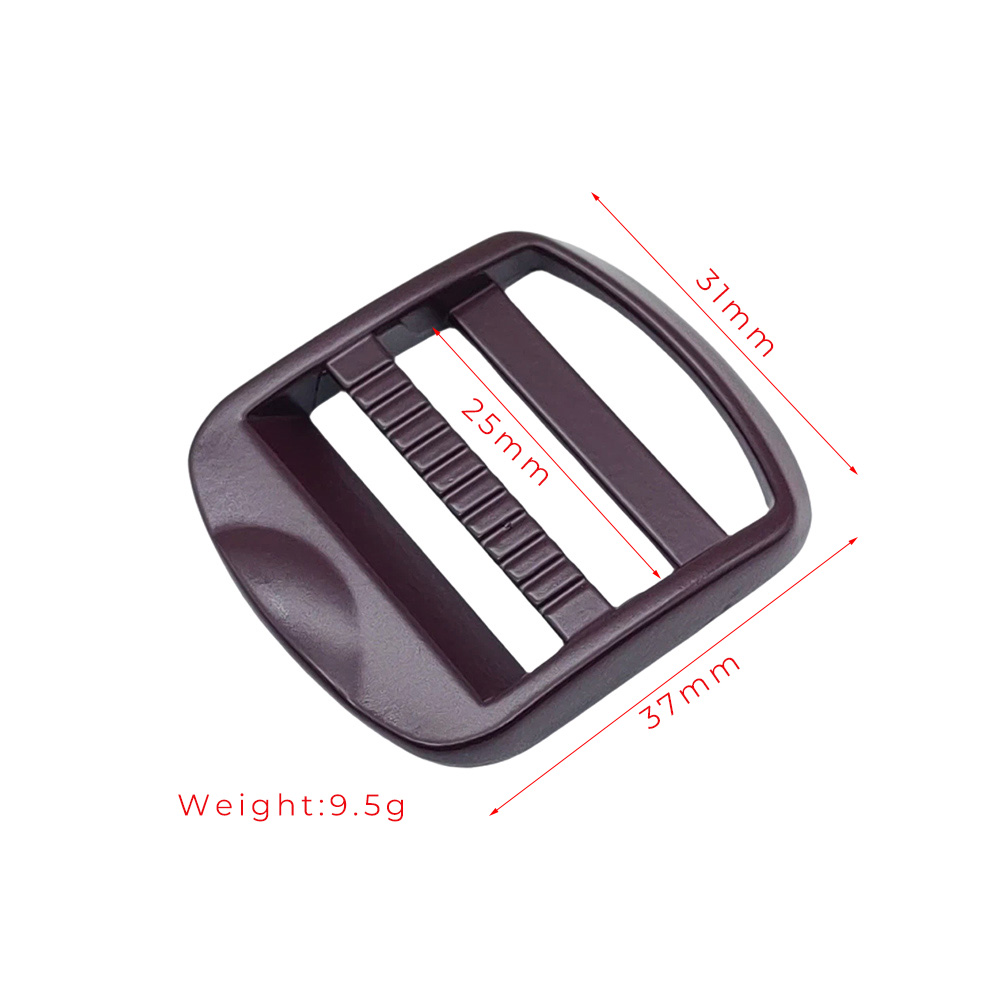
The supplied drawing shows three critical measurements. The 25 mm dimension is the clear webbing path—the dimension buyers must match to their strap width. The 31 mm dimension is the overall width of the frame; this determines how much the hardware protrudes beyond the webbing edges. The 37 mm dimension is the overall length along the strap axis. Weight is listed at 9.5 g, which is low enough for most backpack and luggage applications while still providing the rigidity expected from zinc alloy.
When evaluating a ladder lock for webbing, procurement teams should also ask for the tooth height and the radius on the entry edges. Sharp edges increase webbing abrasion; insufficient tooth height reduces holding force. We keep both parameters under process control so that the same part number remains consistent across production lots.
Raw zinc alloy is melted and injected into a multi-cavity die-casting mold. After cooling, the gates are trimmed and the parts move to a grinding station that removes any residual flash. Multiple polishing stages follow—first a coarser grit to level the surface, then finer compounds to prepare for finishing. The polished blanks are either electroplated or painted in the specified burgundy shade. After curing, every piece receives a 100 % visual inspection for surface defects and a sample-based functional check for tooth engagement. Final packing uses pearl foam + OPP bag + export carton to protect the finish during transit.
Why so many polishing steps? Curved surfaces and the recessed areas around the teeth trap plating solution if the surface is not fully prepared. Skipping stages produces uneven color or thin spots that show after a few months of field use. That is the practical reason we refuse to compress the process even when lead time is tight.
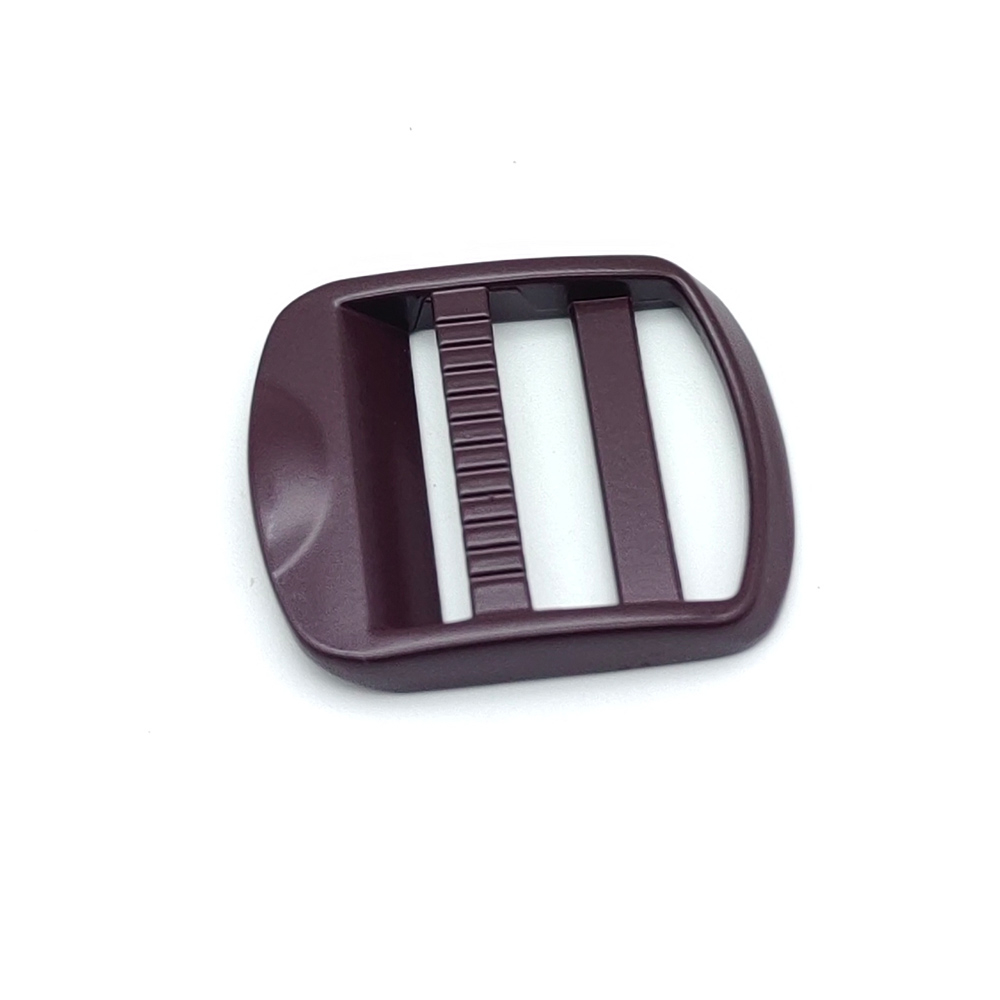
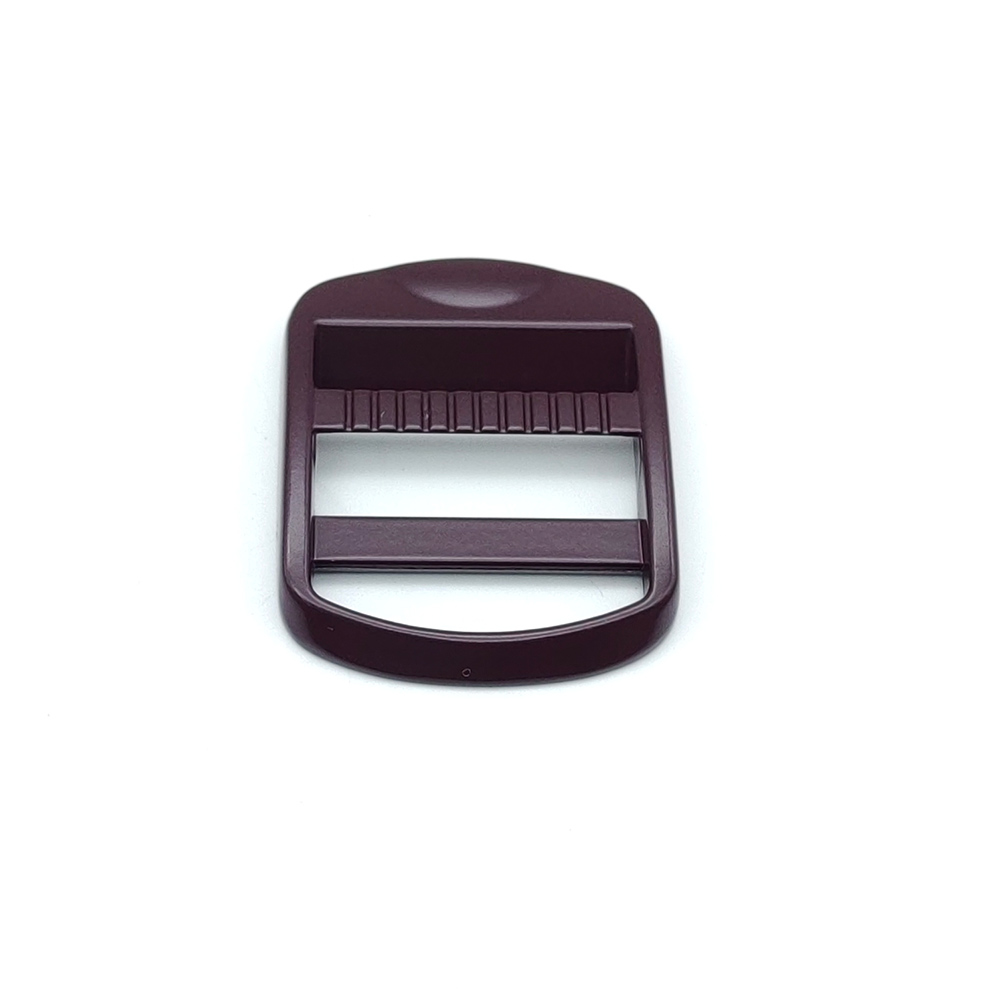
Luxury and outdoor brands that need color consistency and higher rigidity usually choose the zinc alloy version. Fashion brands focused on lowest unit cost may still prefer plastic. OEM factories that already run zinc alloy die casting for other hardware often find it convenient to keep the ladder lock in the same material family. Small-volume designers benefit from the free stock sample policy and the ability to test the part on actual prototypes before committing to tooling. The part is less suitable for ultra-lightweight ultralight backpacking where every gram is scrutinized and plastic is preferred.
Custom mold development is available when the standard 25 mm geometry does not fit the strap design. Laser, emboss, or deboss logos can be added on the frame surface. Oil-filling is less common on this style but possible on larger versions. Electroplating or solid-color painting covers the full range of standard and custom shades. Private-label packaging, barcodes, hang tags, and retail boxes are routinely supplied. During prototype development we typically turn samples in 5–7 days so that the design team can validate fit and function before the bulk order.
A European outdoor brand needed a backpack strap ladder lock that matched their existing burgundy webbing. Previous plastic versions showed visible wear after six months of retail returns. Switching to the zinc alloy 25mm ladder lock buckle with the same color finish reduced return rates and allowed them to keep the same visual language across the collection. Another luggage manufacturer used the part as a luggage strap adjuster on soft-sided cases; the higher rigidity prevented the hardware from deforming when the cases were over-packed.
Pet product companies have adopted the same geometry as a Pet Collar Strap Adjuster because the smooth entry edges reduce the chance of the animal’s fur catching during adjustment. In each case the decision hinged on matching the 25 mm webbing, confirming the tooth grip, and approving the burgundy color under real lighting.
Zinc alloy with a painted or electroplated finish performs well in normal indoor and outdoor conditions. Prolonged exposure to high humidity or salt air can eventually affect the surface, so we recommend rinsing with fresh water after marine or winter use. Avoid strong acidic cleaners that can attack the finish. Store finished goods in dry conditions and avoid stacking heavy loads directly on the hardware during warehousing. When cleaning straps, it is safer to wipe the ladder lock rather than submerge the entire assembly for long periods.
What is the MOQ for the 25mm ladder lock buckle?
1000 pcs, negotiable based on order details. We regularly discuss lower trial quantities for new customers evaluating the part.
How long does sampling take?
Stock samples ship in 1–3 days. Custom color or logo samples require 5–7 days. Custom sample fees are fully deductible from the subsequent bulk order.
Can you match a specific burgundy shade?
Yes. Provide a Pantone reference or physical sample and we will produce a lab dip for approval before production.
Is the part suitable for outdoor gear?
Yes. The zinc alloy frame and durable finish are commonly used on outdoor gear ladder lock applications. We can supply salt-spray data on request.
Do you offer private labeling?
Yes. Logo options, custom packaging, hang tags, and barcodes are available under OEM or ODM arrangements.
What packaging is used?
Standard packing is pearl foam + OPP bag + export carton. Customized packaging is available when required.
How do I confirm the webbing will fit?
Send a short length of your actual webbing. We will thread it through a sample and return photos or a short video showing engagement and release.
What lead time should I plan for production?
Production time is 10–15 days after sample approval and deposit. Delivery time is an additional 10–15 days depending on destination and shipping method.
Nearly 20 years of manufacturing experience means we have already solved the common tooling, plating, and dimensional issues that first-time buyers encounter. Engineering support is available during the prototype stage so that questions about tooth profile or edge radius can be answered with actual process knowledge rather than generic advice. QC inspection is performed on every lot, and communication remains responsive from inquiry through shipment. Long-term customers appreciate that the same part number remains consistent year after year because the molds and process parameters stay under control.
If you already have technical drawings or a webbing sample, send them over and we will confirm fit and prepare a quotation. If you are still comparing suppliers, we are happy to ship free stock samples of the 25mm ladder lock buckle so your team can evaluate the part on actual prototypes. Either way, the conversation starts with the real product in hand rather than a photograph.