Custom Metal Logo for Bags and Handbags: Materials, Finishes, and Manufacturing Guide
Quick Answer
A custom metal logo emblem is a die-cast nameplate used to brand handbags, wallets, and small leather goods. It is typically produced in zinc alloy and finished with embossed or debossed lettering. DG Buddy manufactures custom metal logo hardware for bags, offering brushed, matte, polished, and plated finishes together with private mold development for exclusive logo shapes. Whether you are sourcing a metal logo for bags, a refined metal logo for handbags, or a durable metal logo on bag for an OEM collection, the right material, mounting method, and surface treatment should be selected together.
Key Takeaways
- Custom metal logo emblems are typically zinc alloy die castings finished with electroplating or PVD coating.
- Letter edge sharpness depends on mold precision, not just the plating step.
- Matte and brushed finishes hide surface imperfections better than high-polish mirror finishes.
- Back mounting method—pins, adhesive, or rivets—should match the leather thickness of the final product.
- MOQ for custom metal logo hardware starts at 1000 pcs and is negotiable based on mold complexity.
- Free stock samples are available; custom mold samples carry a fee that is deducted from the bulk order.
- Sample lead time runs 5–7 days for custom tooling, with production following at 10–15 days.
- A specialist metal logo manufacturer can help compare zinc alloy, brass, stainless steel, and sheet metal solutions before tooling begins.
Mold Development and Letter Sharpness
One thing buyers often ask is why two suppliers quote the same “custom metal logo” and end up with noticeably different letter definition. The answer is almost always in the mold, not the plating line. During prototype development, our toolmakers cut the lettering cavity with a finishing pass that controls the stroke width and corner radius of each letter. Thin strokes below roughly 0.8 mm tend to round off in die casting and lose definition, especially in zinc alloy, where molten metal needs to fully fill narrow channels before it cools.
This is also why buyers searching for metal logo plate manufacturers should evaluate tooling capability rather than compare only the quoted unit price. A clear drawing review, a properly finished mold, and a sample containing the smallest logo detail are better indicators of production quality than a generic catalog photograph.
Quick Knowledge
What is a die-cast logo plate?
A die-cast logo plate is formed by injecting molten zinc alloy or aluminum into a steel mold under pressure. It produces a solid, dimensionally consistent part that holds fine detail better than stamped sheet metal for raised or recessed lettering. For brands specifically looking for a custom sheet metal logo, stamping can be considered when the design is flat, thin, and primarily defined by cut lines or surface etching. Die casting is generally more suitable for dimensional lettering and sculpted emblems.
Why does finish matter more than most buyers expect?
The base metal is largely invisible once finished; what the end customer actually sees and touches is the plating or coating layer. A finish applied over an under-polished surface will telegraph every scratch and pit from the casting stage, regardless of how good the plating chemistry is. A brushed metal logo is often a practical choice for e-commerce photography because its directional texture reduces harsh reflections, while a gold plated logo gives a more decorative and luxury-oriented appearance when the color and coating thickness are controlled carefully.
Embossed vs. Debossed Lettering
| Aspect | Embossed (Raised) | Debossed (Recessed) |
|---|---|---|
| Visual Effect | Bold, dimensional | Subtle, understated |
| Tooling Complexity | Higher | Moderate |
| Wear Resistance | Raised edges can wear on abrasion | Protected within recess |
| Common Use | Brand-forward hardware | Minimalist branding |
Zinc Alloy vs. Brass for Logo Plates
| Factor | Zinc Alloy | Brass |
|---|---|---|
| Casting Detail | Excellent for fine lettering | Good, slightly less fluid fill |
| Weight | Lighter | Heavier, denser feel |
| Cost | Lower | Higher raw material cost |
| Plating Adhesion | Strong with proper pre-treatment | Naturally strong |
| Typical Use Case | High-volume OEM hardware | Premium, heritage-positioned brands |
| Corrosion Resistance | Good with plating | Naturally corrosion resistant |
| Mold Longevity | Longer mold life | Higher mold wear |
| Recyclability | High | High |
Brass is a strong option for a substantial, heritage-style emblem, while zinc alloy is often preferred for detailed, cost-efficient production. Stainless steel is another option when a brand needs a thin, corrosion-resistant component or a cool metallic appearance. A qualified supplier can recommend whether die casting, stamping, or CNC processing best matches the artwork and target price.
Applications and Development Story
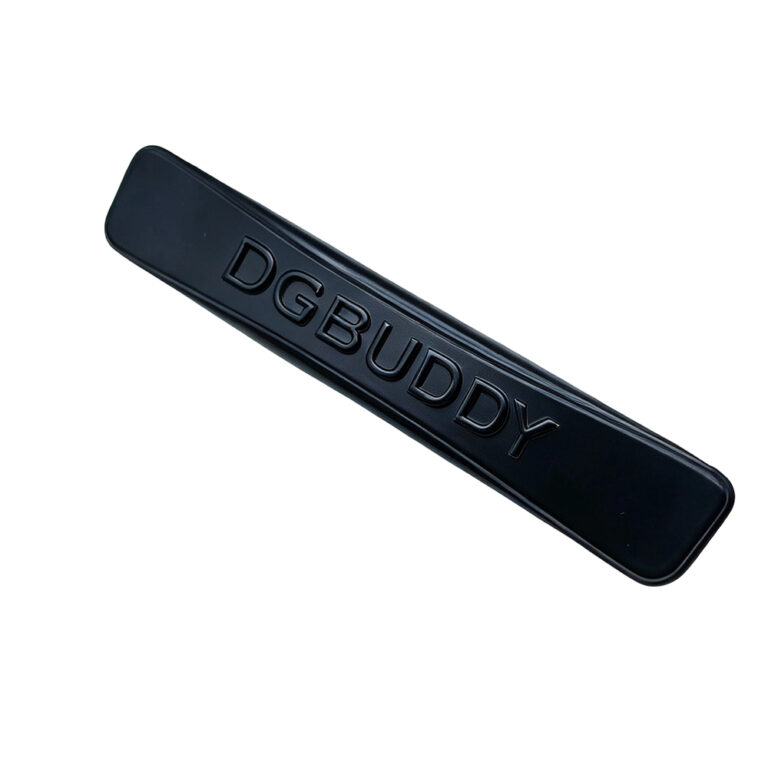
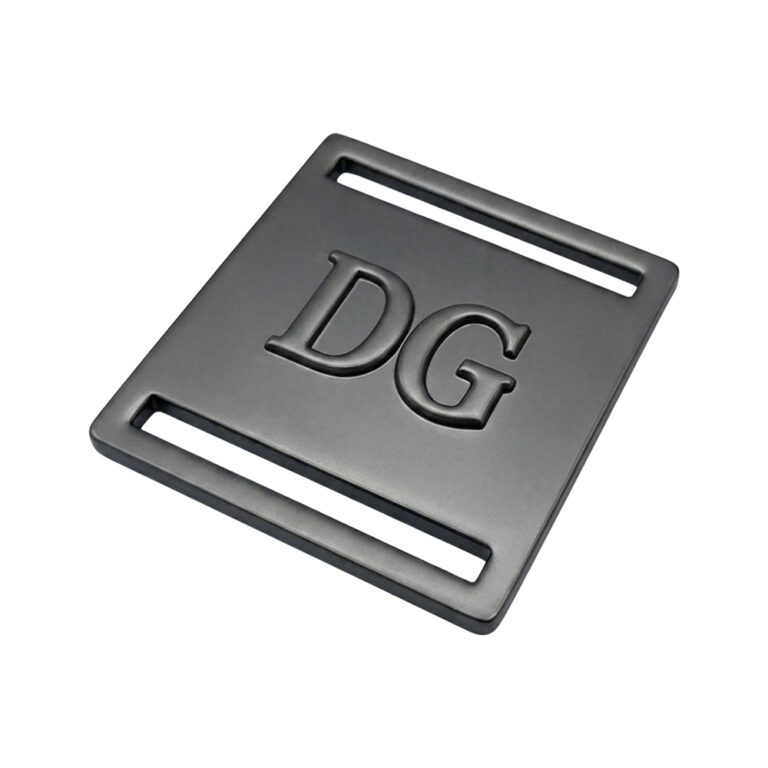
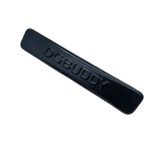
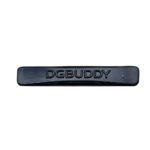
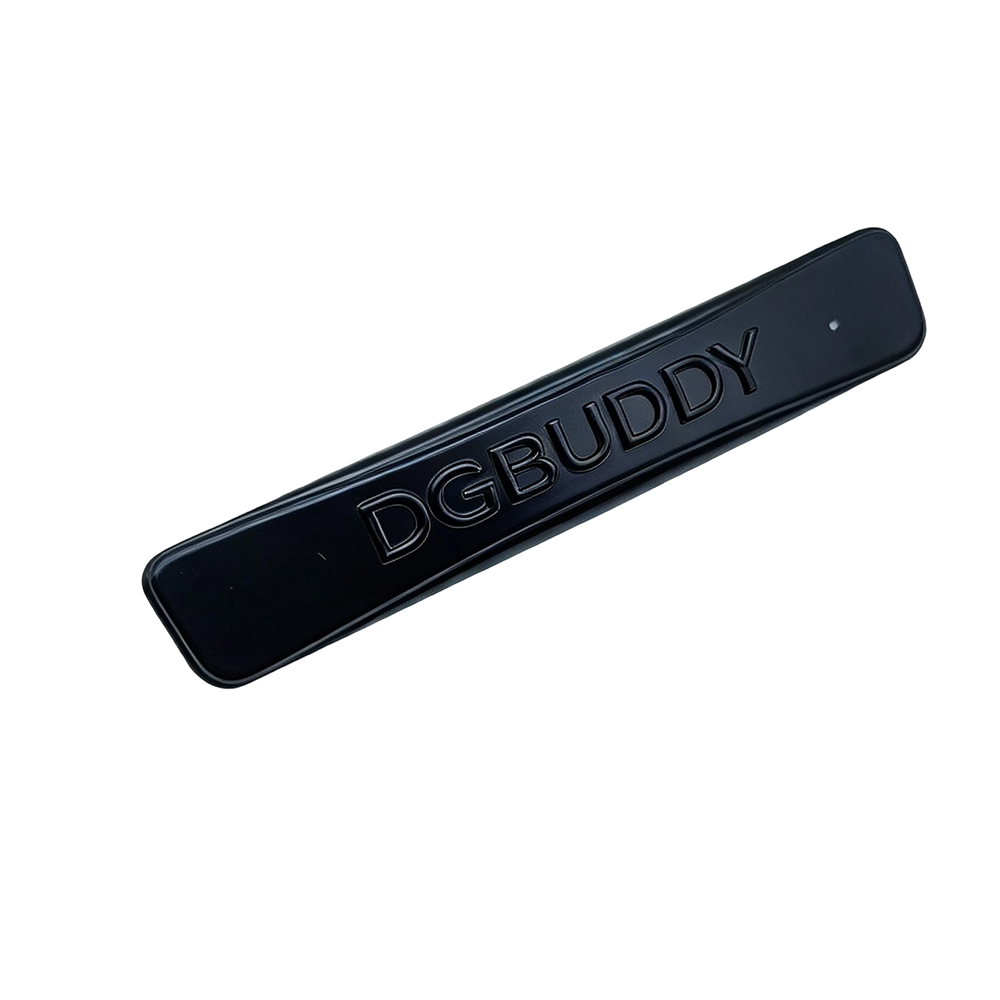
Applications for a metal logo emblem this size typically center on front-panel branding for handbags, closure tabs on wallets, and trim pieces on small leather goods where a subtle, low-reflectivity mark is preferred over a glossy plaque. A European accessories brand we worked with initially requested a mirror-polished finish for a wallet line, but during sample review, the buyer noticed fingerprint marks showing up clearly in photography.
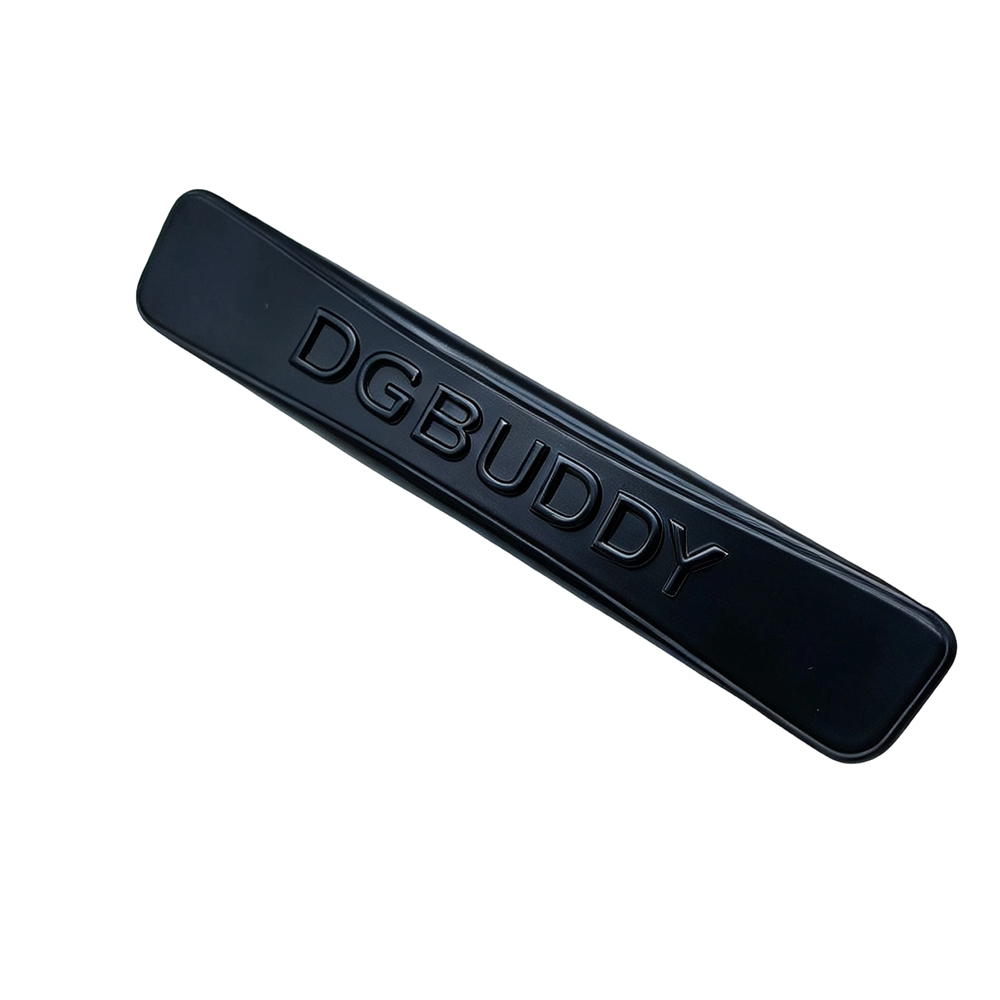
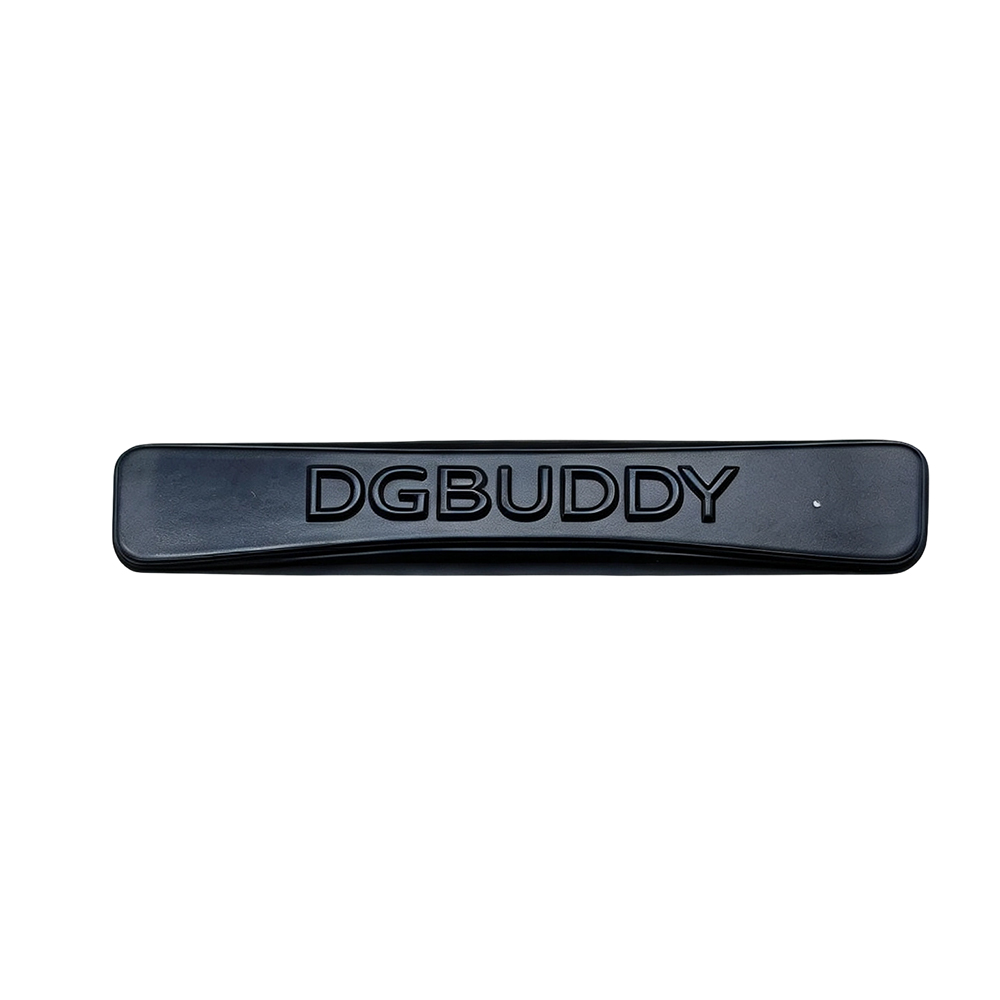
We proposed switching to the brushed matte finish shown in this listing. It reduced light reflection under studio lighting and proved more forgiving of minor handling marks during retail display—a small process change that solved a photography problem the brand had not originally connected to the finish choice.
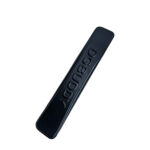
For a visible metal logo on bag panels, designers should also review edge softness, plate thickness, weight, and the distance between the emblem and nearby seams. These details affect both comfort and the finished appearance after the leather is folded or stitched.
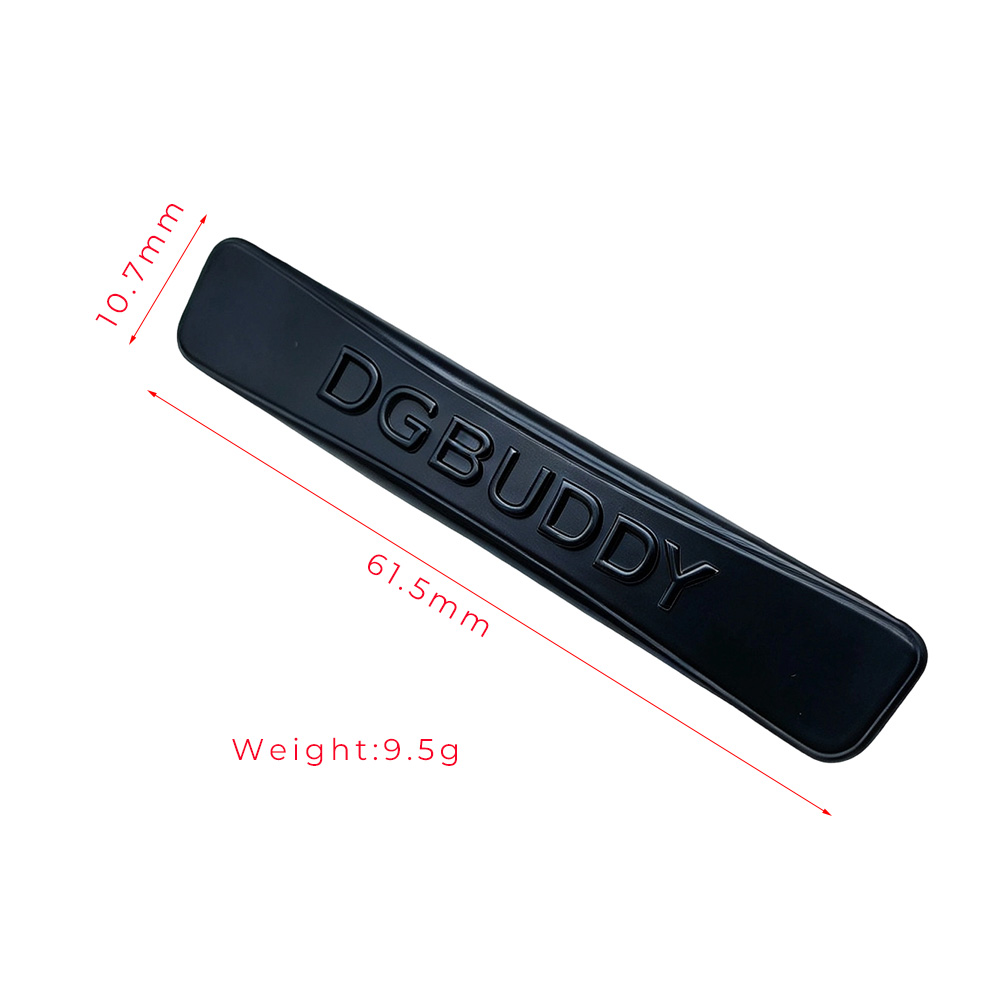
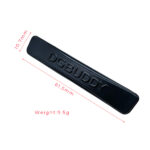
Technical Drawing Explanation
- Overall Length (61.5 mm): Determines placement tolerance on the leather panel; too long for the intended mounting area and the plate risks overhanging a seam or edge.
- Overall Height (10.7 mm): Affects how many characters or how much logo detail can be legibly cast without letters merging together.
- Plate Thickness: Directly impacts perceived weight and rigidity; thinner plates flex more during handling and can develop coating stress cracks over time.
- Corner Radius: A consistent radius prevents sharp edges from cutting into leather or fabric backing over repeated flexing.
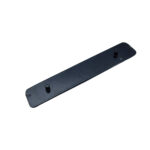
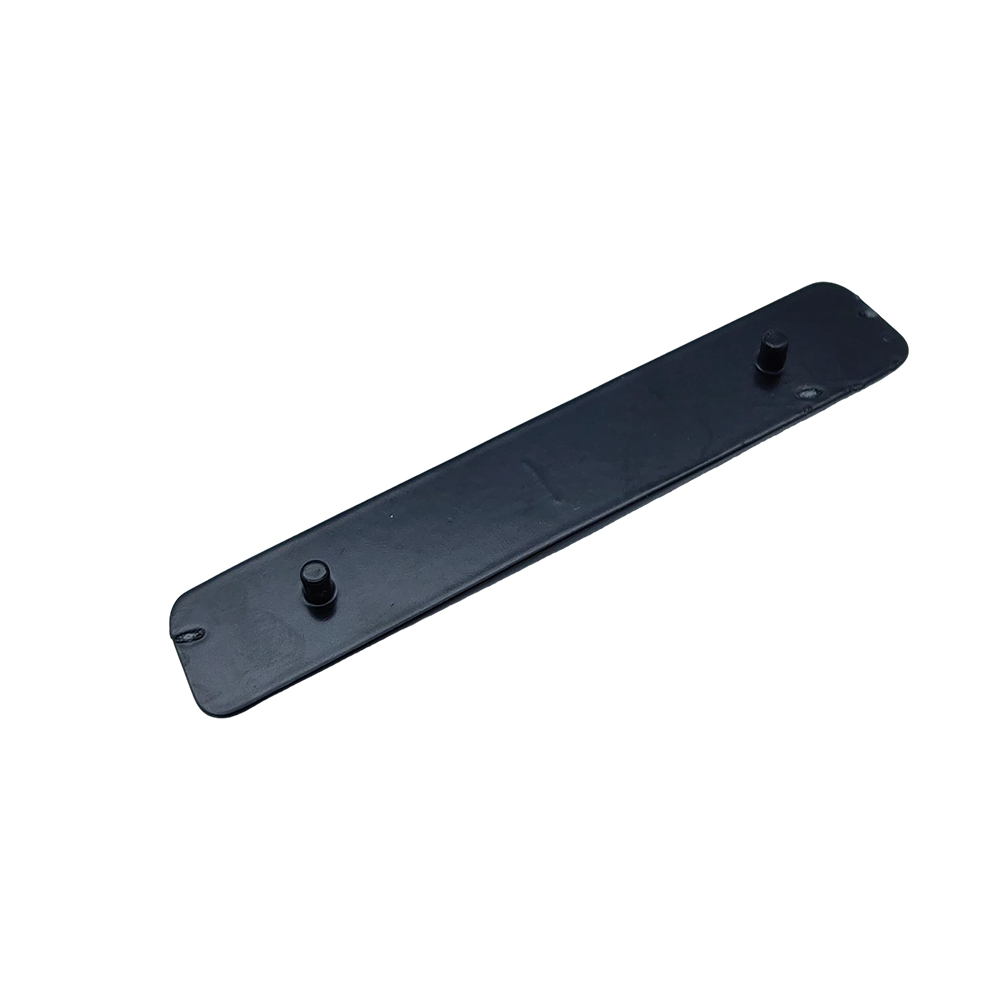
- Back Pin Placement: Pin spacing needs to be confirmed against the leather panel’s puncture points before mold finalization. This is one of the most common late-stage change requests we see.
- Weight (9.5 g): Used by buyers to sanity-check unit cost against material volume; a sudden weight drop between samples and bulk production is a red flag for wall-thickness inconsistency.
How We Produce a Metal Logo Emblem
Raw zinc alloy ingot is melted and injected into the finished steel mold under high pressure, which allows fine lettering to form in a single shot rather than through secondary engraving. After casting, parts go through trimming to remove the gate and flash, followed by grinding to knock down casting seams. Polishing comes next, and this step is repeated at multiple grit stages rather than done once because a single pass leaves micro-scratches that show up clearly once plating is applied.
Parts are then assembled with mounting pins if required, sent through electroplating or PVD coating for color and corrosion resistance, and subjected to salt spray testing to verify that the coating holds up under accelerated humidity exposure. Every batch goes through 100% visual inspection for letter definition and surface defects before packing, since sampling-only inspection can let a bad mold cavity go unnoticed until a customer complaint arrives.
Factory Expert Tips
- Choosing a finish: If the emblem will be photographed frequently for e-commerce, request a brushed or matte sample first; high-gloss finishes are harder to photograph consistently across different lighting setups.
- Avoiding scratches during shipping: Ask for individual poly sleeves inside the export carton for plated parts; loose parts rubbing against each other in transit are the most common cause of returned plating defects.
- Evaluating a supplier’s mold capability: Request a sample with your smallest letter or detail included. Suppliers who cannot hold fine strokes in a sample will not be able to hold them in bulk production either.
- Reducing return rate: Confirm back pin length against your actual leather thickness before bulk production; pins cut too short or too long are a frequent cause of loose-feeling hardware after assembly.
Common Buying Mistakes
- Approving a sample under studio lighting without checking how the finish looks under normal retail or daylight conditions.
- Ignoring wall-thickness consistency, which affects both weight and long-term coating durability.
- Assuming all “custom logo” quotes include mold cost, when tooling is often billed separately from the per-piece price.
- Skipping salt spray test data, then discovering coating failure after the product has already shipped to retail.
- Finalizing pin placement before confirming the exact leather panel thickness it will be mounted into.
- Choosing a supplier based only on a search for a “metal logo maker near me” without checking whether the factory can produce the required material, finish, and export documentation.
Buyer Decision Guide
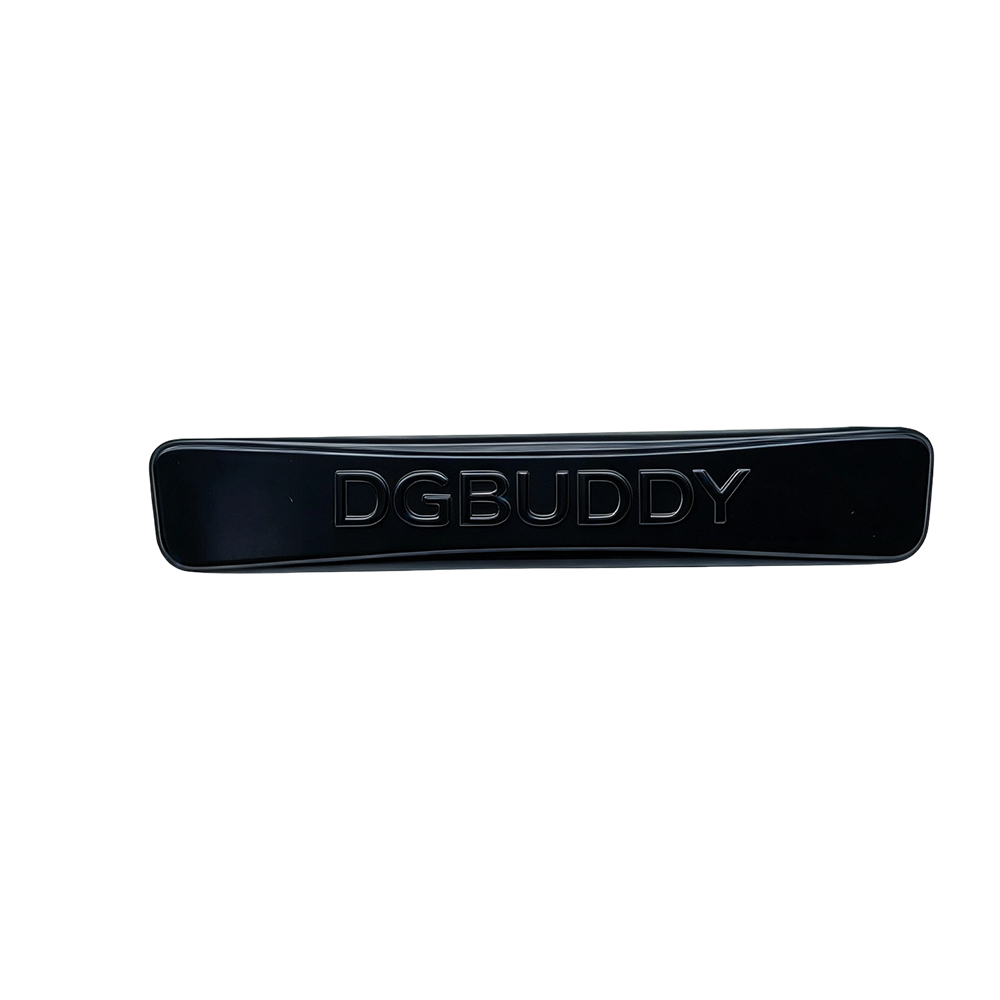
This type of custom metal logo emblem suits different buyers differently. Luxury and designer brands developing an exclusive mold generally prioritize letter sharpness and finish consistency over unit price and should expect to invest in tooling upfront. Fashion brands refreshing an existing hardware line often want fast sample turnaround and are more price-sensitive on the mold.
OEM factories sourcing components for their own client base typically need documentation support—salt spray reports and material certificates—more than a fast sample. Small MOQ brands testing a new logo concept before committing to a full mold run should ask specifically about low-volume or shared-tooling options, since a full custom mold at 1000 pcs MOQ may not fit an early-stage budget.
OEM Customization
Beyond the standard matte black shown here, we support custom mold development for exclusive logo shapes, laser engraving for fine serial numbers or secondary marks, embossed and debossed lettering, oil filling to add color contrast into recessed letters, and a range of electroplating finishes from brushed nickel and gunmetal to silver and gold tones. For brands comparing a stainless steel logo maker with a die-cast hardware supplier, our engineering team can review the drawing and explain the trade-offs in thickness, weight, edge detail, cost, and production quantity.
For brand launches, we also handle private-label packaging, barcode application, hang tags, and retail-ready boxing so the hardware arrives ready for the brand’s own fulfillment process rather than needing repackaging on your end. This makes DG Buddy a practical choice for buyers seeking a complete metal logo manufacturer rather than a separate plating or assembly vendor.
Care and Maintenance
Plated zinc alloy hardware holds up well under normal use but benefits from a few precautions. High-humidity storage can accelerate oxidation at any point where the coating is thin, particularly around mounting pin holes, so parts should be kept in sealed poly during warehousing rather than left exposed. Direct or prolonged contact with sweat or acidic skin oils can dull certain plating finishes over time; this is more relevant for wearable items than bag-mounted hardware, but still worth noting for wallet applications with frequent hand contact.
During transportation, loose parts should never be bagged together without separation, since surface-to-surface contact under vibration is the leading cause of scuffed plating on arrival. For cleaning, a dry or slightly damp soft cloth is sufficient. Abrasive cleaners or ultrasonic cleaning baths are not recommended for plated finishes because they can strip thin coating layers.
Frequently Asked Questions
What is the MOQ for a custom metal logo emblem?
Standard MOQ for individual hardware items such as logo plates is 1000 pcs, though this is negotiable depending on mold complexity and finish requirements. For first-time custom mold orders, we are happy to discuss what is realistic for your volume.
How long does sampling take?
Custom mold samples typically take 5–7 days from design confirmation. If you are evaluating stock finish options rather than a fully custom shape, stock samples can usually go out in 1–3 days.
Is there a cost for custom samples?
Yes. Custom samples require a sampling fee because they involve mold or tooling work. That fee is fully deductible from your bulk order once you move forward with production.
Can you match our existing logo mold from another supplier?
In most cases, yes. Send us your technical drawing or a physical sample and we will confirm feasibility and provide a quote for new mold development, since molds are typically not transferable between factories.
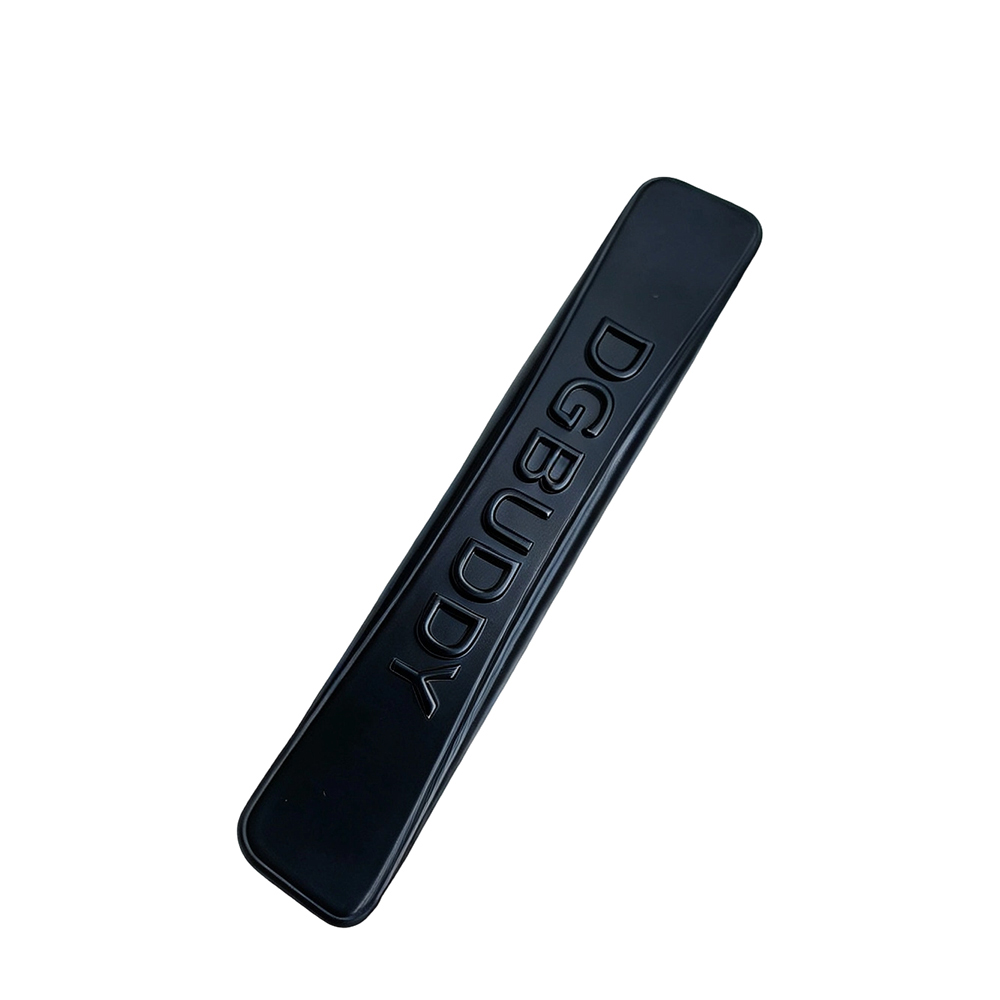
What plating and finish options are available?
Beyond the matte black shown here, we offer brushed, high-polish mirror, and a range of plated finishes. Availability of specific tones such as gold or silver plating depends on the base metal and order volume. A brushed finish, matte finish, or custom gold plated logo can be reviewed through samples before bulk production.
Do you provide certification documentation?
We maintain quality certification documentation and are happy to provide the current valid certificates upon request during your sourcing evaluation.
How is the logo attached to the leather panel?
This depends on the mounting method specified for your part. Back pins, adhesive pads, or rivets are all options, and pin length should be matched to your specific leather thickness.
Can you help if I am searching for a brass logo maker near me?
Yes. Even when a buyer begins with a local search such as “brass logo maker near me,” an experienced export manufacturer can provide brass, zinc alloy, stainless steel, and plated samples for comparison. The most useful next step is to send the logo artwork, target dimensions, quantity, and preferred finish so the material and process can be quoted accurately.
What if I need a local metal logo maker near me?
Local sourcing can be useful for face-to-face sampling, but location is only one part of supplier evaluation. Check mold ownership, material traceability, plating quality, inspection standards, MOQ, and shipping experience. DG Buddy can support remote drawing review and sample approval for international OEM projects.
What is your production and delivery timeline after sample approval?
Production typically runs 10–15 days after sample approval, with delivery also estimated at 10–15 days depending on destination and shipping method.
Why Choose DG Buddy
DG Buddy has close to two decades of experience producing metal hardware for handbag and leather goods brands, with in-house mold development that lets us control letter sharpness and finish quality from the tooling stage rather than relying on a third-party mold shop.
Our engineering team reviews technical drawings before quoting, which catches mounting or dimension issues before they become a sampling delay. Every production batch goes through 100% inspection rather than spot-check sampling, and we maintain responsive, direct communication with project managers and OEM buyers throughout development rather than routing everything through a sales intermediary.
Related Categories
Related Products
Get in Touch
If you already have technical drawings for your logo shape, send them over and we will confirm mold feasibility and timeline. If you are still evaluating suppliers, we are happy to send a stock finish sample so you can check plating quality before committing to custom tooling. Send us your logo artwork, preferred material, target finish, or leather panel specifications and we will get back with a quote.