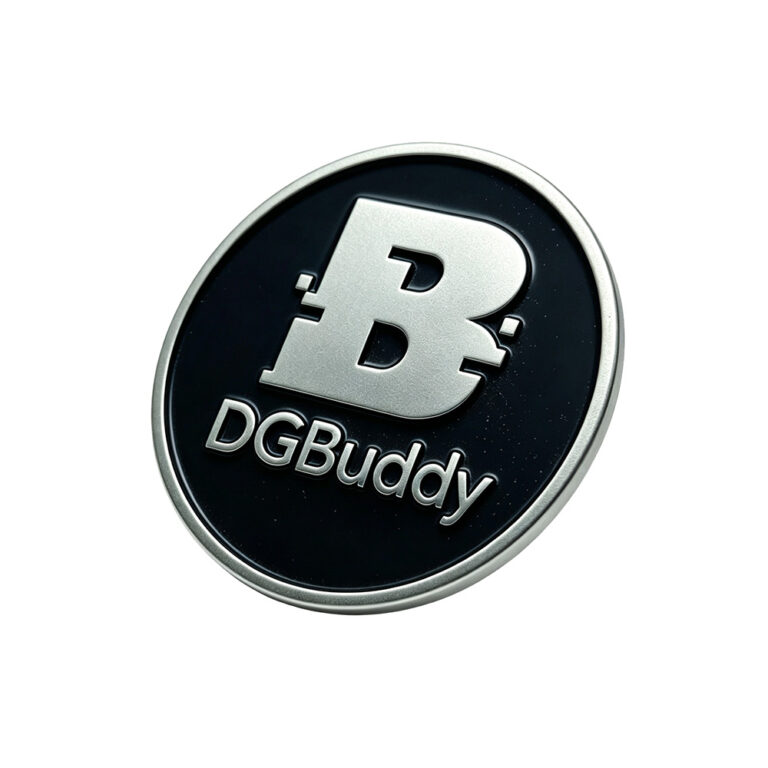
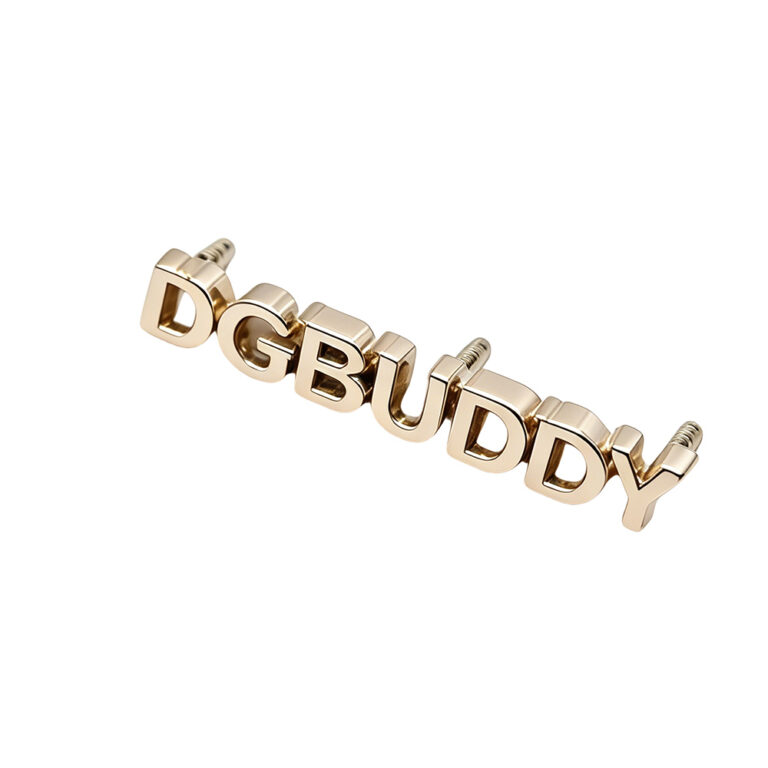
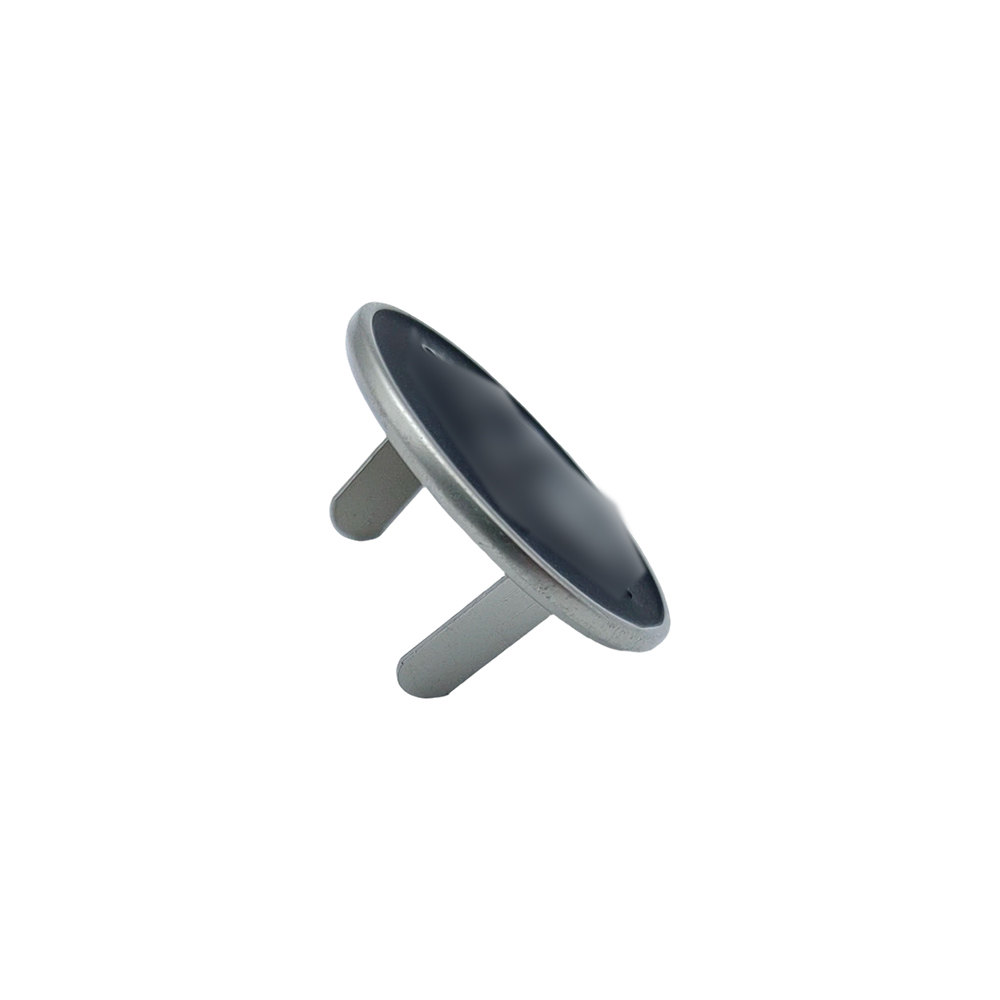
A custom metal logo tag is a branded metal nameplate attached to a handbag, wallet, backpack, or leather accessory. This 35 mm round version uses a raised three-dimensional logo, a recessed dark background, a metal outer rim, and two rear fixing pins. The pins pass through prepared holes in the bag material and are secured from the inside, creating a clean front-facing brand detail without visible screws.
For handbag development teams, this type of metal logo hardware does more than display a name. Its logo relief, material thickness, pin alignment, electroplating quality, and installation method affect perceived product value, assembly efficiency, and long-term appearance. DG Buddy develops custom die-cast logo plates for OEM leather-goods projects, including custom molds, raised or recessed lettering, color filling, plating selection, private-label packaging, and practical pin-position review.
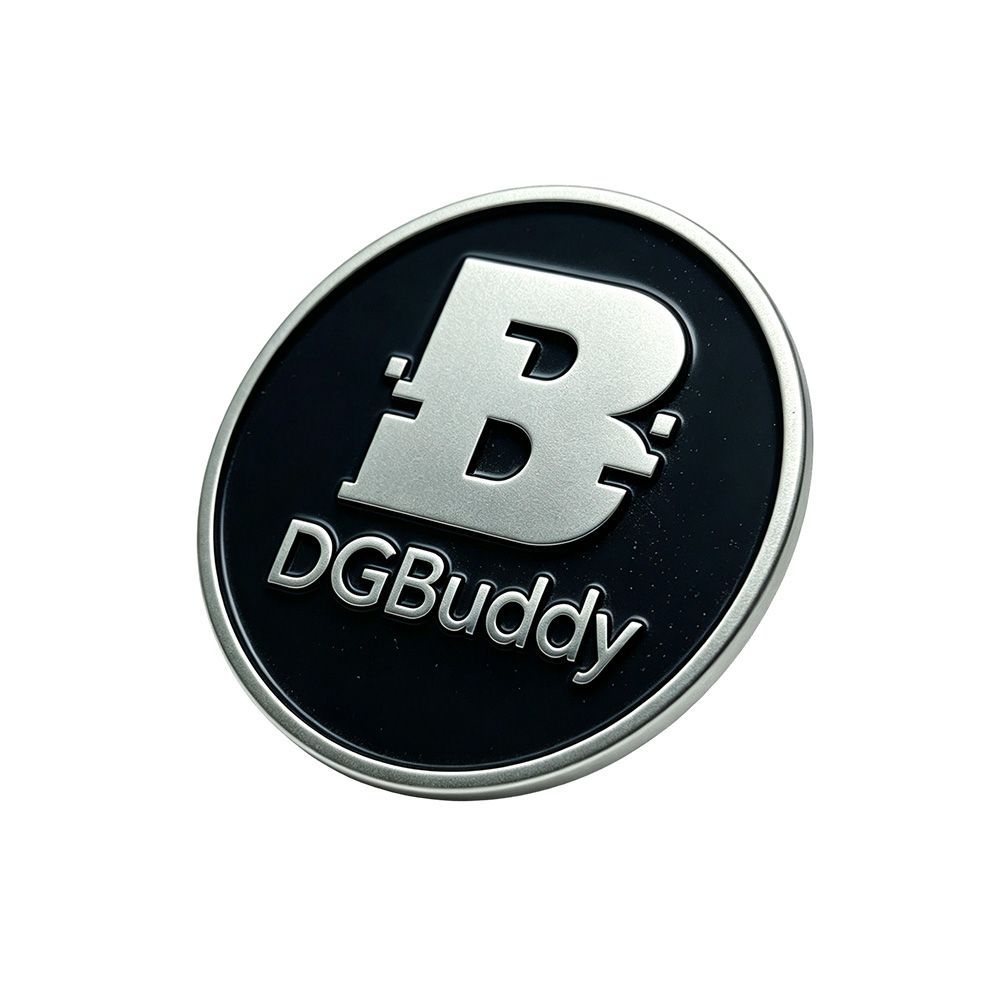
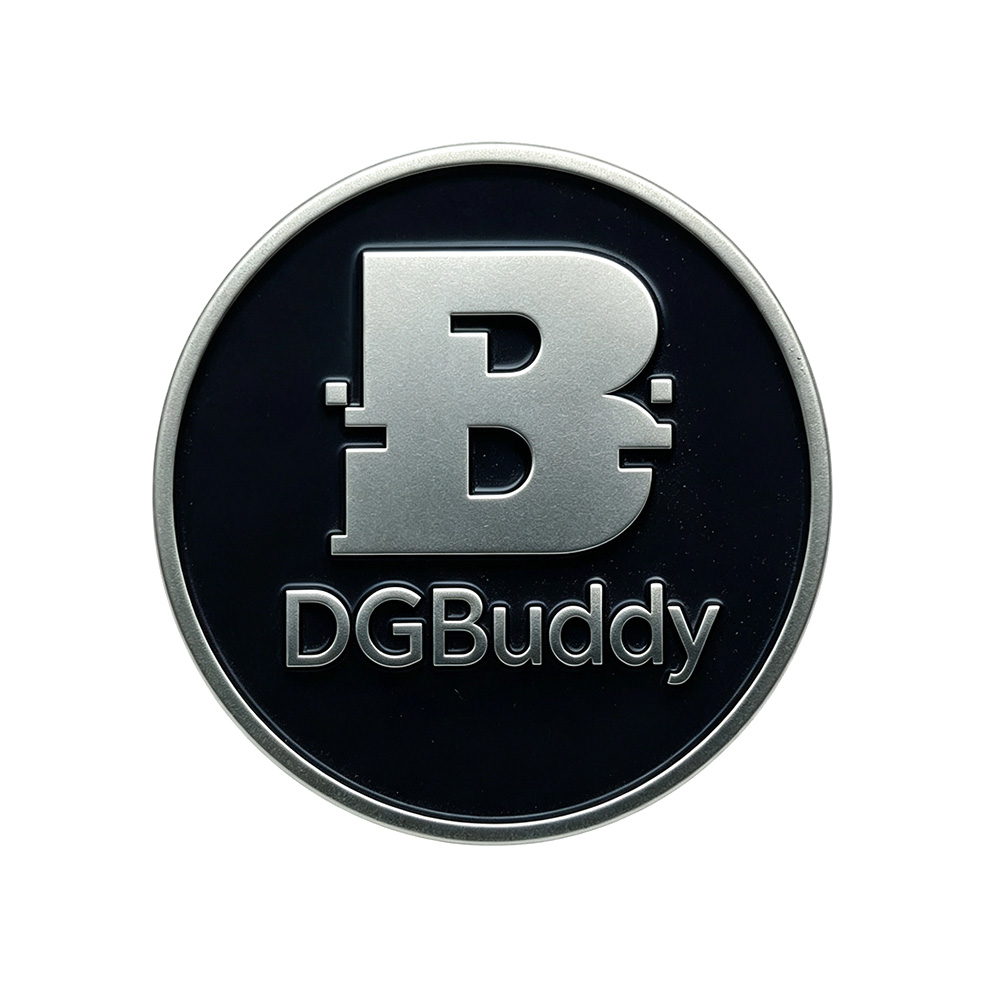
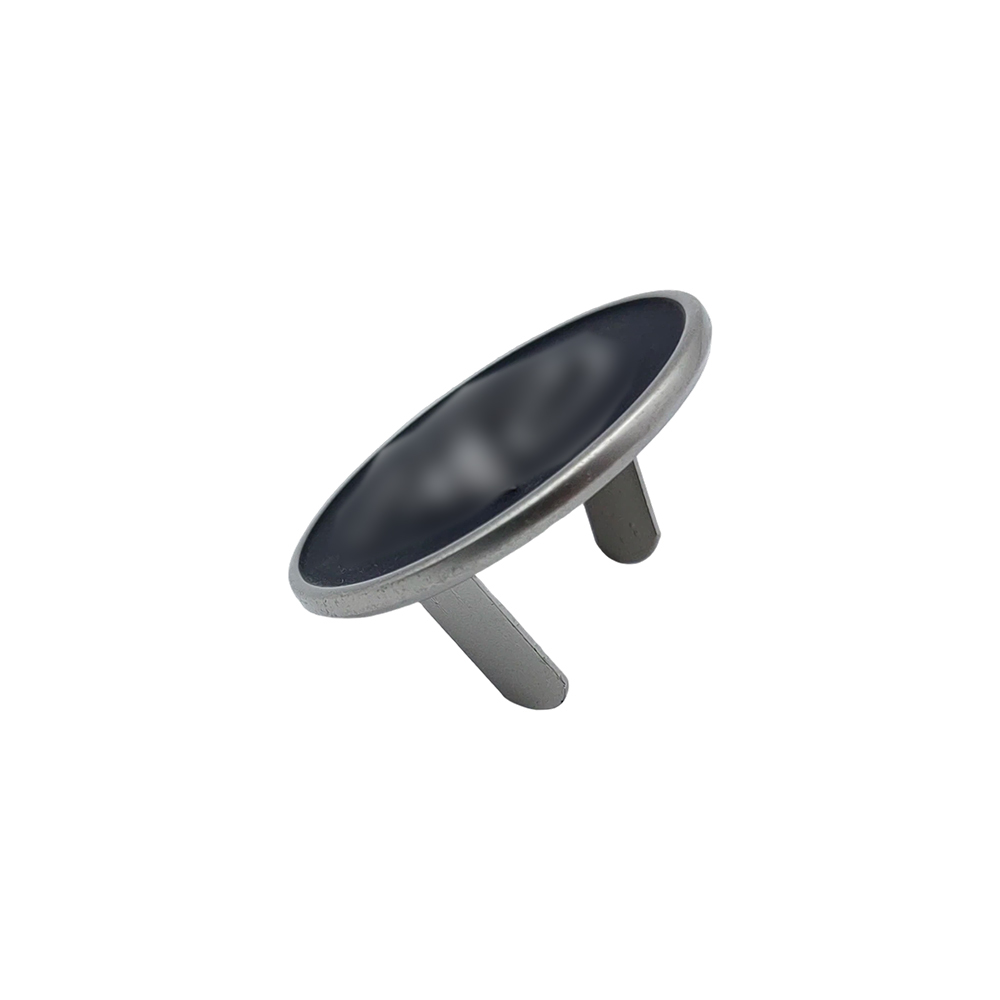
The visible side of this metal logo plate is designed for brand recognition. In the supplied example, a raised “B” mark and raised DGBuddy lettering sit over a dark recessed field. The two rear pins are the functional part: they anchor the logo to the bag panel, flap, pocket, or front patch.
During bag assembly, the factory punches or cuts two matching holes in the leather or material panel. The rear pins are inserted through those holes, then folded inward or secured with a washer, backing plate, rivet-style component, or another approved internal fastening method. The logo position should be confirmed before bulk production because moving pins after mold approval can require mold modification.
Compared with screw-fixed hardware, back-pin logo tags avoid visible screw heads on the front face. Compared with adhesive labels, the mechanical attachment is more dependable for bags exposed to daily handling, surface friction, and changes in temperature or humidity.
In handbag sourcing, the terms are often used interchangeably. A metal logo tag usually refers to a compact branded decorative component, while a metal logo plate may describe a larger or flatter nameplate. Both can be die cast, stamped, etched, laser marked, or assembled from multiple parts. The important distinction is not the name; it is the logo construction, material, attachment method, finish, and required visual effect.
Relief depth is the height difference between the raised logo and the recessed background. A shallow relief may lose contrast after polishing and electroplating. Excessively deep recessed areas can retain polishing compound, create uneven color filling, or make small lettering harder to inspect. During prototype development, DG Buddy reviews the logo’s fine strokes, enclosed spaces, corner radii, and draft angles so the artwork can be reproduced consistently in a die-cast mold.
| Comparison Point | Two Back Pins | Screw Studs | Rivet Fixing |
|---|---|---|---|
| Visible Front Appearance | Clean, no visible screw head | Clean front, removable from inside | Clean front when properly assembled |
| Best Use | Decorative logo tags and thin-to-medium leather panels | Thicker assemblies, replaceable hardware, structured bags | Permanent logo attachment and production-line assembly |
| Assembly Speed | Fast after accurate hole punching | Moderate; requires thread engagement | Fast with suitable press tooling |
| Positioning Control | Strong when pin spacing is correct | Strong, dependent on screw-hole alignment | Strong, dependent on rivet alignment |
| Removal After Assembly | Usually destructive or difficult | Possible if screw access is retained | Usually destructive |
| Suitable for Curved Panels | Depends on logo curvature and pin layout | Possible with correct stud angle | Possible with matched tooling |
| Internal Finish Requirement | Requires clean folded-pin or washer coverage | Requires nut, washer, or threaded receiver | Requires rivet cap or internal backing |
| Key Purchasing Risk | Pin length mismatch | Thread tolerance or loosening | Improper press setting or leather damage |
This round logo badge is visually consistent with zinc alloy die casting, although the final material should be confirmed before publishing. Zinc alloy is commonly selected for three-dimensional logos because it can reproduce raised characters, recessed backgrounds, an outer rim, and integrated back pins in a single molded component. Existing DG Buddy logo-hardware pages likewise describe zinc alloy, brass, stainless steel, and aluminum as material options for custom metal tags and nameplates.
Buyer PriorityDetailed shape reproduction and efficient repeat productionSpecific material preference and traditional metal character
| Decision Factor | Zinc Alloy Die Casting | Brass |
|---|---|---|
| Best Design Type | 3D logos, detailed relief, complex edges, integrated pins | Fine stamped plates, solid metal appearance, select machined details |
| Production Process | Die casting followed by trimming, grinding, polishing, and plating | Stamping, forging, machining, polishing, and plating depending on design |
| Logo Relief Capability | Well suited to raised and recessed brand artwork | Possible, but design route differs by thickness and process |
| Weight | Moderate; final weight depends on wall thickness and geometry | Often heavier for a comparable solid component |
| Integrated Back Pins | Can be designed into the casting or assembled to suit requirements | Often welded, riveted, soldered, or mechanically assembled |
| Surface Finish Options | Electroplating, polishing, brushing, matte treatment, color filling | Polished, brushed, antique treatment, electroplating, lacquer options |
| Tooling Consideration | Requires a custom mold for unique artwork and geometry | May require stamping dies, tooling, or machining fixtures |
Rather than selecting material from a catalog image, buyers should compare the actual logo shape, desired relief, product quantity, plating color, attachment method, and target bag price point. A thin script logo may need a different process than a heavy round badge with a raised monogram.
The sample combines a silver-tone raised logo and rim with a black recessed background. This type of contrast works because the eye reads the raised brand mark before the background. To preserve this effect, the mold must maintain adequate separation between raised and recessed areas, and the polishing process must not soften lettering or round off intended edges.
For die-cast metal logo hardware, the practical sequence begins with mold engineering. After casting, trimming removes gates and excess metal. Grinding addresses parting-line irregularities. Polishing prepares visible surfaces for electroplating. The selected plating is then applied, followed by black oil filling, paint filling, or another approved color treatment if the logo design includes recessed color areas.
One thing buyers often ask is whether a mirror-like appearance is always better. It is not. A bright polished finish can emphasize a luxury look, but it also makes fine scratches more visible. A brushed or satin surface can better hide handling marks, especially on frequently touched handbags, luggage, and travel accessories. The right choice depends on the product’s use case and retail environment.
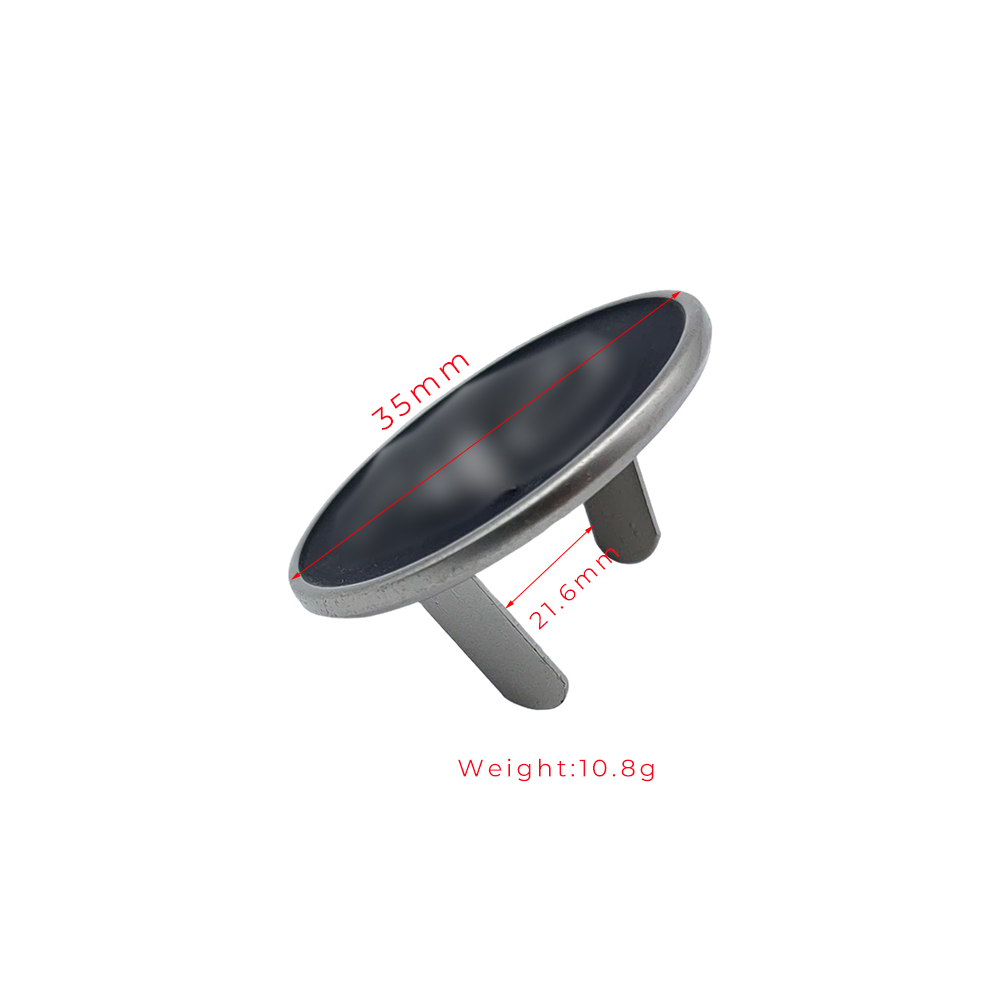
The supplied image provides useful preliminary reference dimensions. It should not replace a finalized 2D drawing, CAD file, or approved physical sample. For a rear-pin metal logo tag, the following dimensions affect both visual quality and bag-factory assembly.
Custom metal logo manufacturing works best when the brand, bag developer, and hardware factory confirm technical decisions early. The following is how DG Buddy approaches a typical OEM logo-tag project.
Salt spray testing may be considered when a customer’s specification requires comparative corrosion-resistance testing for coated metal parts. ASTM B117 describes a controlled salt-spray environment used to obtain relative corrosion-resistance information for metals and coated metals; it is a test method, not a standalone promise of real-world product life.
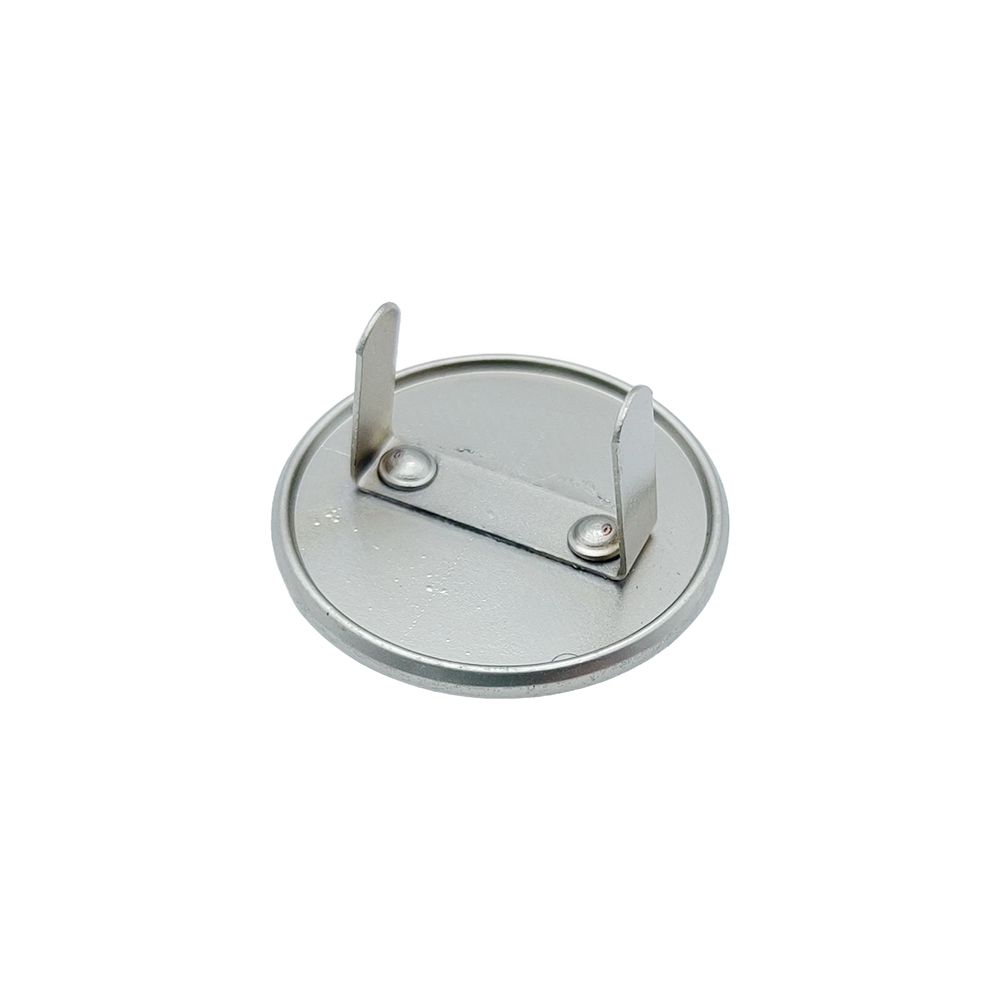
This round metal logo tag is suitable for luxury handbags, fashion totes, crossbody bags, backpacks, wallets, luggage, cosmetic cases, small leather goods, and private-label accessories. Its circular format works particularly well when a brand uses a monogram, initial, symbol, crest, or compact wordmark.
During a typical handbag-development project, a customer may initially choose a flat printed metal badge because it appears simpler. Once prototypes are reviewed, the brand may find the print lacks depth against textured leather. A die-cast logo with raised lettering and a recessed black background can solve the visibility issue without enlarging the badge. The next engineering question becomes the rear attachment: if the original pins overlap with an internal pocket seam, DG Buddy can revise pin positions before final mold release, helping the bag factory install the component consistently.
For a front panel with soft leather, the logo should usually sit over an appropriate reinforcement area. For a curved flap, the badge thickness and rear-pin arrangement should be assessed to prevent rocking, uneven contact, or visible distortion of the leather surface.

| Buyer Type or Project | Suitability | Why |
|---|---|---|
| Luxury handbag brand | Suitable | Raised logo, controlled finish contrast, and custom plating can support a recognizable front-panel brand detail. |
| Fashion bag OEM factory | Suitable | Two back pins support repeatable location when leather punching and assembly methods are correctly matched. |
| Private-label accessories brand | Suitable | Custom mold, private-label packaging, and custom logo development allow a distinct hardware identity. |
| Wallet or small-leather-goods project | Suitable with dimension review | 35 mm may be visually large for compact wallets; a smaller diameter or thinner logo structure may be preferred. |
| Soft unreinforced pouch | Review required | Back pins may distort soft material unless the installation zone includes suitable backing or reinforcement. |
| High-volume standardized bag program | Suitable after sample approval | Fixed mold dimensions and production inspection can support consistent repeat orders. |
| Very low-quantity one-off project | Review required | Custom tooling investment should be considered against volume, design lifespan, and repeat-order potential. |
DG Buddy supports OEM and ODM development for metal logo hardware. A successful custom project begins with a clear artwork file and ends with an approved sample that can be repeated in bulk. Existing DG Buddy product pages also describe custom logo plates as die-cast nameplates for handbags, backpacks, luggage, and leather goods, attached using back pins, rivets, or screws according to the product structure.
Metal logo hardware should be protected from avoidable abrasion, high humidity, sweat residue, acids, and uncontrolled contact with other metal components. Electroplated surfaces can be affected by storage conditions and repeated friction, particularly at raised logo edges and polished rims.
The standard MOQ for individual handbag hardware is 1000 pcs (negotiable based on order details). The final commercial arrangement can depend on material, finish, custom mold requirements, packaging, and whether the design uses an existing structure or a new OEM development. For a new logo project, sharing artwork, target size, finish reference, and estimated annual quantity allows the engineering and sales teams to provide a more useful quotation.
Yes. The displayed DGBuddy artwork is a product reference only. For OEM production, DG Buddy can develop your brand name, monogram, symbol, letter mark, or emblem using approved vector artwork. AI, PDF, SVG, CDR, DXF, or another editable vector format is preferred. Before mold development, we review line thickness, letter spacing, relief depth, pin layout, and whether any small features need adjustment for die casting and polishing.
Custom sample time is 5–7 Days. This timeframe applies to mold development or custom sampling. Production time is 10–15 Days, and delivery time is 10–15 Days. Free stock samples available. Custom samples require a sampling fee, and custom sample fees are fully deductible from bulk orders. Courier charges are borne by the customer.
Free stock samples available. If an existing stock item is suitable for checking material feel, plating color, or general workmanship, it can be used as an initial reference. A sample carrying your own logo, your exact rear-pin spacing, or your specific finish is a custom sample and requires a sampling fee. Custom sample fees are fully deductible from bulk orders. Courier charges are borne by the customer.
Finish options can include polished silver tone, brushed nickel, light gold, deep gold, rose gold, gunmetal, antique brass, black nickel, matte textures, and two-tone effects. Recessed areas can also be developed with black oil filling, paint filling, or another approved color-treatment method. The correct finish should be selected using a physical reference sample whenever possible, because photo lighting can significantly change how plated colors and gloss levels appear.
Measure the complete assembly thickness at the installation point: outer leather or fabric, adhesive layer, reinforcement board, lining, and any internal backing washer. The pin needs enough usable length to secure the logo without creating a bulky or sharp internal finish. The approximately 21.6 mm dimension visible in the supplied image is a reference only; the final pin length should be confirmed against the actual handbag construction and installation method.
Yes, material options can be reviewed based on the desired design and production method. Zinc alloy is often practical for a detailed three-dimensional die-cast logo with integrated geometry. Brass may be selected for certain stamped, machined, or more solid-feeling components. Stainless steel can suit specific thin plate or corrosion-resistance requirements. Material selection should follow the artwork, relief depth, finish, attachment design, target cost, and bag-position requirements rather than appearance alone.
We maintain quality certification documentation and are happy to provide the current valid certificates upon request during your sourcing evaluation.
DG Buddy operates from the perspective of an OEM hardware project, not just a catalog sale. A custom metal logo tag must fit the brand artwork, the leather-goods pattern, the bag factory’s assembly method, and the selected surface finish. That is why the practical work happens before bulk production: reviewing the logo, confirming pin spacing, checking material thickness, approving a physical sample, and defining inspection expectations.
With nearly 20 years of manufacturing experience, DG Buddy supports buyers who need technical discussion around die casting, polishing, electroplating, color filling, custom molds, packaging, and QC inspection. The goal is not to make broad claims about quality. It is to reduce avoidable risk: unclear artwork, unsupported small lettering, poor pin alignment, inconsistent plating, scratched surfaces, and hardware that does not fit the bag construction.
If you already have logo artwork, a physical reference sample, or a handbag technical drawing, send it to DG Buddy for an initial feasibility review. We can help check whether the logo is suitable for die casting, recommend a workable relief structure, confirm rear-pin placement, and prepare a sample plan before you commit to bulk production.
If you are still evaluating suppliers, share the target size, finish reference, mounting method, intended application, and estimated order quantity. Our team can help you define the information needed for a practical quotation and a production-ready custom metal logo tag.