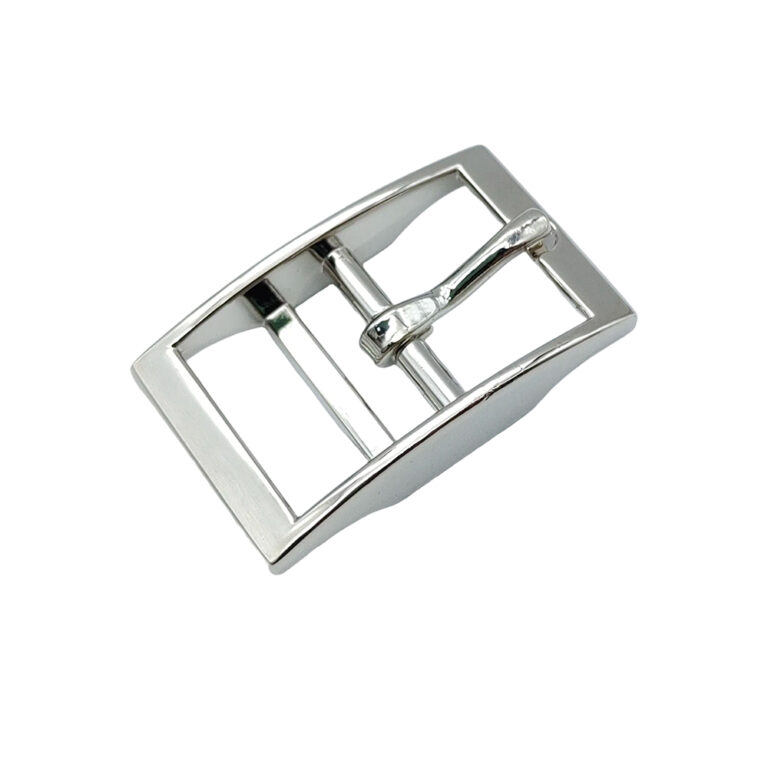
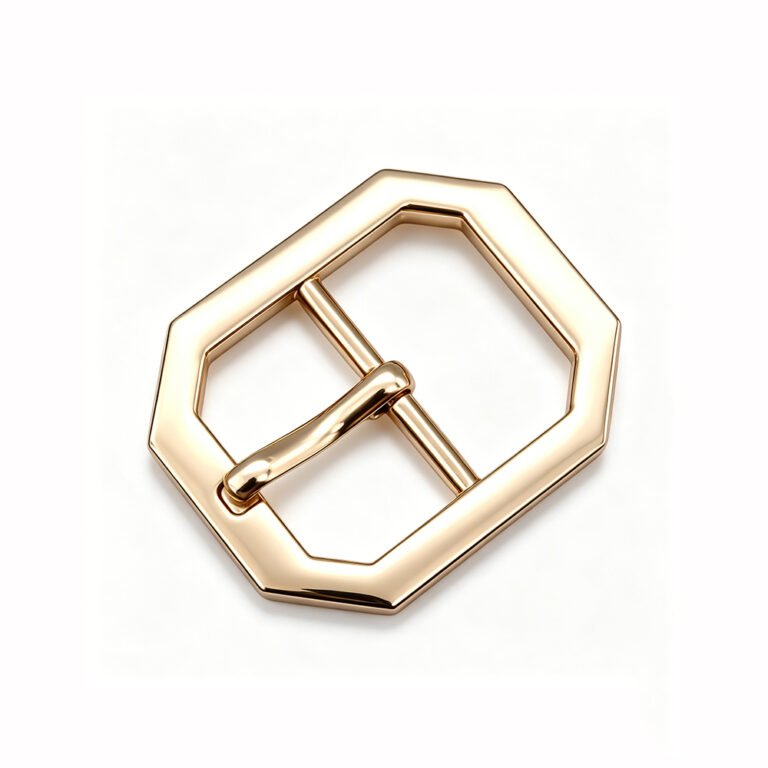
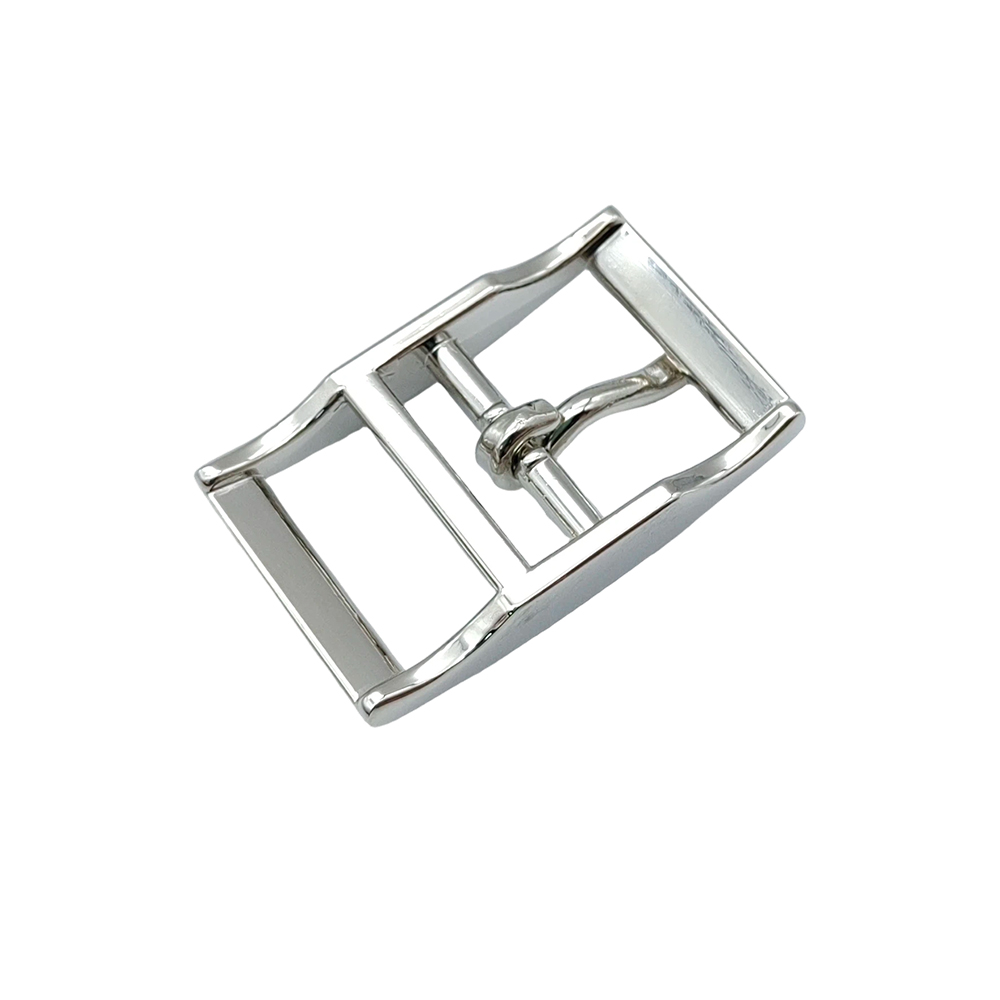
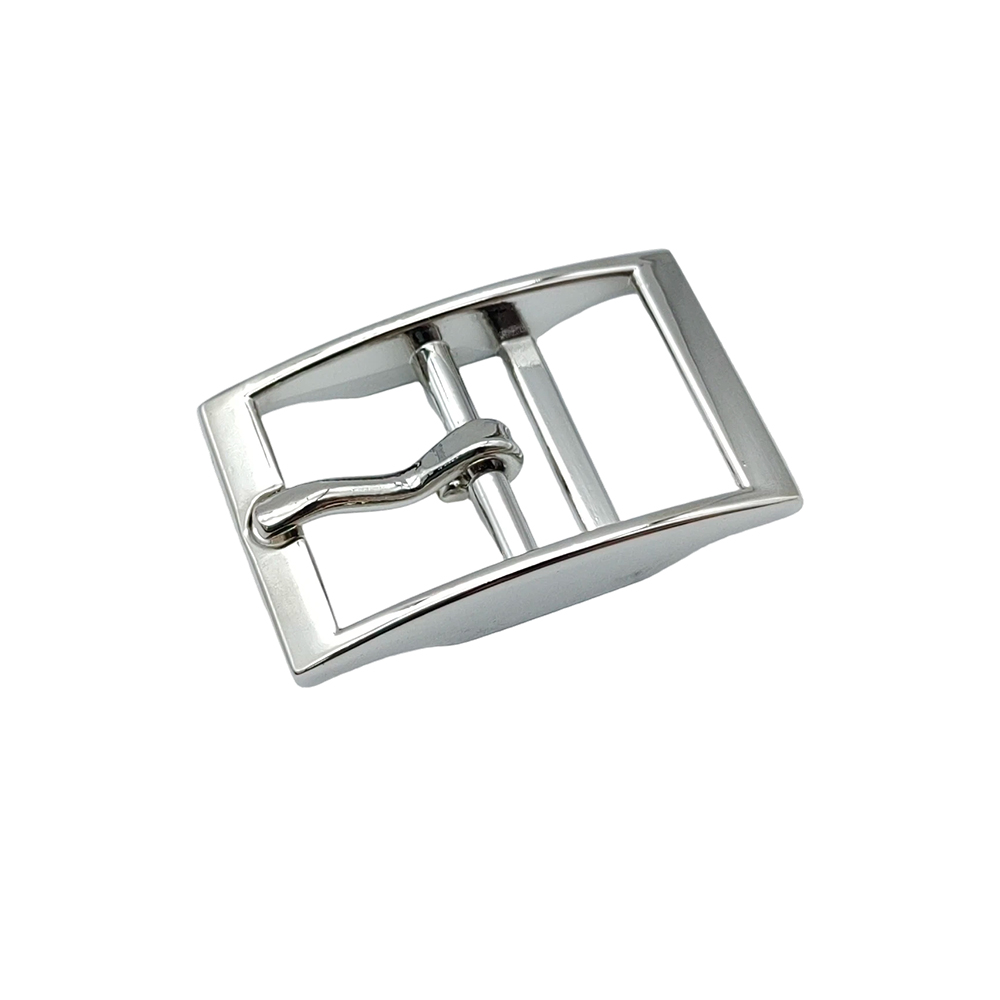
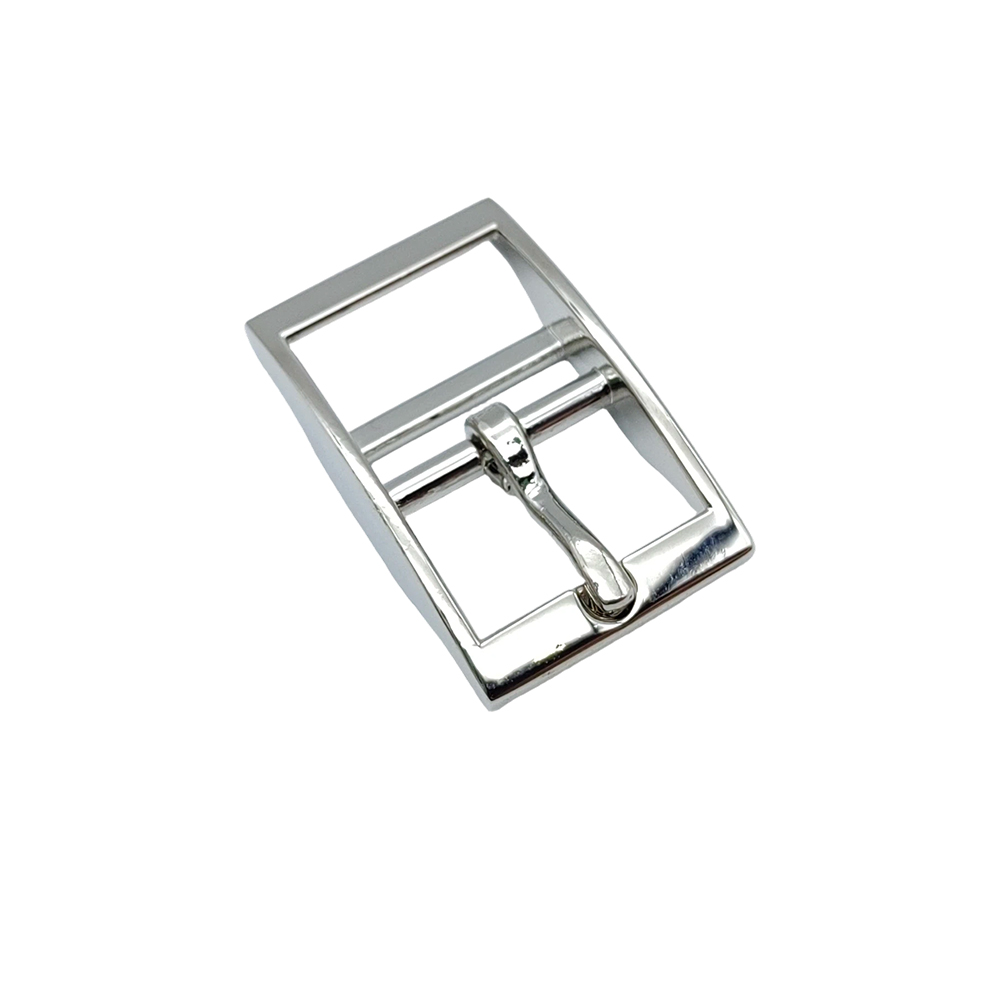
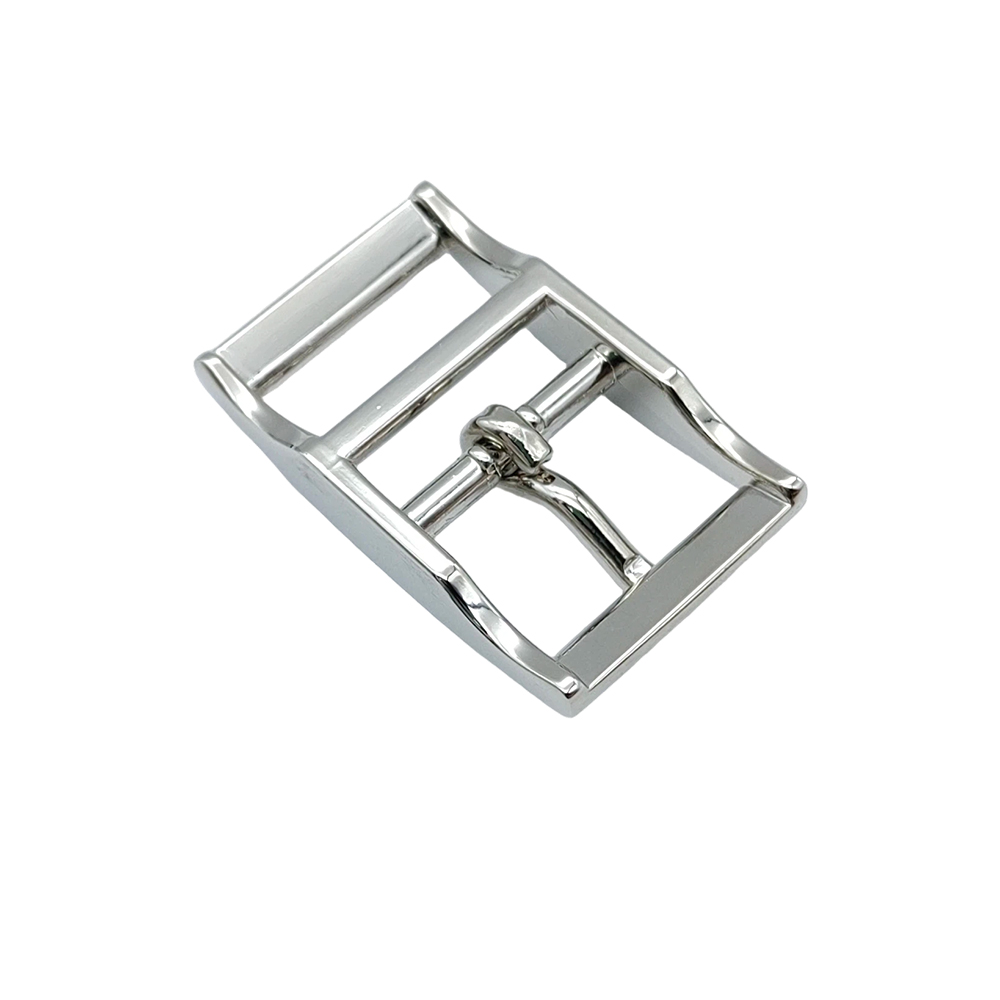
A double bar tongue buckle is a metal strap fastener with a rectangular frame, two transverse bars, and a movable tongue that engages with a punched strap or webbing hole. Unlike a conventional single-bar tongue buckle, the second bar guides and retains webbing after it passes through the tongue area. This makes the design particularly suitable for pet collars, dog leashes, harness straps, luggage webbing, backpacks, and narrow utility straps. DG-TB020 is made from zinc alloy die casting and can be supplied with bright nickel or bright chrome electroplating. It is intended for nominal 20mm webbing, subject to confirmation using the actual webbing sample, thickness, weave, coating, and strap construction.
For buyers developing pet accessories, the useful question is not simply whether a buckle looks good in a sample photo. The real decision is whether its bar spacing, tongue alignment, edge radius, finish, and assembled pull performance fit the final collar or webbing product. DG Buddy supports OEM development from drawing review and custom mold evaluation through sampling, plating selection, QC inspection, and export packing.
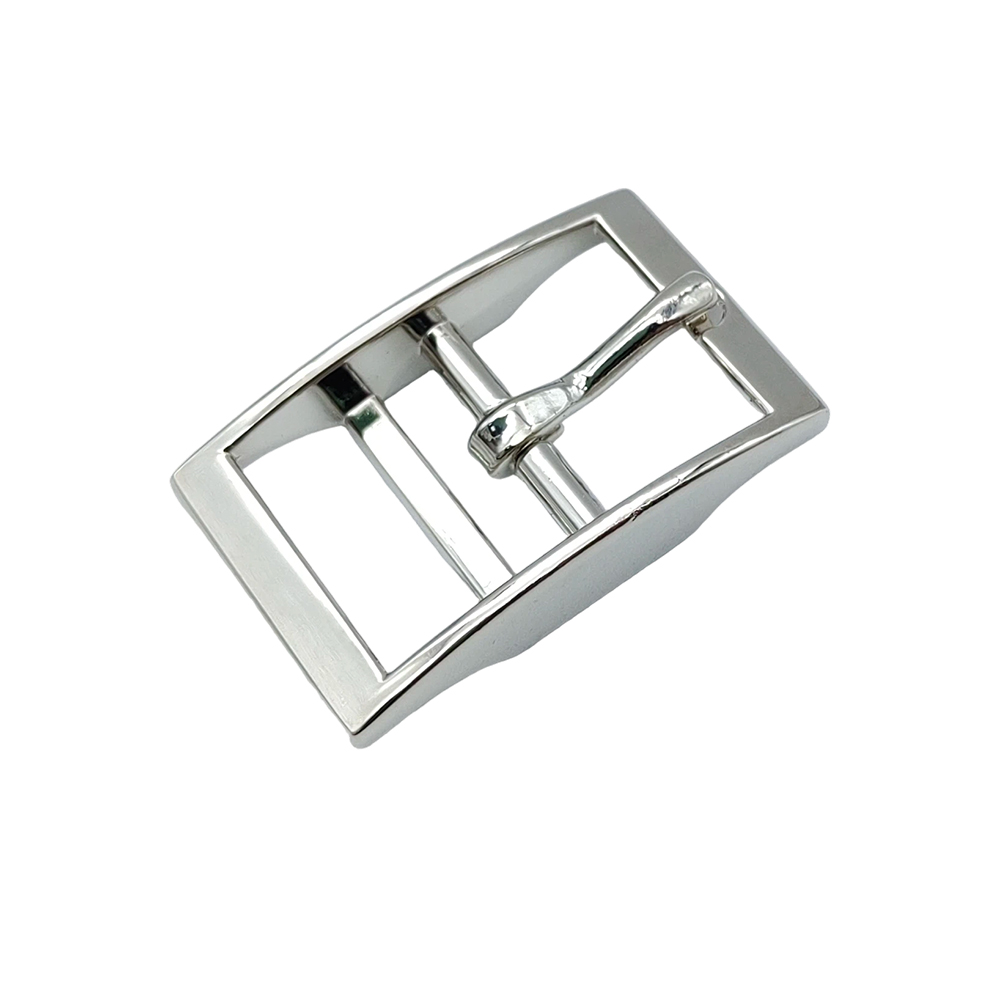
A double bar collar buckle uses one center bar near the rotating tongue and a second bar to guide or retain the webbing. The second bar changes the strap path. It can help the webbing sit more evenly, reduce strap wandering, and limit visible twisting when a collar is repeatedly adjusted. This structure is often preferred for webbing-based pet products because nylon webbing, polyester webbing, and coated webbing can move differently from leather. Comparable two-center-bar collar buckle designs are described as using one bar for the prong and one for webbing or strap attachment.
A nominal 20mm strap does not always measure exactly 20mm in production. Heat-cut webbing, woven-edge webbing, coated webbing, stitched folded straps, and printed polyester straps can each behave differently in a buckle. A strap that is technically 20mm wide may still be difficult to thread if it is thick, stiff, or has a raised edge. During prototype development, we recommend checking the actual webbing sample through the buckle rather than approving the part from a dimension list alone.
| Decision Point | Bright Nickel | Bright Chrome |
|---|---|---|
| Visual tone | Warm-to-neutral reflective silver appearance | Cooler, sharper blue-silver appearance |
| Typical use | Pet hardware, bags, straps, fashion accessories | Decorative hardware requiring a crisp chrome look |
| Surface preparation need | Requires even grinding and polishing before plating | Requires especially clean leveling because defects remain visible |
| Scratch visibility | Fine handling marks may become visible on a mirror surface | Fine handling marks may also be noticeable due to high reflectivity |
| Color matching | Useful when matching nickel-colored rings, sliders, and hooks | Useful when matching chrome-like decorative hardware |
| Recommended buyer input | Approved color chip or retained reference sample | Approved color chip or retained reference sample |
| Corrosion evaluation | Specify the agreed test method and acceptance criteria | Specify the agreed test method and acceptance criteria |
| Production control focus | Polishing uniformity and plating coverage | Leveling, coverage, brightness, and final appearance consistency |
For zinc die castings, decorative electroplating is not a single operation. The surface must be prepared so that polishing lines, porosity, gate marks, and edge defects do not become more obvious under a reflective finish. Nickel and chromium are among the common decorative electroplate finishes used on zinc die castings. Rather than selecting “silver” only from a digital image, buyers should approve a physical reference sample under the lighting conditions used for their product inspection.
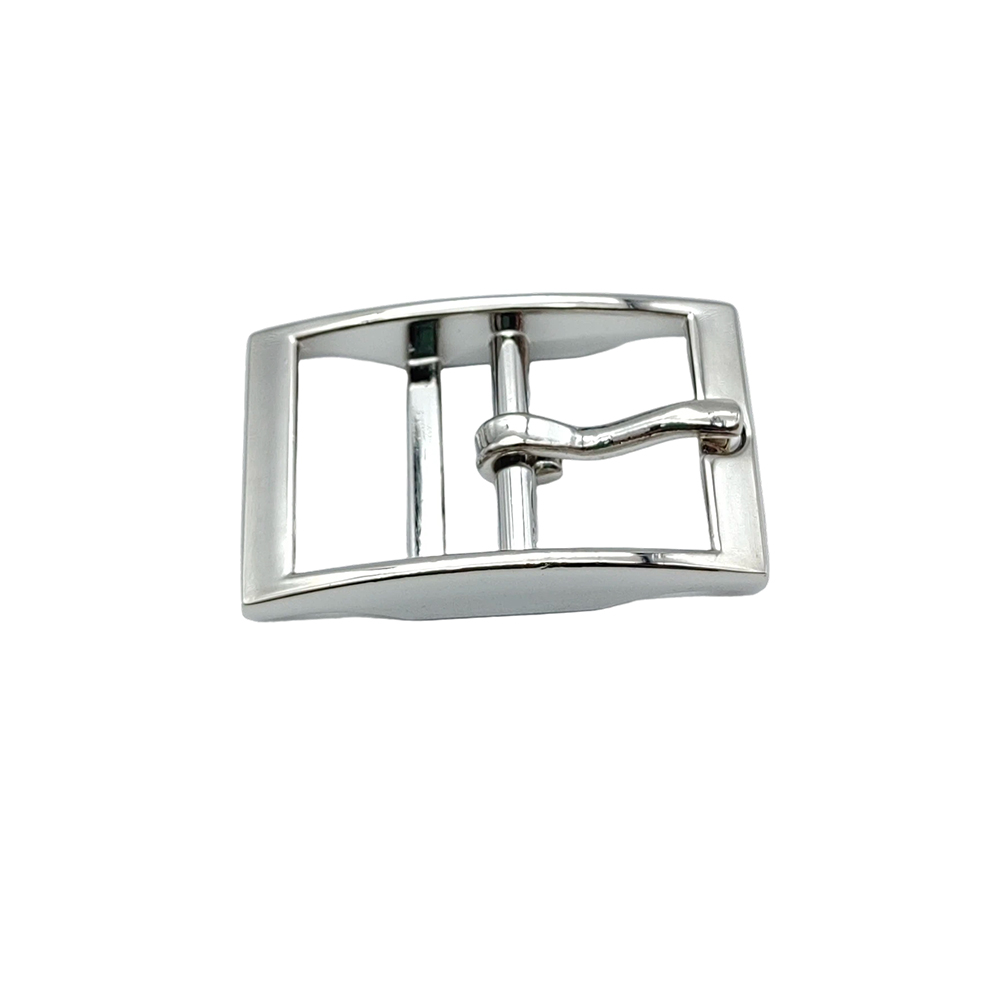
The core advantage of a metal webbing buckle is the relationship between its frame, center bars, tongue, and strap. On DG-TB020, the tongue engages with the adjustment holes or designated webbing opening, while the dual-bar structure manages how the strap returns through the buckle body. This is why the product is more suitable for collar webbing and narrow strap systems than for thick vegetable-tanned leather belts.
With a single-bar buckle, the strap may have fewer guided contact points after it passes the tongue. A double bar tongue buckle adds a controlled routing point. For dog collars and harnesses, this can help the webbing remain flatter and more centered during adjustment. It does not eliminate the need for correct webbing specification, proper hole spacing, and a secure sewn or folded strap end.
The rotating tongue should enter the strap hole without forcing the webbing sideways. If the tongue tip is too broad, too sharp, or incorrectly positioned, it may enlarge the hole after repeated use. If the pivot is loose, the tongue may sit off-center. In a factory sample review, this should be checked with the buyer’s actual webbing or collar strap—not only with a metal gauge.
Pet products experience motion, pulling, moisture, and repeated adjustment. The inside edges around the two bars should be smooth because these areas contact the webbing most frequently. A polished edge radius helps reduce concentrated rubbing. It is particularly relevant to printed nylon, coated polyester, reflective webbing, and color-sensitive fashion straps.
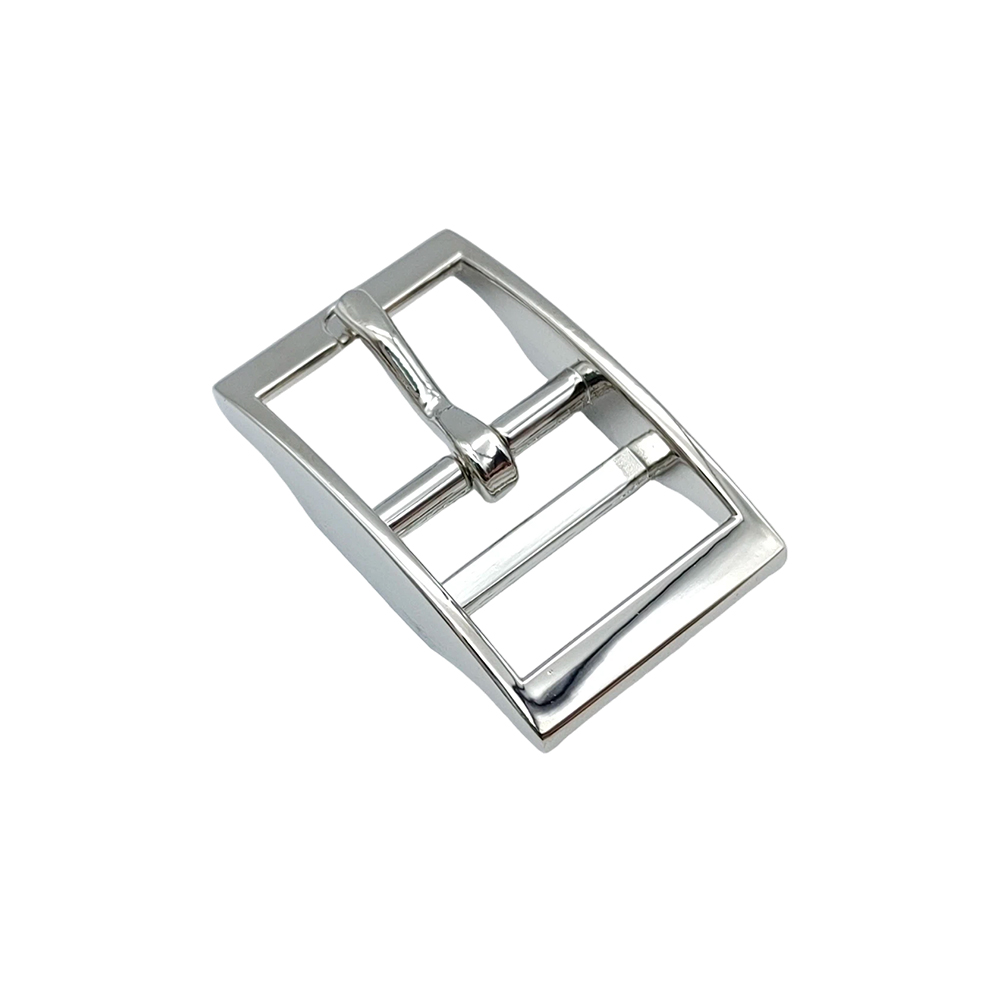
Material choice should match the end product, required appearance, tooling budget, and environmental expectation. Zinc alloy is widely used for shaped pet hardware and fashion accessories because die casting can form complex buckle geometry efficiently. Brass and stainless steel may be considered when the application has different strength, corrosion, machining, or material-positioning requirements.
| Factor | Zinc Alloy | Brass | Stainless Steel |
|---|---|---|---|
| Typical production method | Die casting | Casting, forging, machining, or stamping depending on the design | Stamping, wire forming, machining, or investment casting depending on the design |
| Suitability for detailed shapes | Strong for integrated bars, shaped frames, and decorative geometry | Good, depending on process and part complexity | Often better for simpler formed structures or machined parts |
| Surface appearance options | Electroplating, painting, PVD, and decorative finishes | Natural brass, polishing, plating, antique effects | Brushed, polished, PVD, or natural stainless appearance |
| Tooling approach | Custom die-casting mold for repeat production | Depends on selected forming process | Depends on selected forming process |
| Weight feel | Substantial metal feel | Typically dense and substantial | Varies by design and wall thickness |
| Pet collar application | Common for decorative and functional buckle designs | Suitable where brass appearance or specific product positioning is needed | Suitable where the product design requires stainless characteristics |
| Buyer review point | Plating stack, casting quality, and assembled pull test | Material finish, cost, and fabrication route | Grade, forming method, edge treatment, and construction |
For this double bar tongue buckle, zinc alloy die casting is a practical choice because it can produce the rectangular frame, twin bars, and tongue-related features in a repeatable form. The decision should still be verified against the product’s required pull test, user environment, and target retail position.
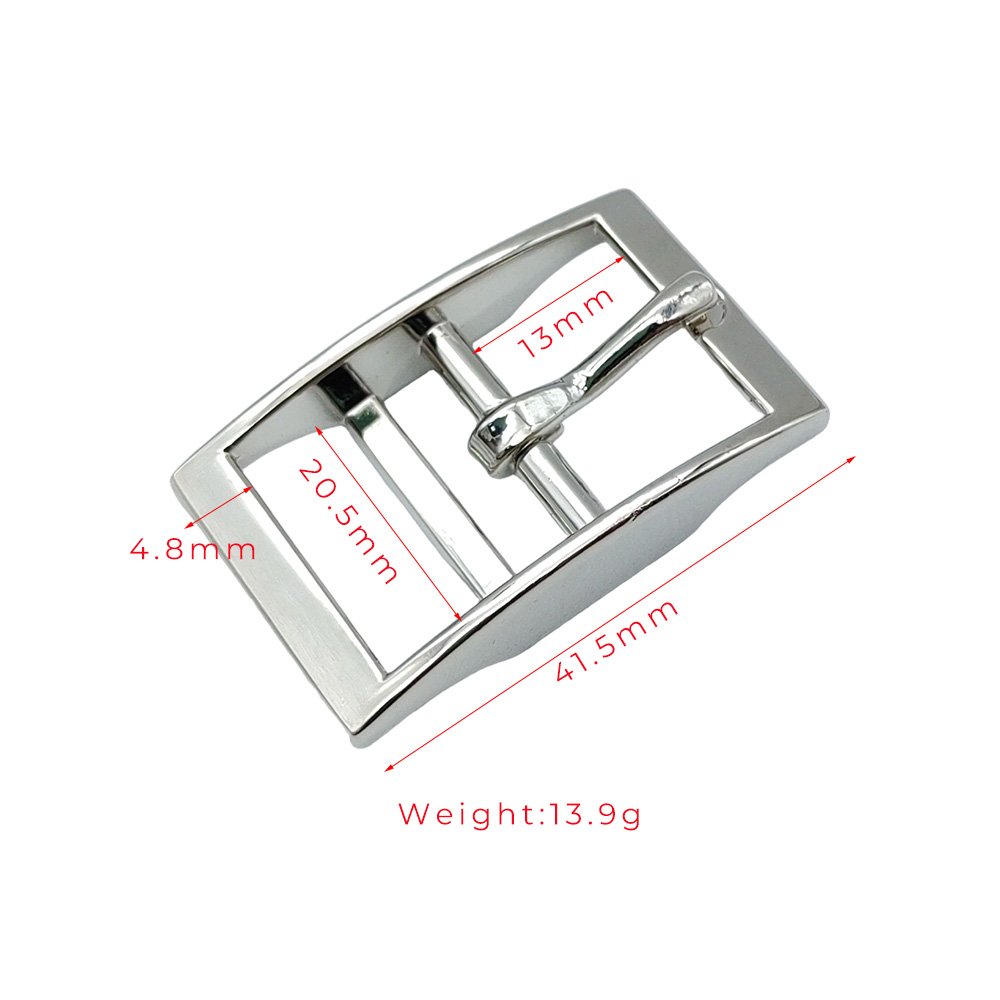
The supplied image indicates an approximate overall length of 41.5mm, an internal webbing-related dimension of approximately 20.5mm, a secondary dimension of approximately 13mm, and a unit weight of approximately 13.9g. These reference values are useful for initial inquiry, but a final CAD drawing or approved production drawing is needed before custom tooling and bulk production.
| Drawing Feature | Reference Information | Why It Matters to Buyers |
|---|---|---|
| Overall buckle length | Approximately 41.5mm | Determines visual proportion on a dog collar, leash, backpack strap, or handbag webbing detail. |
| Usable webbing width | Approximately 20.5mm | Determines whether nominal 20mm webbing can pass through without binding or excess side movement. |
| Secondary opening or bar-related dimension | Approximately 13mm | Must be clarified because it affects strap routing, tongue clearance, and actual assembly space. |
| Outer-frame thickness | Customizable | Affects strength, visual weight, casting fill, edge radius, and total buckle profile. |
| Center-bar thickness | Customizable | Changes how tightly webbing bends around the bars and influences wear at contact points. |
| Tongue length and tip profile | Customizable | Controls entry into strap holes, user adjustment feel, and the risk of webbing-hole damage. |
| Tongue pivot clearance | Customizable | Ensures smooth rotation without excessive looseness or rubbing against the plated frame. |
| Unit weight | Approximately 13.9g | Helps buyers estimate hardware weight for a finished pet collar or strap assembly. |
One thing buyers often overlook is plating allowance. A die-cast part may meet the raw-casting dimension but become tighter after copper, nickel, or chrome layers are added. Where strap clearance is tight, DG Buddy reviews the tolerance together with the selected surface treatment and physical webbing sample.
Production begins with the approved material, drawing, finish reference, and webbing application details. For custom pet collar buckle projects, the most efficient time to resolve issues is before mold release—not after the first plated sample is completed.
DG-TB020 is best suited to products that use webbing or relatively thin flexible strap materials. The double-bar layout is especially relevant where a stable strap path matters during repeated adjustment.
During pet collar development, a buyer may choose a nominal 20mm buckle for a 20mm printed nylon webbing design, then find the actual strap difficult to thread after folding, stitching, and applying a protective coating. The apparent mismatch is often not the buckle’s nominal width alone. It can come from raised webbing edges, increased thickness at the folded end, or insufficient bar clearance. In this situation, the practical approach is to send the actual webbing and collar construction sample for fit review before mold confirmation. The buckle can then be evaluated for clearance, tongue position, strap routing, and appearance as one working system.
| Buyer Type | Is DG-TB020 Suitable? | Recommended Next Step |
|---|---|---|
| Pet collar brand | Yes, especially for webbing-based collars requiring a traditional tongue buckle. | Send webbing, strap-hole spacing, product load expectation, and finish reference. |
| Pet harness or leash developer | Potentially suitable as part of a complete hardware system. | Confirm the buckle function and perform finished-assembly pull testing. |
| Handbag or luggage brand | Yes, for narrow webbing straps and functional decorative adjustment details. | Confirm strap material, thickness, matching hardware color, and visual standard. |
| Outdoor strap producer | Suitable for selected light-duty webbing designs. | Specify the use environment and complete product performance requirement. |
| Thick leather belt brand | Usually not the first choice. | Consider a belt buckle structure designed for thick leather and the required tongue reach. |
| Small OEM project | Suitable when using an existing size and existing finish. | Discuss stock-style availability, sample requirement, and target order details. |
DG Buddy can support OEM and ODM projects when buyers need a buckle that aligns with a specific collar, bag, strap, or accessory collection. A custom project should begin with the functional requirement, not only a reference picture. For example, the buyer should identify the strap width, webbing construction, tongue-hole pitch, target finish, required logo method, and intended order quantity.
Custom samples require a sampling fee. Custom sample fees are fully deductible from bulk orders. Courier charges are borne by the customer. Free stock samples available; custom sample fees fully deductible from bulk orders.
Bright nickel and bright chrome finishes need sensible handling after assembly. The coating protects the zinc alloy substrate, but the appearance of a polished surface can be affected by storage conditions, household chemicals, sweat, salt residue, abrasive cleaning, and contact with wet leather or damp webbing.
Yes, DG-TB020 is designed for webbing-based uses such as dog collars, leashes, harness straps, and similar pet accessories. Its two-bar configuration helps guide the strap after the tongue area, which can reduce twisting and strap displacement compared with a simple single-bar construction. However, suitability for a pet collar depends on the complete assembly: webbing specification, stitching, D ring, leash attachment, strap holes, load requirement, and intended pet size must all be evaluated together.
The supplied image indicates an internal webbing-related dimension of approximately 20.5mm, so the initial positioning is for nominal 20mm webbing. Actual compatibility must be confirmed using the buyer’s physical webbing sample. Thickness, woven edge, coating, print layer, folded construction, and stitching can all affect how the strap threads through the double bars. For a custom project, send a sample or complete webbing specification before mold confirmation.
A standard single-bar tongue buckle generally uses one primary center bar to support the tongue and direct the strap. A double bar tongue buckle includes an additional bar that helps retain and guide webbing after it passes through the tongue section. For webbing products such as pet collars, this additional routing point can improve strap alignment and reduce twisting. It is not automatically the best choice for every belt; thick leather belts often require a buckle specifically designed for their material thickness and tongue reach.
Yes. This product can be developed with bright nickel or bright chrome electroplating, subject to approved samples and plating requirements. A reflective finish reveals surface condition, so die-cast trimming, grinding, and polishing must be controlled before plating. Buyers should provide a physical color standard, retained sample, or clear target reference. For corrosion evaluation, agree on the test method, sample quantity, duration, and pass/fail criteria before production rather than requesting a vague “rustproof” requirement.
Yes. OEM logo options may include laser marking after plating, molded raised logos, recessed logos, or oil-filled details depending on the part geometry and visible surface area. If a logo is part of the buckle’s main design, it is better to discuss it before mold development so its depth, edge clarity, polishing access, and plating behavior can be considered. Send your artwork in an editable vector format together with the preferred logo location and size.
The MOQ for individual hardware such as this buckle is 1000 pcs (negotiable based on order details). Pricing and flexibility depend on whether the buyer uses an existing design or needs a custom mold, selected finish, logo process, packaging method, and inspection requirement. Sharing the projected order quantity, color split, and delivery destination at the inquiry stage helps DG Buddy prepare a more practical quotation.
For custom molds or custom samples, the standard Sample Time is 5–7 Days. Production Time is 10–15 Days, and Delivery Time is 10–15 Days. Free stock samples available where applicable. Custom samples require a sampling fee, and custom sample fees are fully deductible from bulk orders. Courier charges are borne by the customer. Final timing should be reconfirmed after the design, finish, quantity, and packaging requirement are approved.
We maintain quality certification documentation and are happy to provide the current valid certificates upon request during your sourcing evaluation. For product-specific performance requirements, please also identify the intended market, material expectation, plating requirement, and testing criteria. This lets the project team distinguish between general documentation needs and the test plan needed for your particular pet collar, webbing, bag, or accessory application.
The standard packing method is Pearl Foam + OPP Bag + Export Carton. This approach helps reduce metal-to-metal contact and surface scratching during handling and international shipment. For retail programs, DG Buddy can discuss Customized Packaging Available, including inner-box quantities, barcode labels, private-label cartons, hang tags, retail boxes, and buyer-designated inspection labels. The selected packing should consider the brightness of the plating and the likelihood of friction during transport.
DG Buddy operates with nearly 20 years of manufacturing experience in metal hardware development for bags, leather goods, straps, and accessory projects. For a double bar tongue buckle, the relevant capability is not a generic claim about quality. It is the ability to review strap compatibility, manage die-casting geometry, control polishing before reflective plating, assemble the tongue correctly, and inspect the product against a buyer-approved standard.
DG Buddy’s published manufacturing workflow for metal hardware includes mold development, die casting or machining, polishing and deburring, surface treatment, inspection, and packing—stages that align with the development needs of custom buckle projects.
If you already have a technical drawing, webbing sample, plated reference, or target collar design, send it to DG Buddy for a practical buckle review. We can check whether the 20mm double bar tongue buckle configuration matches your webbing width, thickness, tongue-hole layout, visual finish, and packaging requirement before you commit to production.
If you are still comparing suppliers, share the intended application, estimated order quantity, webbing material, preferred finish, and destination market. We will help identify the information needed for an accurate OEM quotation and a more useful sample evaluation.
Want to see how our hardware feels in your hand? Download our 2026 Premium Hardware Catalog today, or request a batch of free stock samples for your next quality test—we usually ship them out within 12 hours.