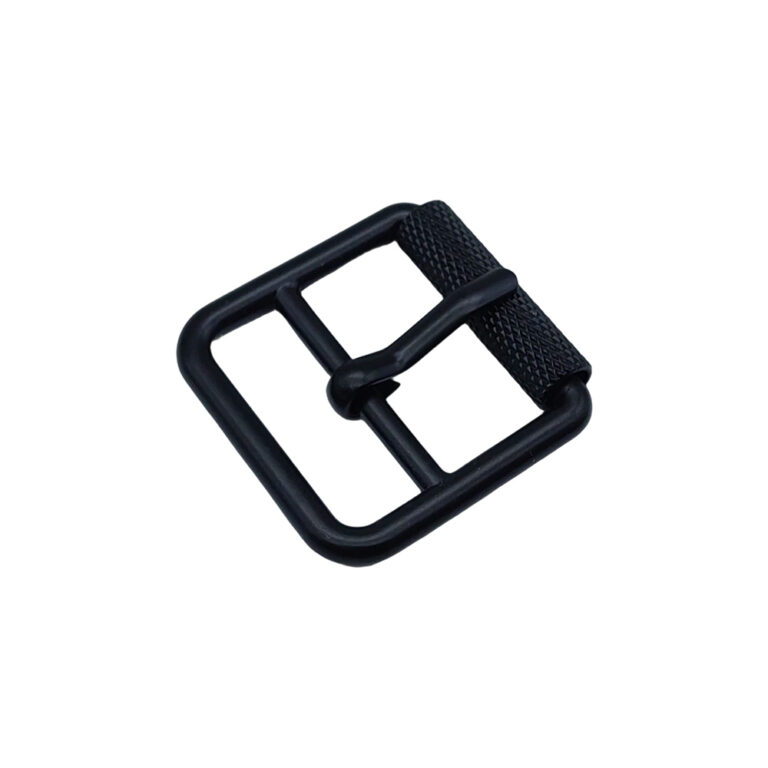
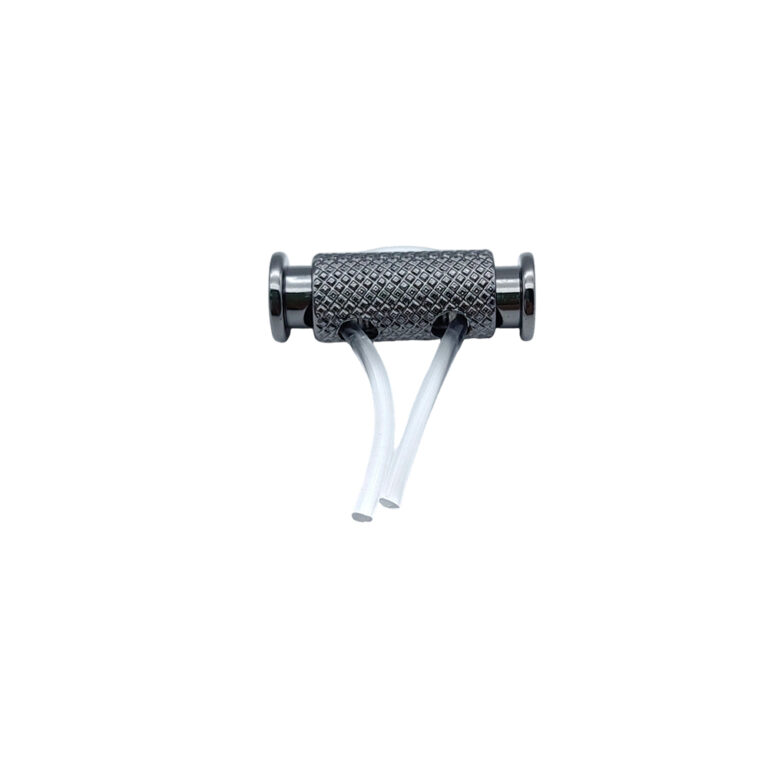
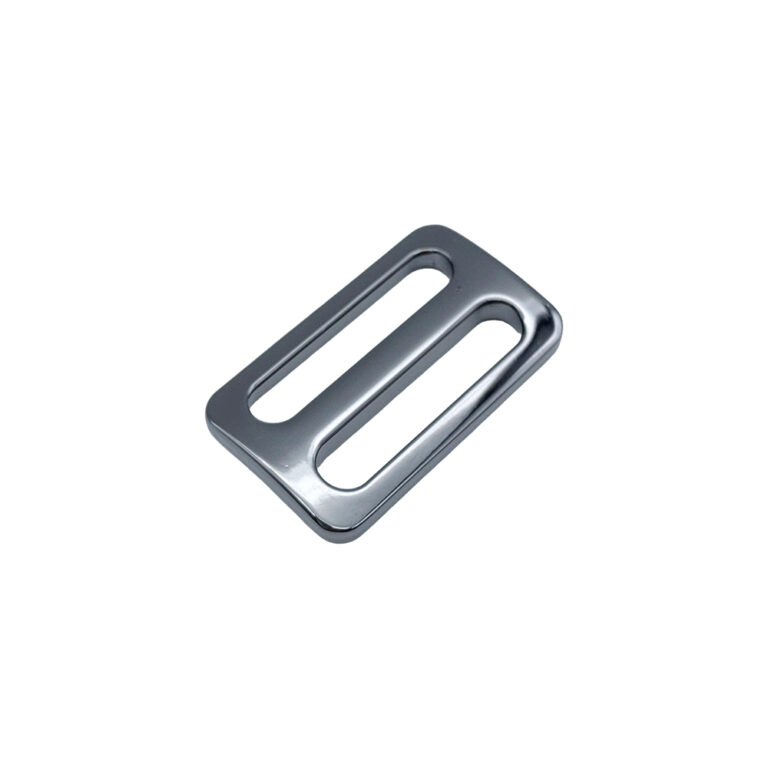
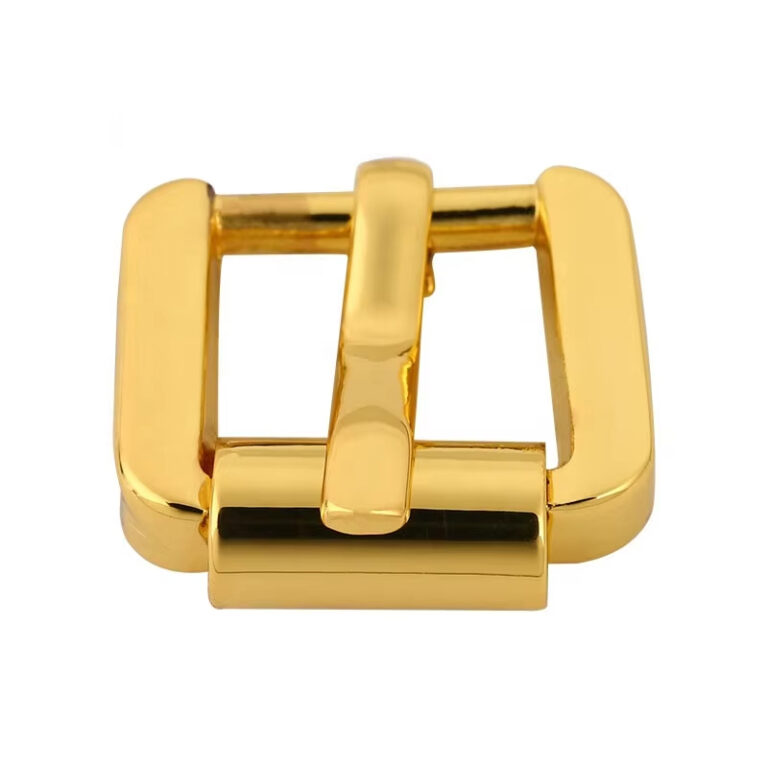
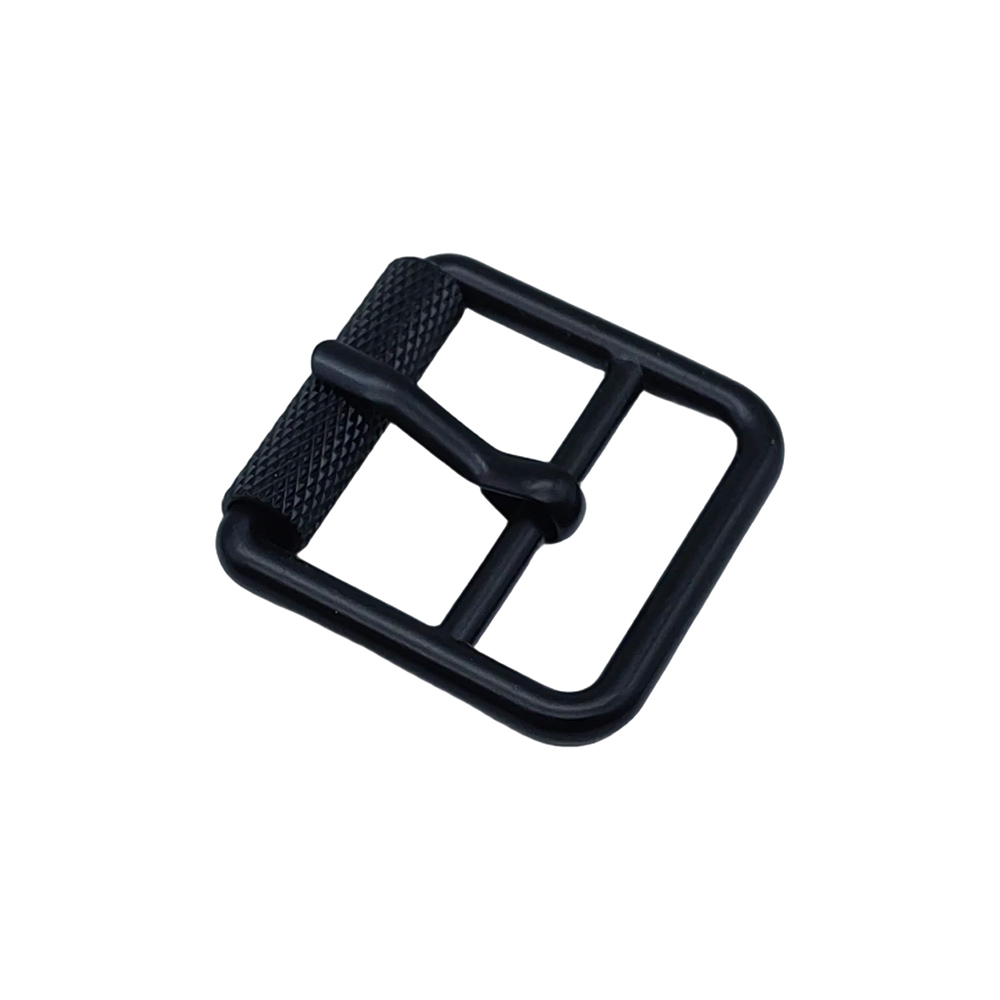
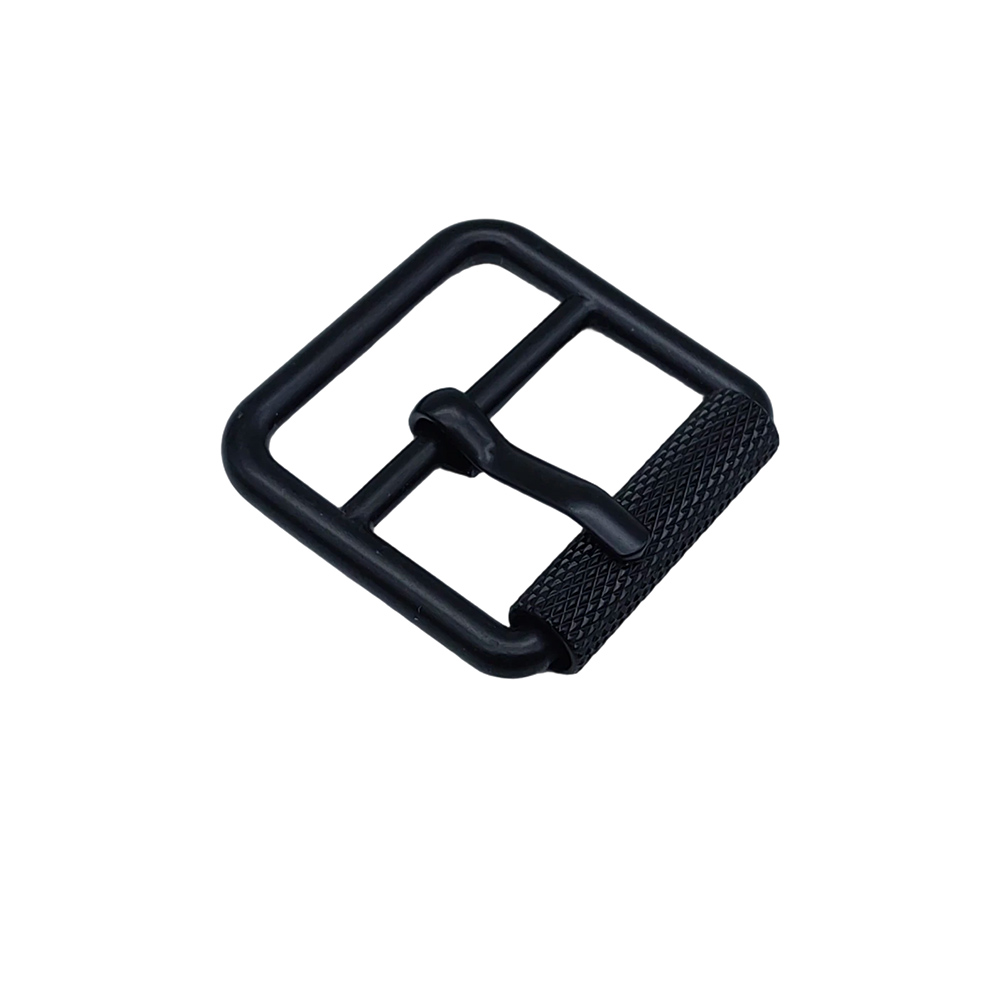
What is a roller buckle? A roller buckle is a belt strap buckle made from metal with a rotating roller sleeve positioned at the front of the frame. Compared with a fixed front bar, the roller gives the strap a moving contact surface during insertion and tightening. This 25mm roller buckle for belt straps uses a rectangular frame, a single prong, and a knurled roller sleeve for belts, bag straps, footwear straps, luggage details, and selected outdoor gear. Buyers should confirm the usable strap width, material, finish, tolerance, and pull requirement before production. DG Buddy supports sample review, OEM customization, and practical engineering communication from prototype to repeat order.
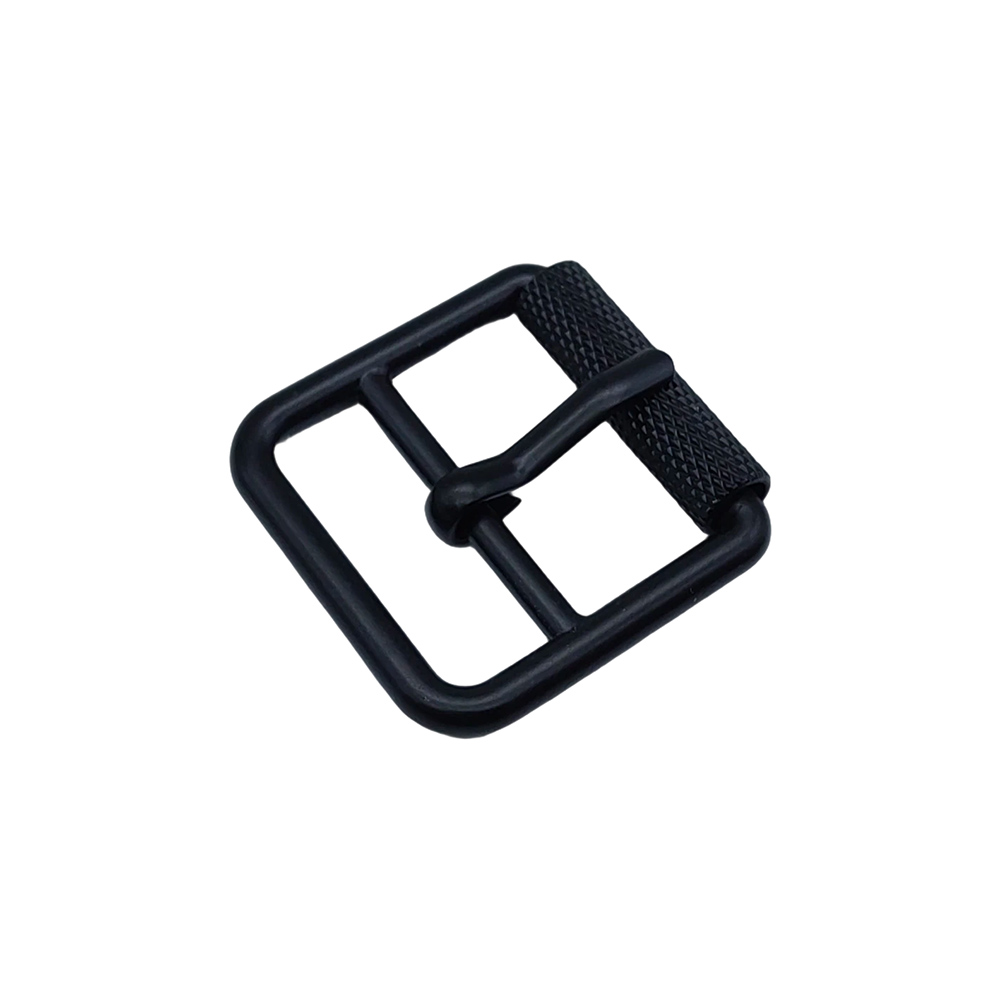
A roller belt buckle is selected when a buyer wants a familiar pin-buckle adjustment with a smoother strap path. As the belt or webbing is pulled, the rotating roller sleeve turns with the contact movement. It does not eliminate all friction, but it can ease repeated adjustment.
For textile webbing, the knurled surface must provide useful contact without catching loose fibers. During prototype development, test the actual strap construction rather than approving hardware on appearance alone. A metal roller buckle for bag straps can work well when strap width, thickness, hole pattern, and expected tension are matched.
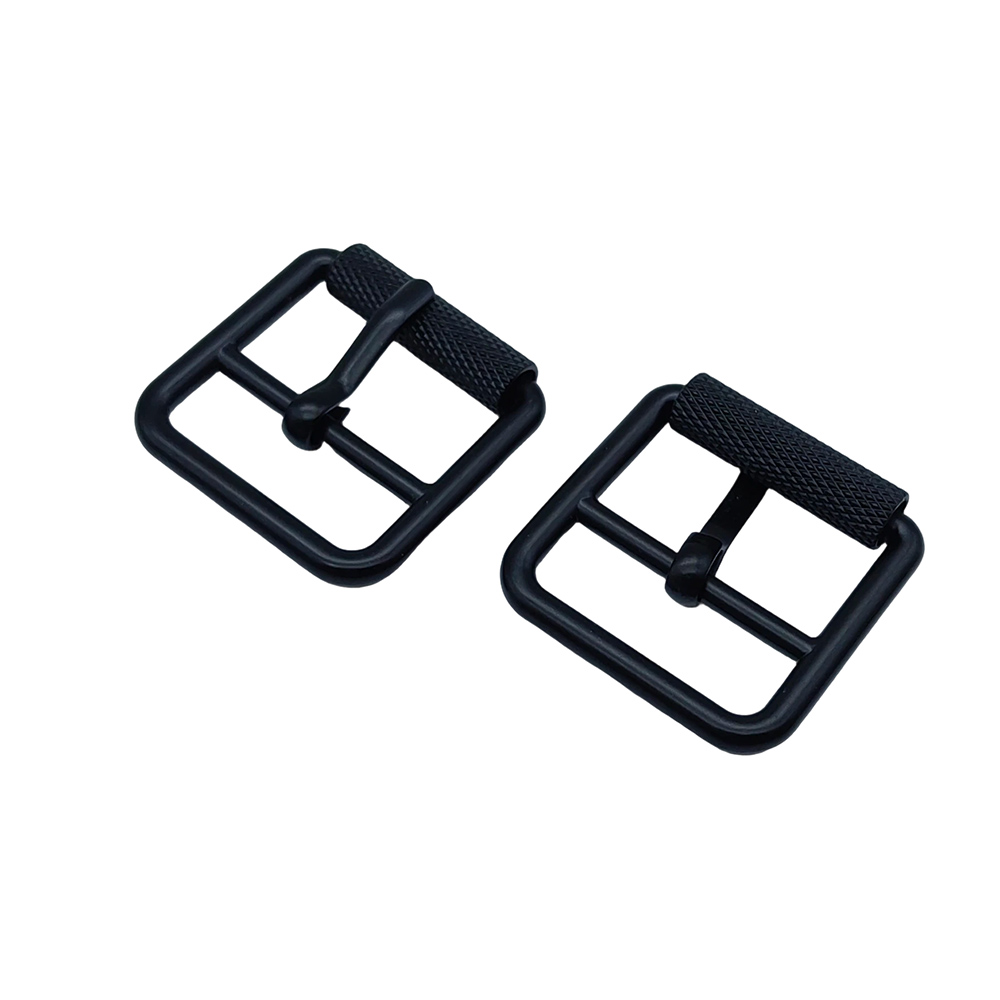
A standard pin buckle normally uses a fixed front bar. A roller buckle replaces that fixed contact point with a rotating roller sleeve. The practical difference is the strap interface: a fixed bar creates sliding contact, while a roller creates rolling contact as the strap is pulled. Choice depends on strap material, adjustment frequency, visual style, cost, and holding performance.
The knurled surface affects grip, noise, wear, and the risk of marking the strap. A fine texture may be more suitable for soft leather or coated webbing, while a stronger texture may be considered for firmer webbing. Texture should be evaluated with the actual strap, because the same roller pin buckle can feel different on leather, nylon webbing, cotton tape, and coated synthetic material.
Suppliers and buyers do not always use the same reference for a nominal size. One party may mean compatible strap width, while another may mean an inner opening or a drawing dimension. Before a purchase order, confirm the dimension used for the 25mm roller buckle, together with strap thickness, hole diameter, center-to-center hole spacing, and production tolerance.
| Decision Point | Metal Roller Buckle Consideration | Buyer Check |
|---|---|---|
| Base material | Metal choice affects weight, forming behavior, corrosion response, and cost. | Confirm the exact alloy or steel grade. |
| Frame strength | The frame transfers strap tension into the buckle body. | Define the intended pull or load requirement. |
| Roller sleeve | The sleeve must rotate freely without excessive side play. | Test rotation with the production strap. |
| Pin | Pin diameter and alignment influence hole fit and adjustment feel. | Check pin position, straightness, and hole compatibility. |
| Edge condition | Burrs can cut leather, webbing, packaging, or the end user. | Inspect internal corners and contact edges. |
| Black finish | Black appearance may be achieved by different surface-treatment routes. | Confirm the actual process and color standard. |
| Polishing | Preparation before finishing affects visual consistency on curved areas. | Review a representative finish sample. |
| Packaging | Metal parts can rub against one another during transportation. | Confirm Pearl Foam + OPP Bag + Export Carton or Customized Packaging. |
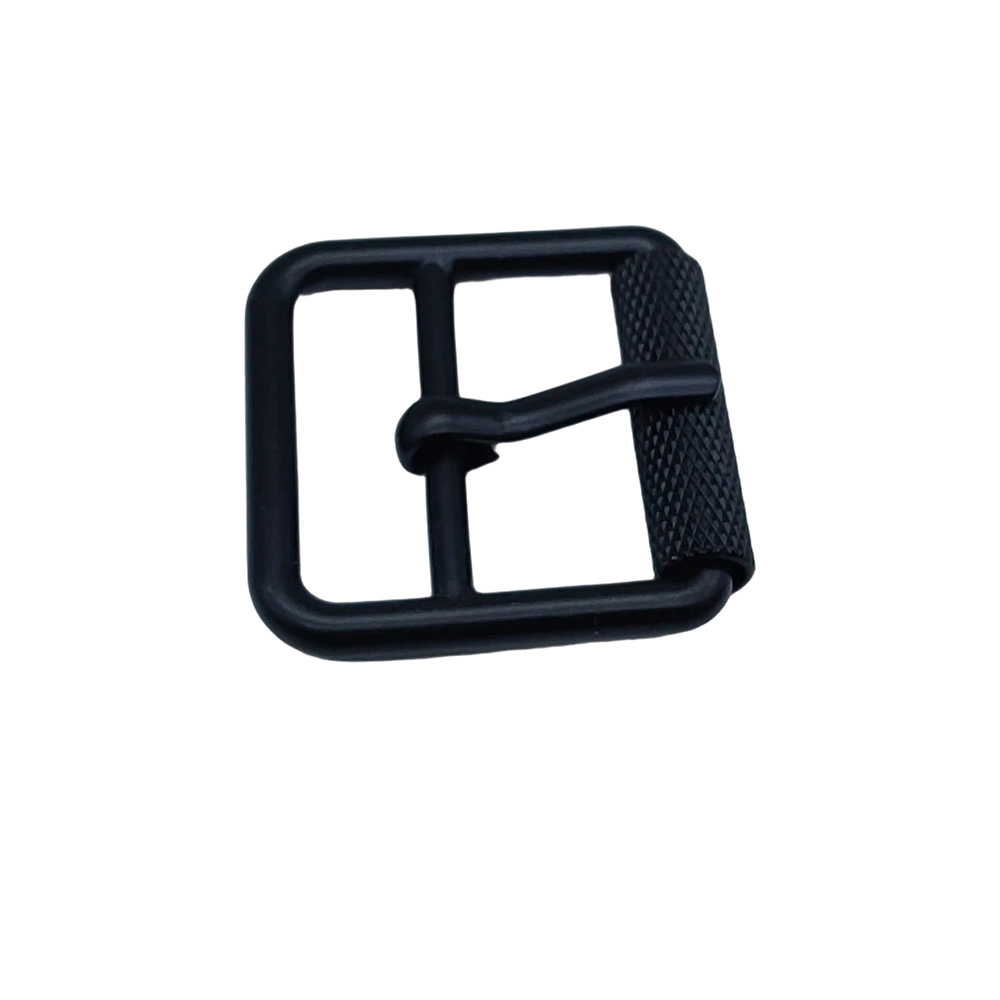
The supplied image shows a black finish, but the exact material and treatment are not confirmed by the image alone. Request the material specification and approve a physical sample, especially for sweat, humidity, dyed leather, or coated webbing.
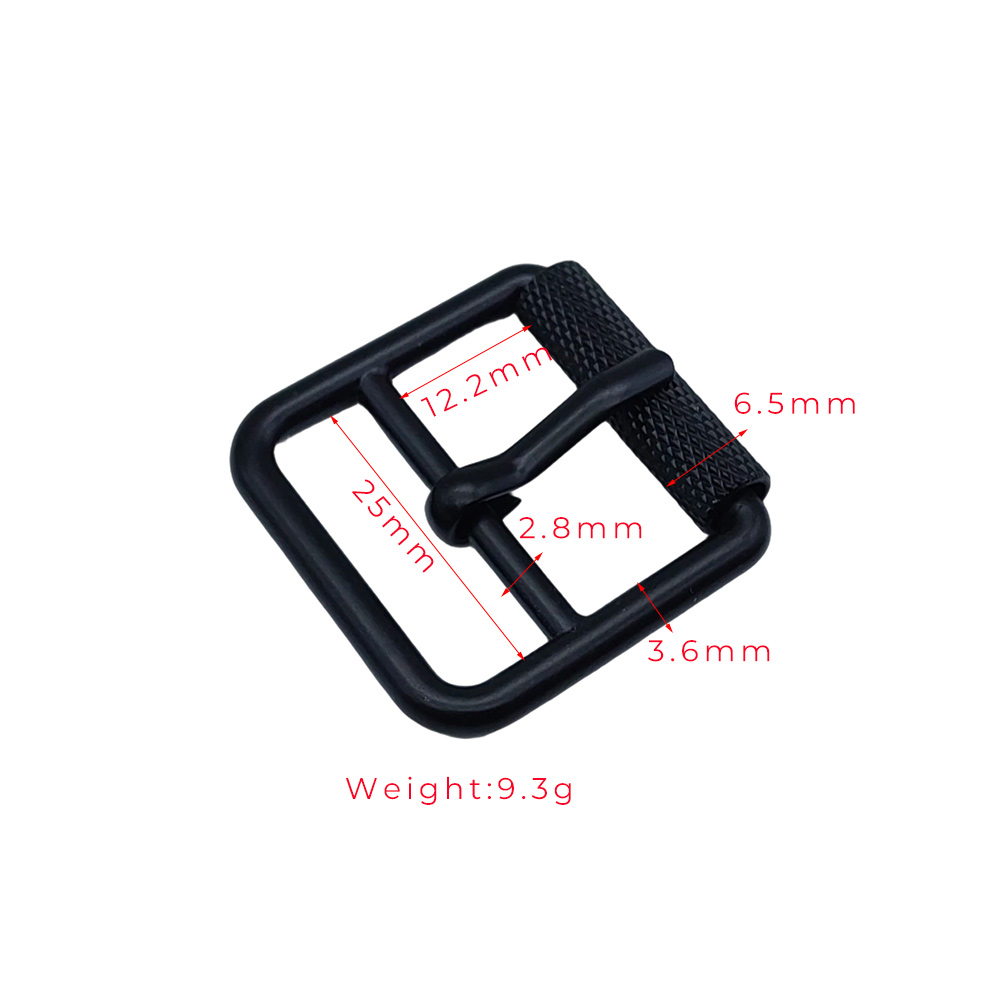
The supplied image marks several dimensions and an approximate weight. These numbers are useful for an initial review, but a production drawing should identify datums, tolerances, and the exact measurement direction.
| Marked Feature | Why It Matters to Production |
|---|---|
| 25mm nominal size | Usually guides strap selection, but the buyer must define whether it means usable strap width or another reference. |
| 12.2mm opening | Influences how the strap turns through the frame and whether a folded or thick strap can pass smoothly. |
| 6.5mm roller-related width | Helps establish the contact zone and side clearance of the roller sleeve. |
| 2.8mm pin diameter | Must match the strap-hole diameter and provide a stable but usable adjustment feel. |
| 3.6mm frame section | Relates to frame rigidity, visual proportion, and the amount of material around the strap path. |
| 9.3g marked weight | Useful for product costing and shipping estimates; production tolerance should be confirmed. |
For OEM work, the drawing should also show overall length, overall width, roller sleeve length, pin clearance, frame radius, and surface-treatment allowance. Check whether the outside profile interferes with stitching, folding, lining, or adjacent components.
In our factory, the process route should follow the confirmed material and construction rather than a generic product template. A typical route for this type of buckle may include raw material preparation, metal forming or stamping, roller-sleeve knurling, trimming, deburring, polishing, assembly, surface treatment, inspection, and packing. The exact route must be confirmed against the approved drawing.
Quality control is more useful when it is tied to buyer risk. For example, a buyer selling a narrow leather belt may prioritize edge smoothness and roller marking, while a buyer using the component on an outdoor strap may place more emphasis on material, finish durability, and pull performance.
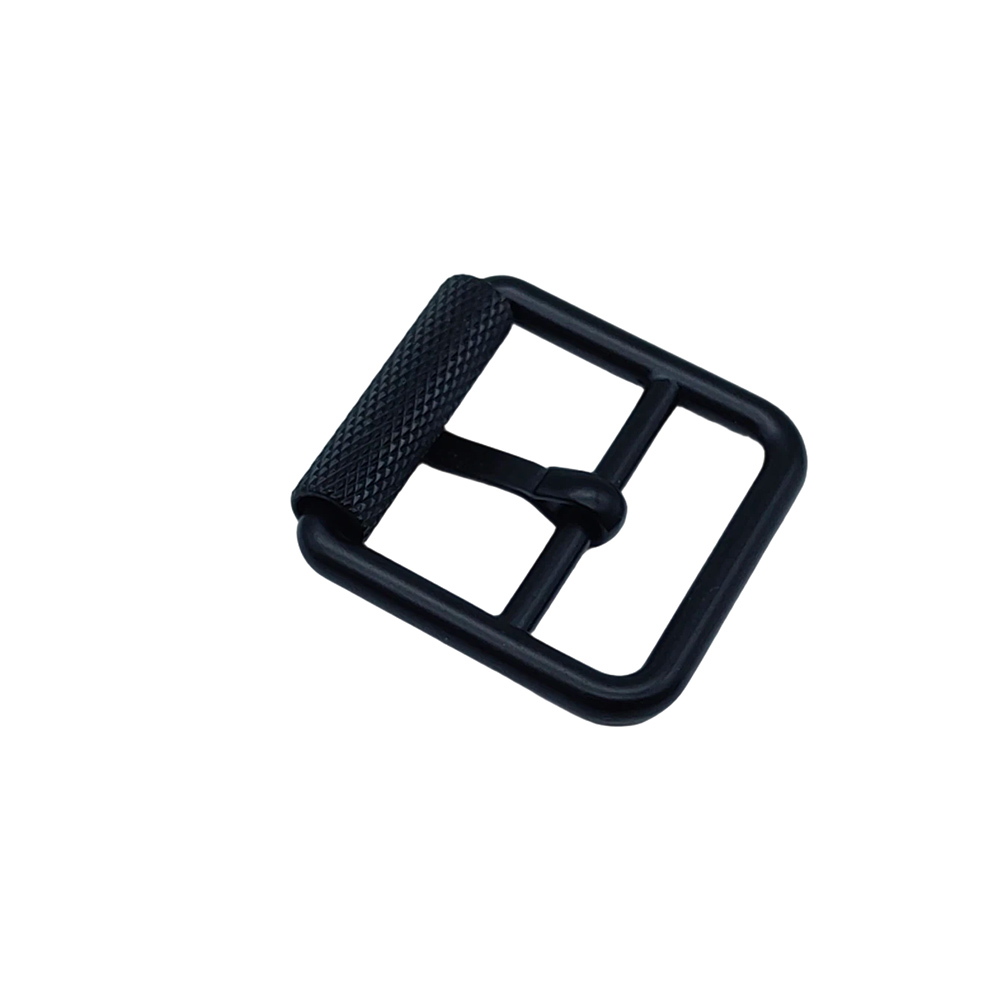
This product is a practical candidate for fashion belts, compact bag straps, footwear details, luggage accents, and selected outdoor accessories where a pin adjustment is preferred. For a roller buckle for webbing straps, confirm the strap interface and finish requirement. It is not ready for a critical safety application until material, geometry, and load validation are specified.
A typical buyer scenario is a brand developing a narrow black leather accessory. The sample looks correct, but the strap is thicker and the roller opening is tight. The useful solution is not simply changing the color. The team should compare strap thickness, opening dimensions, pin position, edge condition, and adjustment force, then revise the drawing before a bulk order. This type of engineering review helps reduce late-stage returns and assembly problems.
When a buyer compares an OEM roller buckle manufacturer, DG Buddy can review an OEM requirement around strap width, frame proportions, roller texture, pin details, finish, and packaging. A practical development route is:
Laser logo, embossed logo, deboss logo, and oil filling are not automatically assumed for this buckle. They can be discussed only if the product geometry and the customer’s branding direction support them. The quotation should separate tooling, sampling, unit price, packaging, and any requested testing so the buyer can compare suppliers on the same basis.
As an individual buckle hardware item, the standard MOQ is 1000 pcs (negotiable based on order details). The practical quantity may depend on the confirmed material, finish, packaging, tooling, and whether the order is a repeat production run. If you are comparing suppliers, send the required quantity, strap width, finish reference, and target delivery date together. That allows the quotation to reflect the real production conditions instead of comparing an incomplete unit price.
The fixed custom or development sample time is 5–7 Days. The fixed production time is 10–15 Days, and the fixed delivery time is 10–15 Days. Free stock samples available. Custom samples require a sampling fee. Custom sample fees are fully deductible from bulk orders. Courier charges are borne by the customer. Timing begins after the required drawing, finish, and order details are available for review.
Yes, OEM / ODM discussion can cover strap width, frame geometry, roller details, pin dimensions, finish, packaging, and inspection requirements. A Custom Mold may be needed when the requested geometry cannot be produced through the existing process route. Buyers should provide a drawing or physical reference where possible. During prototype development, we review fit with the actual strap rather than approving the buckle as an isolated object.
The supplied image confirms a metal construction but does not verify a specific alloy or steel grade. The final material should be confirmed in the technical specification and quotation. Material selection affects weight, forming, finish response, corrosion behavior, and cost. If the buckle will contact sweat, humidity, dyed leather, or outdoor conditions, tell the supplier the intended environment before the sample is finalized.
The supplied product image shows a black finish. The exact treatment route and available alternatives should be confirmed before approval because black appearance can be produced through different processes. A buyer should review a physical finish sample, define color tolerance, and consider abrasion, sweat, humidity, and strap contact. The surface finish should be evaluated together with edge condition and roller movement, not as a color decision alone.
Free stock samples available. Custom samples require a sampling fee. Custom sample fees are fully deductible from bulk orders. Courier charges are borne by the customer. For a custom sample, provide the intended strap, drawing, finish reference, and quantity target if available. This information helps the sample represent the actual application and reduces the risk of approving a part that later needs adjustment during assembly.
We maintain quality certification documentation and are happy to provide the current valid certificates upon request during your sourcing evaluation. Please specify the market, product application, and documentation requirement in your inquiry so the relevant current documents can be reviewed. Certification should not be assumed from a product photograph or from a generic supplier statement.
Send the required quantity, strap width and thickness, material preference, black or other finish reference, drawing or image, application, packaging requirement, and target delivery date. If the buckle is part of a bag, belt, footwear, or outdoor assembly, include the actual strap sample or its construction details. We can then review sample feasibility, MOQ, tooling, production time, delivery time, and packaging on a consistent basis.
Related categories: Belt Buckle Hardware and Bag Strap Hardware.
Related products: Metal D Ring and Adjustable Strap Slider.
If you already have technical drawings, strap samples, or a finish reference, send them for review with your target quantity. If you are still evaluating suppliers, begin with the strap width, material, application, and required finish. DG Buddy can help clarify whether the shown 25mm reference matches your assembly and whether the current roller geometry needs adjustment. Request a quotation after the key dimensions and finish expectations are confirmed.